Fulfillment
Canada 3PL Market: Why International Brands Choose Canadian Fulfillment Partners
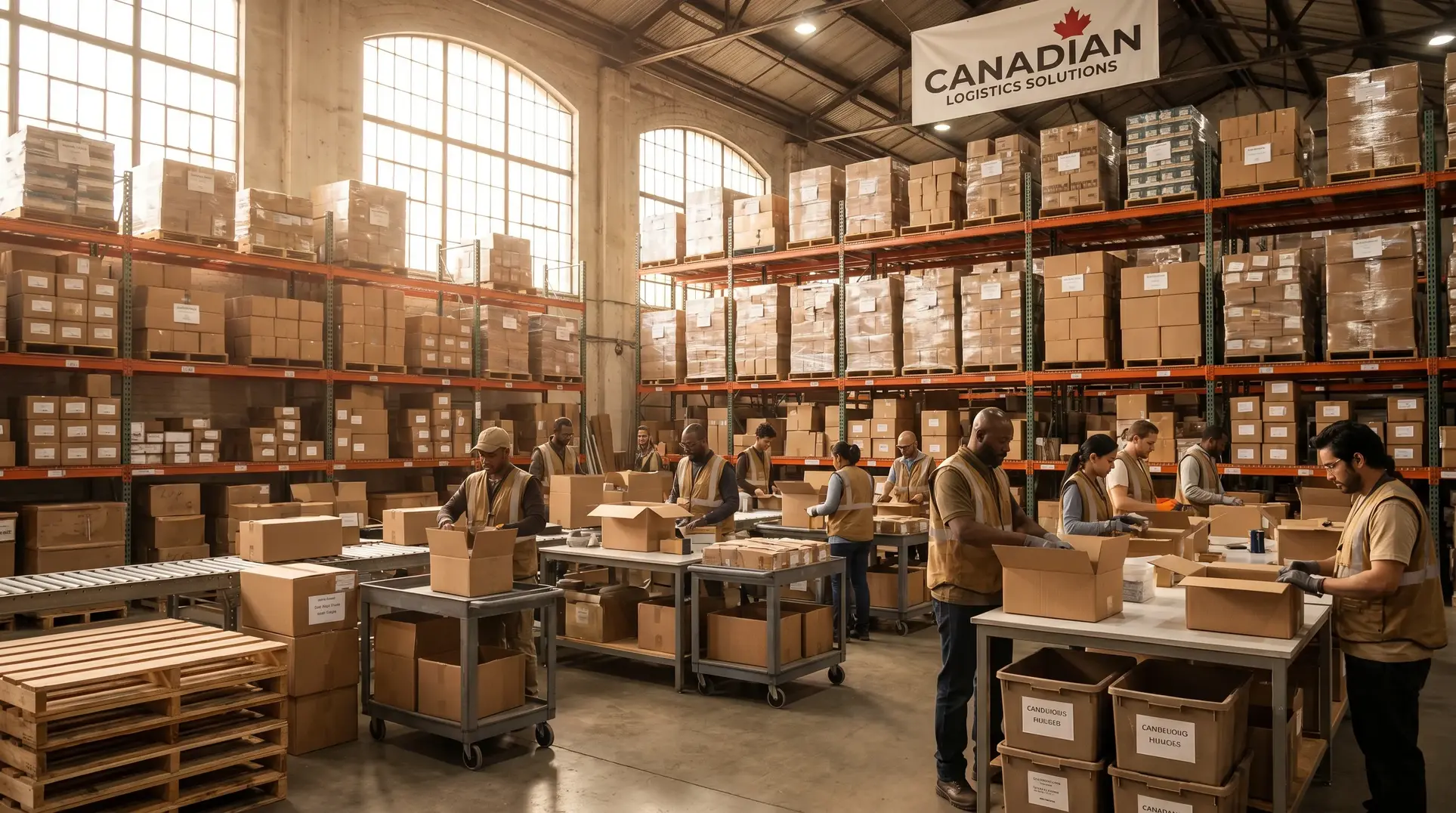
International brands expanding into North American markets face a strategic decision that significantly impacts their fulfillment economics, delivery performance, and regulatory compliance: where to position inventory for optimal market coverage. While conventional wisdom often points toward centralized US fulfillment, a growing number of sophisticated D2C brands are discovering that Canadian 3PL partnerships offer distinct competitive advantages that US-based or overseas logistics providers simply cannot replicate. The Canadian fulfillment landscape has evolved into a specialized ecosystem of cross-border experts who understand the nuances of bilateral trade, regulatory navigation across two distinct compliance environments, and geographic optimization strategies that reduce total landed costs while accelerating delivery times. For operations managers and supply chain directors at established international brands, understanding why Canadian fulfillment positioning matters—and what distinguishes Canadian 3PL expertise from alternatives—is essential for building a business case that optimizes North American market access.
Who This Article Is For—And Who It Isn’t
This strategic analysis is designed for operations leaders at established D2C ecommerce brands processing 500 or more orders monthly who are actively evaluating Canadian fulfillment options. If your organization ships regulated products like natural health products, food and beverage, or cosmetics to Canadian customers, the compliance considerations we address are directly relevant to your operational planning. Similarly, if you’re a US, UK, EU, Australian, or Singaporean brand seeking to reduce cross-border friction, optimize shipping costs through zone-skipping, or establish in-country inventory to meet Canadian consumer delivery expectations, the strategic frameworks presented here will inform your 3PL evaluation process.

This content is not intended for startups processing fewer than 100 orders monthly, marketplace-only Amazon sellers, or businesses seeking basic 3PL definitions and fundamental outsourcing explanations. We assume familiarity with concepts like harmonized tariff classifications, landed cost modeling, and platform integration requirements.
The Canadian 3PL Advantage for International Brands
The fundamental value proposition of Canadian 3PL partnerships extends far beyond simply having a warehouse on Canadian soil. Canadian fulfillment positioning creates a dual-market access advantage that enables brands to serve both Canadian consumers with domestic delivery speeds and northern US markets through zone-skipping strategies that bypass costly cross-border shipping for individual orders.
Consider the geographic reality: approximately 90% of Canadians live within 100 miles of the US border, concentrated in major metropolitan areas like Toronto, Montreal, and Vancouver. This population distribution creates natural efficiency opportunities for brands serving North American customers. A strategically positioned Canadian fulfillment center can deliver to Toronto, Vancouver, Seattle, Detroit, Buffalo, and Minneapolis with comparable transit times and often lower shipping costs than a centralized US warehouse located in a traditional fulfillment hub.
Trade Agreement Benefits and Market Access
The United States-Mexico-Canada Agreement (USMCA/CUSMA) creates preferential trade conditions that Canadian 3PLs understand at an operational level. This isn’t theoretical knowledge of trade policy—it’s practical expertise in structuring shipments, maintaining documentation, and optimizing duty treatment for products moving between the two countries. Canadian 3PLs with bilateral trade experience help international brands leverage these agreements effectively, reducing landed costs through proper classification and documentation rather than discovering compliance issues at the border.
For international brands currently shipping to Canadian customers from overseas or US locations, the total landed cost calculation often favors Canadian inventory positioning. When you factor in customs brokerage fees, duty payments, unpredictable clearance delays, and the premium shipping rates required to meet customer delivery expectations, establishing Canadian fulfillment partnerships frequently delivers positive ROI even before considering the competitive advantages of faster delivery and improved customer experience.
Cross-Border Expertise: What Canadian 3PLs Understand That Others Don’t
The specialized knowledge that distinguishes Canadian 3PLs from domestic US providers or international logistics companies centers on operational fluency across two distinct regulatory environments simultaneously. This isn’t simply “international shipping capability”—it’s deep expertise in managing inventory, documentation, and compliance obligations that span CBSA (Canada Border Services Agency) requirements on one side and FDA, FTC, and various US state regulations on the other.
Bilateral Trade Documentation and Customs Navigation
Canadian 3PLs with genuine cross-border expertise maintain working relationships with customs brokers on both sides of the border, understand Canadian tariff classification requirements, and can advise on harmonized system codes that optimize duty treatment. They know which products require country-of-origin certificates, when USMCA preferential treatment applies, and how to structure commercial invoices that facilitate clearance rather than trigger inspections.
The practical implications are significant. A brand shipping nutraceuticals from a UK manufacturing facility to Canadian consumers faces different documentation requirements than the same brand shipping from a US fulfillment center to those same customers. Canadian 3PLs navigate these distinctions daily, maintaining compliance documentation that satisfies Health Canada requirements while preserving the paperwork needed for the brand’s home country regulatory obligations.
Post-Section 321 Environment Navigation
Since the suspension of Section 321 de minimis treatment in August 2025, US brands shipping individual orders to Canadian customers from US warehouses face a fundamentally changed cost structure. The de minimis threshold that previously allowed low-value shipments to enter Canada with simplified customs treatment no longer applies in the same way, making in-country Canadian fulfillment increasingly attractive for brands seeking predictable costs and delivery timelines.

Canadian 3PLs with cross-border compliance services help brands navigate this new environment by structuring operations that minimize customs friction. This might involve bulk importing inventory into Canadian warehouses (where duties are paid once at commercial rates rather than on individual consumer shipments), establishing proper importer-of-record arrangements, and maintaining the documentation required for efficient customs clearance.
Geographic Positioning: How Canadian Fulfillment Optimizes North American Delivery
The strategic value of Canadian warehouse locations extends beyond serving Canadian customers—it creates opportunities for optimizing delivery to northern US markets that represent significant purchasing power. Understanding how Canadian fulfillment enables zone-skipping and carrier routing optimization is essential for brands evaluating the total network efficiency of different fulfillment strategies.
Zone-Skipping and Carrier Routing Optimization
Zone-skipping strategies leverage the geographic positioning of Canadian fulfillment centers to consolidate shipments destined for northern US markets, crossing the border as commercial freight rather than individual parcels. A Canadian 3PL with established carrier relationships can route orders to Seattle-area customers from Vancouver fulfillment with ground shipping that competes with two-day delivery from California warehouses—often at lower cost.
The Canada Post shipping partner ecosystem provides Canadian 3PLs with domestic delivery infrastructure that reaches even remote Canadian communities cost-effectively. For international brands, this means Canadian customers receive their orders through familiar domestic carriers with tracking, delivery notifications, and return options that match local expectations—a significant customer experience advantage over international shipments that may arrive through less predictable channels.
Distributed Canadian Networks and Delivery Speed
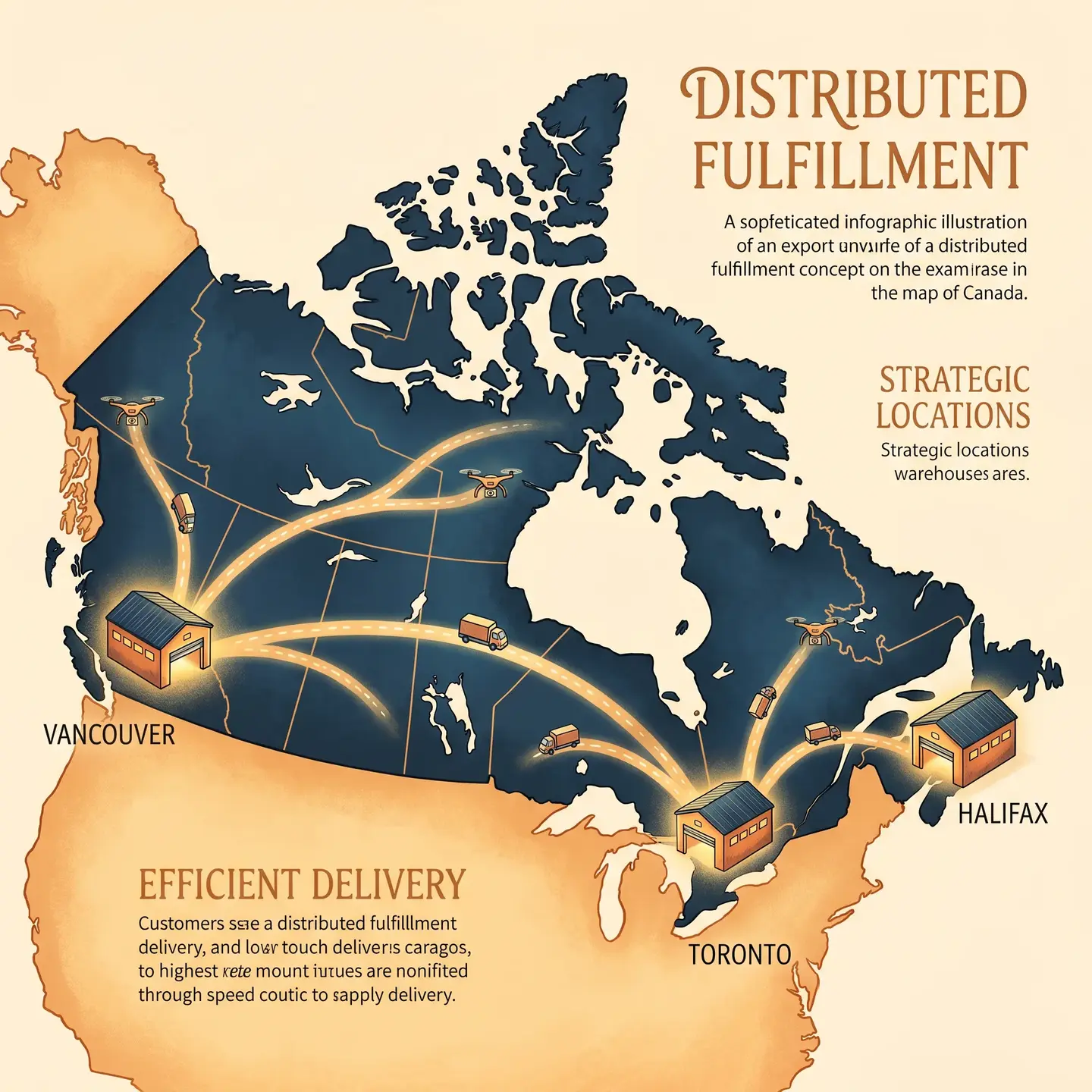
Canadian 3PLs operating distributed fulfillment networks across multiple provinces enable brands to position inventory strategically for optimal delivery coverage. A network spanning Ottawa, Toronto, and Vancouver can reach most Canadian consumers within one to two business days via ground shipping—meeting the delivery speed expectations that define competitive ecommerce without requiring premium expedited shipping costs.
For brands with ecommerce fulfillment capabilities distributed across Canadian locations, order routing logic can automatically direct orders to the nearest fulfillment center, optimizing both delivery speed and shipping costs. This distributed approach also provides inventory redundancy that protects against regional disruptions—a supply chain resilience consideration that has gained prominence following recent global logistics challenges.
Regulatory Navigation: Compliance Capabilities That Matter
For international brands selling regulated products in Canada, the compliance infrastructure of a 3PL partner directly impacts market access, operational continuity, and risk exposure. Canadian 3PLs specializing in regulated product categories maintain expertise that goes far beyond warehouse storage—they serve as compliance partners who understand both Canadian regulatory requirements and how to maintain documentation supporting brands’ home country obligations.
Natural Health Products and Nutraceutical Compliance
Health Canada’s Natural Health Products Regulations impose specific requirements for NHP storage, handling, and distribution that general-purpose warehouses cannot satisfy. Brands selling vitamins, supplements, herbal products, or other NHPs in Canada need fulfillment partners with documented compliance infrastructure—not merely claims of capability.
A Canadian 3PL with genuine NHP expertise maintains:
- Temperature and humidity monitoring appropriate for product stability requirements
- Lot tracking and expiration management systems supporting FIFO/FEFO rotation
- Documentation practices that satisfy Health Canada audit requirements
- Personnel training on proper handling protocols for health products
Certifications matter in this context. An Intertek SAI Global certification with a Superior rating for storage and distribution of health products demonstrates third-party verification of compliance infrastructure—an important consideration for brands whose market access depends on maintaining regulatory standing.
Food and Beverage Regulatory Requirements
The Canadian Food Inspection Agency (CFIA) establishes requirements for food storage and distribution that international food brands must satisfy to sell in Canada. Canadian 3PLs serving the food and beverage sector maintain HACCP-based food safety systems, proper segregation between food and non-food products, and documentation practices that support traceability throughout the distribution chain.
Bilingual labeling requirements add another compliance dimension. Canadian regulations mandate French and English labeling on food products—a requirement that 3PLs can help brands address through relabeling services or by receiving and storing Canadian-compliant product variants separately from other market inventory.
Cosmetics Notification and Compliance
Cosmetics sold in Canada must comply with Health Canada requirements including ingredient disclosure, proper labeling, and restrictions on certain substances. Canadian 3PLs experienced with cosmetics fulfillment understand the documentation requirements, storage conditions that maintain product integrity, and the bilingual labeling obligations that apply to this product category.
For international beauty brands, the combination of regulatory knowledge and fulfillment capability means Canadian 3PL partners can serve as the operational foundation for compliant Canadian market presence—managing the logistics complexity while brands focus on marketing and customer acquisition.
Currency and Cost Considerations for International Brands
The financial analysis supporting Canadian fulfillment investment extends beyond simple per-order pricing comparisons. International brands must evaluate total landed costs, currency implications, duty optimization opportunities, and tax collection obligations to build accurate business cases for Canadian 3PL partnerships.
CAD/USD Exchange Rate Implications
The Canadian dollar typically trades at a discount to the US dollar, which creates favorable economics for US brands paying Canadian warehousing and fulfillment costs. Labor rates, facility costs, and operational expenses denominated in CAD translate to lower USD-equivalent costs than comparable services in many US markets—particularly high-cost coastal regions where warehouse space commands premium rates.
This currency advantage extends to Canadian 3PL rate negotiations. Brands paying in USD for CAD-denominated services benefit from exchange rate arbitrage that can meaningfully impact fulfillment cost as a percentage of revenue. For brands evaluating Canadian market entry, the combination of currency advantage and Canadian logistics industry infrastructure creates a compelling cost basis for in-country fulfillment.
Duty Optimization Through Import Strategy
How inventory enters Canada significantly impacts total landed costs. Bulk importing inventory into Canadian warehouses typically results in more favorable duty treatment than individual consumer shipments—commercial importers benefit from established processes, predictable timing, and the ability to claim preferential rates under trade agreements when applicable.
Canadian 3PLs with import expertise help brands structure their supply chains to optimize duty exposure. This might involve advising on tariff classifications that legitimately minimize duty rates, maintaining origin documentation that supports preferential treatment claims, or timing imports to manage cash flow around duty payments.
GST/HST Collection and Remittance
International brands selling to Canadian consumers must navigate Goods and Services Tax (GST) and Harmonized Sales Tax (HST) obligations that vary by province. Canadian 3PLs don’t typically serve as tax advisors, but those experienced with cross-border commerce understand the operational implications of tax collection requirements and can integrate with systems that calculate appropriate taxes at checkout.
For brands evaluating Canadian market entry, understanding tax obligations upfront prevents surprises that could undermine profitability assumptions. The combination of duty treatment, tax obligations, and fulfillment costs determines whether Canadian inventory positioning makes financial sense for a given product and price point.
Technology Integration and Platform Compatibility
International brands managing fulfillment across multiple countries require 3PL partners whose technology infrastructure integrates seamlessly with existing systems. Canadian 3PLs serving international clients have invested in platform connectivity, API capabilities, and real-time inventory visibility that enables brands to manage Canadian operations within their existing technology ecosystem.
Ecommerce Platform Integration
Native integrations with major ecommerce platforms—Shopify, WooCommerce, BigCommerce, Amazon Canada, and NetSuite—allow international brands to route Canadian orders to Canadian fulfillment automatically without manual intervention. Orders placed on a brand’s Canadian store or through Amazon.ca flow directly to the Canadian 3PL’s warehouse management system, triggering pick, pack, and ship processes that update inventory and tracking information in real-time.
For brands operating Shopify stores serving multiple markets, Canadian 3PL integration enables inventory allocation strategies that position stock where it’s needed based on demand patterns. Real-time inventory synchronization prevents overselling while providing the visibility needed to manage reorder points and seasonal inventory builds.
Multi-Channel Order Management
Sophisticated Canadian 3PLs support order routing logic that directs orders to the optimal fulfillment location based on destination, inventory availability, and shipping cost optimization. A brand operating Canadian fulfillment alongside US fulfillment can configure rules that automatically route Canadian orders to Canadian inventory while directing US orders to the appropriate US location—with logic that handles edge cases like inventory stockouts or split-shipment scenarios.
This multi-channel capability matters for brands selling through multiple marketplaces and direct channels simultaneously. The ability to fulfill Amazon.ca orders, Shopify Canadian store orders, and wholesale Canadian orders from unified inventory eliminates the complexity of managing separate inventory pools for different channels.
Selecting the Right Canadian 3PL Partner: Strategic Criteria
International brands evaluating Canadian 3PL partnerships should apply selection criteria that go beyond standard RFP questions about pricing and service levels. The following considerations distinguish partners with genuine cross-border expertise from providers that primarily serve domestic Canadian businesses.
Assessing Genuine Cross-Border Experience
Not all Canadian 3PLs have equivalent expertise in serving international brands. Questions that reveal actual cross-border capability include:
- What percentage of current clients are international brands shipping to Canada versus domestic Canadian businesses?
- What customs broker relationships do you maintain, and how do you coordinate cross-border documentation?
- How do you handle importer-of-record arrangements for international brands without Canadian legal entities?
- What experience do you have with the specific regulatory requirements for our product category?
- Can you provide references from international brands in similar situations to ours?
Evaluating Carrier Relationships and Rate Leverage
Shipping costs represent a significant component of total fulfillment expense, and Canadian 3PLs with strong carrier relationships deliver better rates than brands could negotiate independently. Understanding how a 3PL approaches carrier rate shopping—whether they use automated rate comparison across multiple carriers, negotiate volume-based discounts, and optimize zone selection—reveals their sophistication in managing this critical cost center.
A 3PL offering rate-shopping across carriers like FedEx, UPS, Canada Post, Canpar, GLS, and UniUni provides flexibility to optimize for cost, speed, or service level based on order characteristics. This carrier diversity matters for international brands whose order profiles may include everything from lightweight supplements to heavier cosmetics shipments with different optimal carrier selections.
Validating Compliance Infrastructure
For regulated product categories, compliance infrastructure validation should include:
- Third-party certifications and audit results demonstrating compliance standards
- Documentation of temperature monitoring and environmental controls
- Evidence of personnel training programs for regulated product handling
- Sample compliance documentation and lot tracking capabilities
- History of regulatory inspections and outcomes
Brands should request facility tours or detailed facility documentation that demonstrates the operational reality behind compliance claims. The difference between a 3PL that claims NHP capability and one that maintains documented Intertek SAI Global certification with Superior ratings becomes apparent in these details.
Understanding Scalability and Peak Capacity
International brands entering Canadian markets often experience significant volume fluctuations—seasonal peaks, promotional campaigns, or viral product moments can drive order volumes to multiples of baseline levels. Understanding how a 3PL handles these fluctuations reveals operational maturity:
- What is your capacity headroom relative to current utilization?
- How do you scale labor during peak periods?
- What was your largest single-day order volume, and how did you handle it?
- What cutoff times do you guarantee for same-day fulfillment, and how does that change during peaks?
A 3PL that processes over 40,000 orders weekly with same-day fulfillment for orders received by 1:30 PM EST demonstrates operational capacity that smaller providers may struggle to match during volume surges.
Building the Business Case for Canadian Fulfillment Partnership
International brands evaluating Canadian 3PL partnerships should construct business cases that capture the full range of benefits and costs. The strategic rationale extends beyond simple fulfillment cost comparisons to encompass customer experience improvements, compliance risk reduction, and competitive positioning in the Canadian market.
Quantifying Cross-Border Friction Elimination
The costs of cross-border friction include obvious elements like customs brokerage fees and duties, but also less visible costs like customer service inquiries about delayed shipments, refunds for packages stuck in customs, and lost customer lifetime value when delivery experiences disappoint. Brands that track these costs rigorously often find that the total cost of cross-border friction significantly exceeds the incremental expense of maintaining Canadian inventory.
Competitive Positioning Through Delivery Performance
Canadian consumers increasingly expect domestic delivery timelines when purchasing from brands with Canadian presence. A brand offering two-day delivery from Canadian fulfillment competes more effectively than one offering seven-to-ten-day international shipping with unpredictable customs delays. This delivery performance advantage translates to higher conversion rates, lower cart abandonment, and improved customer retention—benefits that compound over time as customer lifetime value increases.
For brands exploring US market fulfillment strategies alongside Canadian operations, the combination of Canadian 3PL partnerships with US fulfillment creates a North American network that optimizes delivery performance across both markets. The strategic integration of these capabilities through 3PL solutions for international brands enables sophisticated order routing that serves customers from optimal locations regardless of which side of the border they reside.
The Strategic Imperative of Canadian Fulfillment Positioning
Canadian 3PL partnerships represent more than operational convenience for international brands—they constitute strategic infrastructure that enables competitive market positioning in North America. The combination of bilateral trade expertise, regulatory compliance capability, geographic optimization advantages, and currency-favorable cost structures creates a compelling case for Canadian fulfillment investment that goes far beyond the capabilities of US domestic 3PLs or international logistics providers without specialized Canadian expertise.
As the post-Section 321 environment continues to evolve and Canadian consumers maintain their expectations for domestic-quality delivery experiences, international brands that establish Canadian fulfillment partnerships position themselves advantageously against competitors still relying on cross-border shipping models. The question is not whether Canadian fulfillment makes sense strategically—for most international brands serving Canadian customers, it does—but rather which Canadian 3PL partner offers the right combination of cross-border expertise, compliance infrastructure, technology integration, and operational capacity to support sustainable Canadian market growth.
Frequently Asked Questions
Probe cross-border experience (% international clients, customs broker ties, importer-of-record handling), carrier rate-shopping, compliance certs (e.g., NHP storage), and peak capacity (e.g., 40K+ weekly orders). Request international brand references to confirm they handle your scale and regs.
Top Canadian 3PLs maintain Health Canada/CFIA-compliant infrastructure: temperature monitoring, FIFO lot tracking, bilingual labeling, and certifications like Intertek SAI Global Superior ratings. Ask for audit docs and training proof to avoid compliance risks—essential for nutraceuticals, food, or cosmetics.
Zone-skipping uses Canadian warehouses to ship to northern US markets via efficient ground routes, bypassing pricey parcel borders. From Vancouver, hit Seattle faster/cheaper than from California—leverage 3PL carrier networks like Canada Post for 1-2 day Canadian delivery too.
Canadian 3PLs give international D2C brands dual-market access—fast domestic delivery to Canada plus zone-skipping to northern US cities like Seattle or Detroit at lower costs than US hubs. They handle USMCA trade perks and reduce cross-border friction, cutting landed costs and delays for brands shipping 500+ orders monthly.
Post-2025 suspension, low-value US-to-Canada shipments face higher duties and delays. Switch to Canadian 3PLs for bulk imports (one-time commercial duties), importer-of-record setups, and predictable costs—ideal for avoiding stuck parcels and meeting Canadian delivery SLAs.

Scale Your Canada Fulfillment with Confidence.
Partner with Canada's premier 3PL to unlock faster shipping, lower costs, and seamless scalability for your ecommerce brand.
Talk to an Expert