Compliance
Cosmetics Fulfillment in Canada: Navigating Health Canada Requirements for Beauty Brands
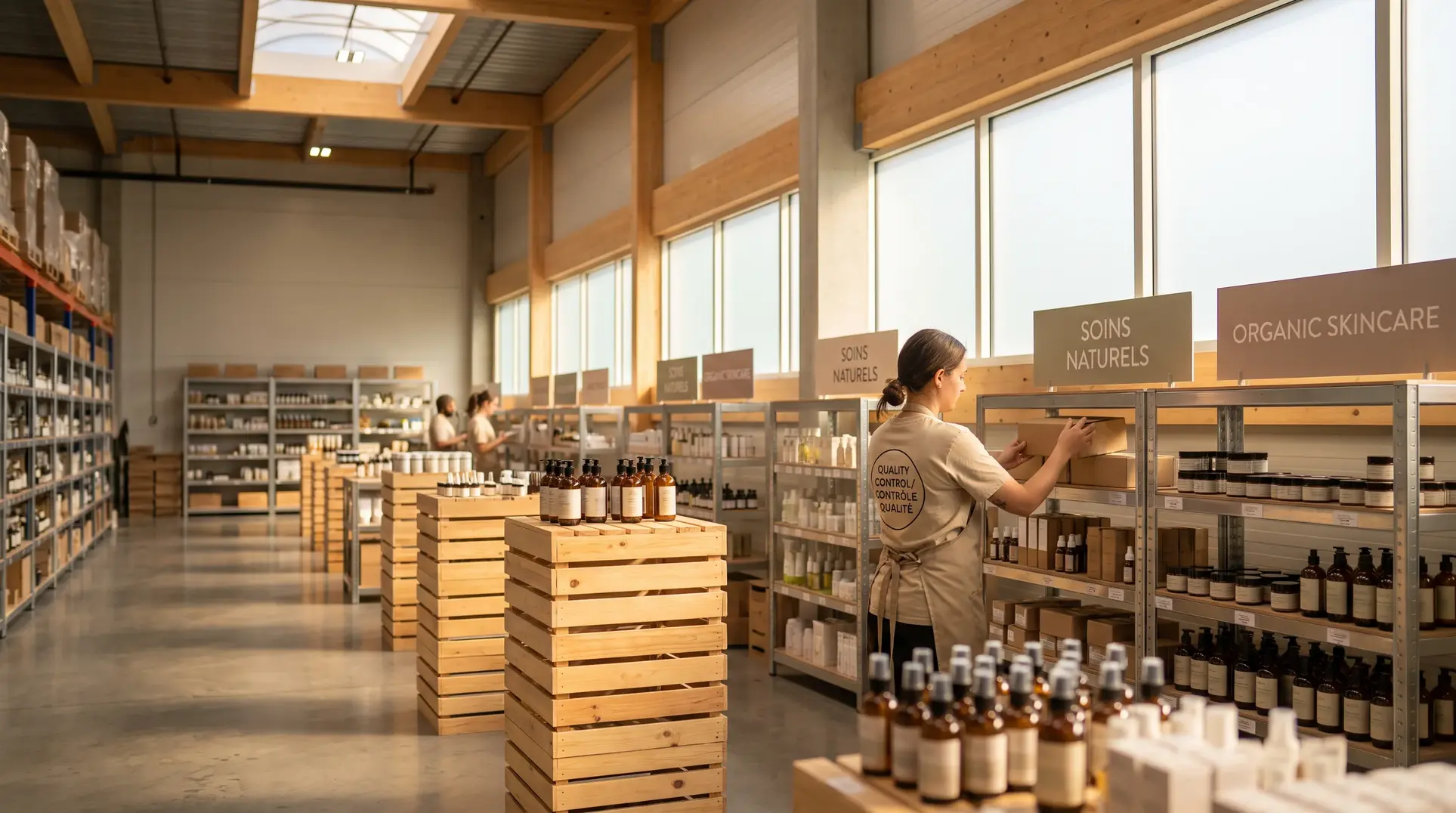
Selling cosmetics into Canada presents a regulatory landscape that differs fundamentally from what U.S., UK, and EU beauty brands encounter in their home markets. Health Canada’s framework for cosmetics—rooted in the Food and Drugs Act and supported by the Cosmetic Ingredient Hotlist, mandatory bilingual labeling, and the Cosmetic Notification Form process—creates compliance requirements that directly impact how products must be stored, tracked, labeled, and fulfilled. For international beauty brands eyeing Canada’s projected 1.7 billion USD cosmetics market by 2027, understanding these requirements isn’t merely a legal formality. It’s the foundation of a viable fulfillment strategy. At Ottawa Logistics Fulfillment, we’ve spent over a century navigating Canadian regulatory environments, and we’ve seen firsthand how cosmetics brands that treat compliance as an afterthought encounter costly delays, rejected inventory, and market entry failures. This guide bridges the gap between Health Canada’s regulatory expectations and the operational fulfillment decisions that determine whether your Canadian expansion succeeds.
Who This Guide Is For—And Who It Isn’t
This content is designed for supply chain managers, operations directors, and founders at established D2C beauty brands processing 500+ orders monthly who are researching what’s required to fulfill cosmetics orders in Canada compliantly. If you’re a U.S. brand assuming you can simply redirect American inventory to Canadian customers, or an international brand wondering why your formulations need adjustment for the Canadian market, this guide addresses your specific situation.
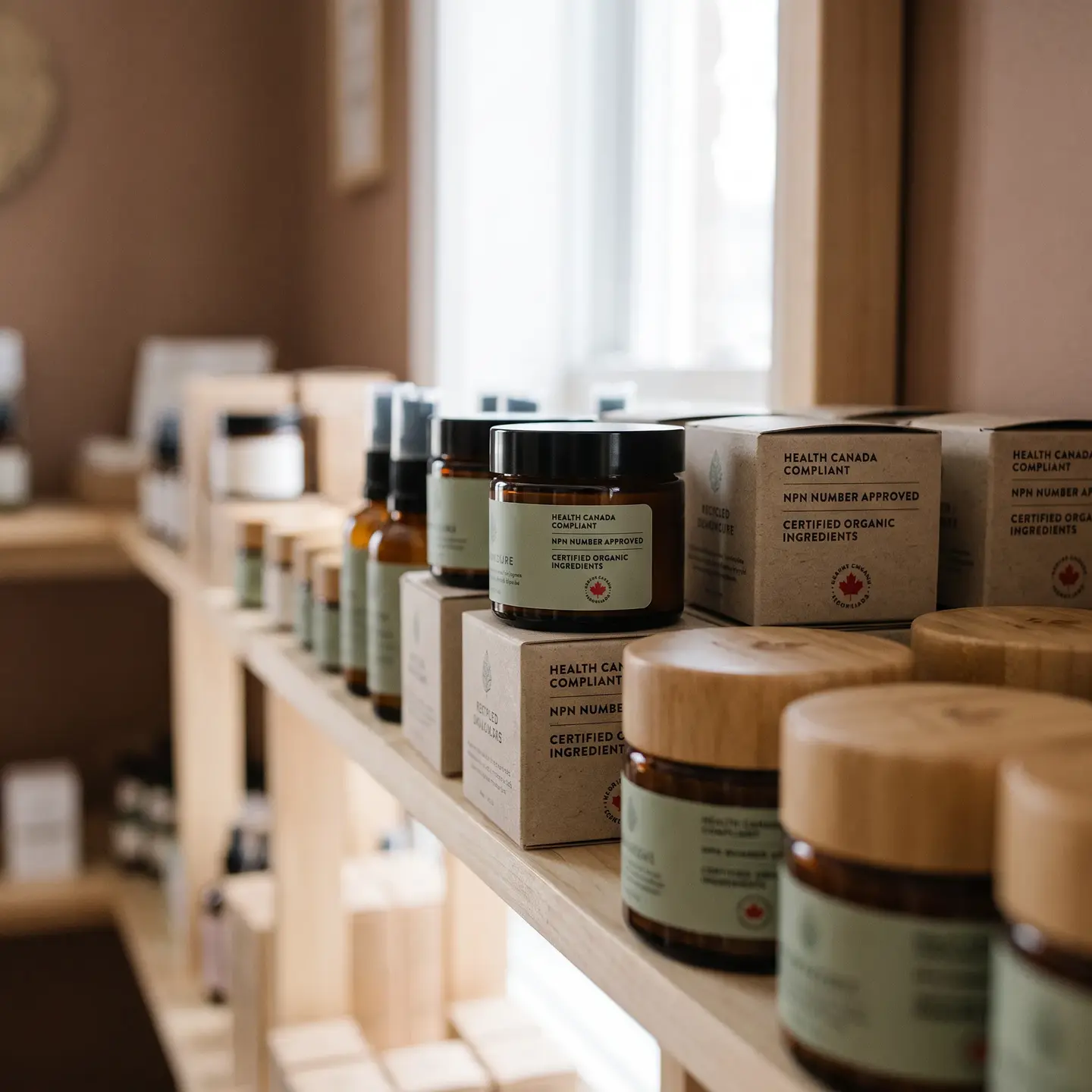
This is not introductory content for brands just starting out. If you’re shipping fewer than 100 orders monthly or haven’t yet established domestic fulfillment operations in your home market, your priority should be building that foundation before tackling cross-border complexity. Similarly, if you’re a marketplace-only Amazon seller without direct-to-consumer operations, the fulfillment model discussed here likely doesn’t apply to your business.
What Qualifies as a Cosmetic in Canada vs. the United States
The first critical distinction international brands must understand is that Canada defines cosmetics differently than the U.S. FDA. Under Health Canada’s Food and Drugs Act, a cosmetic is any substance or mixture of substances manufactured, sold, or represented for use in cleansing, improving, or altering the complexion, skin, hair, or teeth—including deodorants and perfumes.
This definition creates immediate classification challenges for American brands:
- Products making therapeutic claims that qualify as cosmetics under FDA oversight may be classified as drugs or natural health products (NHPs) in Canada
- “Cosmeceuticals”—a term without legal meaning in Canada—often fall into regulatory grey areas requiring careful assessment
- Anti-aging products, acne treatments, and sunscreens may face different classification pathways than their U.S. counterparts
The practical fulfillment implication is significant: products classified differently require different storage protocols, labeling standards, and documentation. A serum marketed as “brightening” typically remains a cosmetic, while the same formulation promoted as “treating hyperpigmentation” may drift into NHP or drug territory, triggering entirely different regulatory requirements that affect how a 3PL must handle the inventory.
Before shipping a single unit to a Canadian warehouse, brands must verify their product classifications align with Health Canada’s framework—not assume U.S. classifications transfer automatically.
The Cosmetic Ingredient Hotlist: Where U.S. Formulations Often Fail
Health Canada maintains the Cosmetic Ingredient Hotlist—a list of prohibited and restricted substances that represents one of the most operationally significant compliance requirements for international brands. Unlike guidance documents, the Hotlist directly determines whether your products can legally enter Canada.
Common Ingredients That Create Problems
Several substances commonly used in U.S., UK, or EU formulations face different treatment in Canada:
- Certain retinoid concentrations: A U.S. skincare brand using retinyl palmitate at concentrations exceeding Canadian limits must reformulate or maintain separate Canadian inventory
- Specific preservatives: Some preservative systems permitted elsewhere face restrictions or prohibitions in Canada
- Certain colorants and fragrances: Ingredients acceptable in other markets may appear on Canada’s prohibited list
What This Means for Fulfillment
The Hotlist creates a fundamental inventory strategy decision: you cannot simply redirect U.S. stock to Canada. International brands must either:
- Reformulate products specifically for the Canadian market
- Maintain separate Canadian-compliant inventory
- Verify that existing formulations already meet Hotlist requirements
A compliant fulfillment partner conducts ingredient verification during onboarding, not after inventory arrives. At our facilities, we review product documentation against Hotlist requirements before accepting cosmetics inventory, preventing the costly scenario of warehousing products that cannot legally be sold.
Cosmetic Notification Form Requirements and Fulfillment Implications
Under Health Canada’s cosmetics regulations, manufacturers and importers must submit a Cosmetic Notification Form (CNF) within ten days after first selling a cosmetic in Canada. This notification captures detailed product information including brand and product name, manufacturer details, ingredients, concentration ranges, and product type.
Key Points About the CNF Process
- Health Canada does not “approve” cosmetics prior to sale—the CNF is a notification, not an authorization
- CNFs must be updated within ten days whenever product information becomes inaccurate (formulation changes, label modifications, discontinued products)
- Import documentation should include the unique Cosmetic Number associated with the CNF to facilitate customs verification
Why Your 3PL Needs to Understand Notification Status
From a fulfillment perspective, CNF compliance affects several operational touchpoints:
- Inventory acceptance procedures: A compliant 3PL verifies that products arriving at the warehouse have corresponding CNF documentation
- SKU data management: CNF data should be integrated into warehouse management systems, ensuring that Cosmetic Numbers appear on customs declarations and shipping documentation
- Change control: When brands reformulate or relabel products, fulfillment operations must synchronize with regulatory filings to ensure shipped units match CNF records
The consequence of misalignment is direct: shipments lacking proper CNF information or containing products that don’t match filed notifications can be held at customs, requiring relabeling or rejection—disrupting fulfillment timelines and increasing costs.
Bilingual Labeling Requirements and Inventory Strategy
Canada’s Consumer Packaging and Labelling Act mandates that mandatory label elements appear in both English and French. For cosmetics, this includes:
- Product identity
- Net quantity
- Required warnings
- Heading for the ingredient list (though INCI ingredient names themselves don’t change language)

Three Approaches to Bilingual Compliance
Brands entering Canada typically choose one of three labeling strategies, each with distinct fulfillment implications:
- Bilingual packaging from manufacturing: Products are manufactured with bilingual labels, allowing single-SKU inventory across markets where practical. This approach simplifies fulfillment but requires upstream coordination with manufacturers.
- Separate Canadian SKUs: Maintaining distinct Canadian-labeled inventory provides clean separation but increases inventory complexity and reduces flexibility for cross-market allocation.
- Bilingual sticker application: Applying compliant stickers at the fulfillment center allows brands to use existing inventory with Canadian-specific labeling applied before shipment. This approach requires fulfillment partners with labeling capabilities and quality controls.
Fulfillment Implications
The labeling strategy you choose directly affects:
- Inventory positioning: Separate Canadian SKUs require dedicated inventory allocation; bilingual base packaging allows more flexible distribution
- Returns processing: Products with Canadian-specific stickers may require different returns handling than base inventory
- Kitting and assembly: Promotional bundles for Canadian customers must maintain bilingual compliance across all included items
At Ottawa Logistics Fulfillment, our facilities support relabeling and bilingual sticker application, integrating label compliance verification into receiving and pick-and-pack workflows. This capability allows international brands to import inventory and achieve Canadian compliance at the fulfillment stage rather than requiring separate manufacturing runs.
Lot Tracking, Expiry Date Management, and FEFO/FIFO for Cosmetics
Cosmetics fulfillment requires operational capabilities beyond standard e-commerce practices. Proper regulated products fulfillment demands:
Lot Number Tracking
Maintaining lot-level traceability enables rapid response to safety concerns or recalls. When Health Canada issues a safety alert, compliant fulfillment operations can immediately identify affected batches, halt outbound shipments of those lots, and provide documentation showing where affected units were shipped.
Expiry Date Management
Many cosmetics—particularly natural formulations, serums, and products with active ingredients—have defined shelf lives. A compliant fulfillment operation:
- Captures expiry dates during receiving
- Monitors approaching expirations proactively
- Prevents shipment of expired or near-expired products
FEFO and FIFO Inventory Rotation
First-Expired-First-Out (FEFO) and First-In-First-Out (FIFO) rotation methodologies ensure that older inventory ships before newer stock. For cosmetics with shelf life considerations, FEFO is typically preferred—ensuring customers receive products with maximum remaining shelf life while minimizing waste from expired inventory.
These capabilities matter for both compliance (recall readiness, consumer safety documentation) and business outcomes (reducing waste, maintaining product quality, protecting brand reputation).
Storage and Handling Requirements for Different Cosmetic Categories
Not all cosmetics have identical storage requirements. A compliant fulfillment operation zones warehouse space appropriately:
Temperature-Sensitive Products
Certain serums, natural formulations, and products with active ingredients require temperature-controlled warehousing to maintain stability and efficacy. Our facilities feature climate-controlled zones with monitoring systems that document storage conditions—providing both product protection and compliance documentation.
Humidity Considerations
Some cosmetics categories—particularly powders and certain natural products—require specific humidity controls to prevent degradation or clumping.
Quarantine and Returns Zones
Cosmetics returns require careful handling. Returned products must be quarantined, inspected for tampering or contamination, and either properly disposed of or reintegrated into inventory under controlled conditions. Our facilities maintain distinct quarantine zones with documented disposition protocols, preventing compromised products from reentering the supply chain.
Building a Compliant Market Entry Strategy for Beauty Brands
For U.S. brands expanding to Canada—or international brands from the UK, EU, Australia, or Singapore—a structured approach to market entry connects regulatory requirements to operational execution:
Step 1: Regulatory Assessment and Product Classification
Before any inventory decisions, verify how each SKU classifies under Health Canada’s framework. Products that are cosmetics in your home market may be NHPs or drugs in Canada, requiring different regulatory pathways.
Step 2: Ingredient Verification Against the Hotlist
Review every formulation against the Cosmetic Ingredient Hotlist. Identify any prohibited substances or restricted ingredients that exceed Canadian limits. Determine whether reformulation is required or existing formulations comply.
Step 3: Cosmetic Notification Form Submission
Prepare CNF submissions timed to your launch plans. CNFs should be filed at or shortly before product listing goes live for Canadian consumers. Integrate Cosmetic Numbers into your SKU master data for customs documentation.
Step 4: Labeling Compliance and Inventory Strategy
Decide your bilingual labeling approach. Coordinate with your fulfillment partner on whether relabeling services are needed, and ensure label content matches both CNF records and online product descriptions.
Step 5: Partner Selection and Onboarding
Select a Canadian fulfillment partner with demonstrated compliance services for regulated products—not just claims of capability, but documented infrastructure including lot tracking, climate control, and quarantine procedures.
Step 6: Ongoing Compliance Monitoring
Regulatory requirements evolve. The Hotlist is updated periodically. Maintain processes to track regulatory changes and update formulations, labels, and CNFs accordingly.
Why Cosmetics Brands Choose Specialized Canadian Fulfillment Partners
Working with a 3PL that understands cosmetics regulations—rather than a general fulfillment provider—delivers several concrete advantages:
Compliance Expertise
A specialized partner understands what can and cannot be stored, recognizes classification nuances, and identifies compliance gaps during onboarding rather than after problems emerge.
Operational Capabilities Matched to Requirements
Lot tracking, FEFO inventory rotation, climate-controlled storage, quarantine zones, and bilingual labeling capabilities aren’t optional extras for cosmetics fulfillment—they’re baseline requirements.
Documentation Management
Maintaining CNF records, ingredient documentation, and storage condition logs supports both regulatory compliance and recall readiness.
Integration with Your Technology Stack
Our platform integrates with Shopify, WooCommerce, BigCommerce, Amazon, and NetSuite, synchronizing inventory, orders, and regulatory data across your systems.
Carrier Rate Shopping for Cost Optimization
Our automated carrier rate-shopping across FedEx, UPS, Canada Post, Canpar, GLS, and UniUni optimizes shipping costs while maintaining delivery speed—critical when serving Canadian customers who expect competitive delivery timelines.
The Ottawa Logistics Fulfillment Difference
Operating since 1918, Ottawa Logistics Fulfillment brings over a century of Canadian logistics expertise to cosmetics fulfillment. Our infrastructure includes:
- Three strategic locations: Ottawa, Toronto, and Vancouver—enabling 1-2 day ground delivery to most Canadian consumers
- 250,000 square feet of warehousing with climate-controlled zones
- Same-day fulfillment for orders received by 1:30 PM EST
- Intertek SAI Global certification with a 100% Superior rating (valid through August 2026)
- 40,000+ orders processed weekly with 99.99% accuracy
- Bilingual English/French operations for complete Canadian market coverage
For cosmetics brands, our regulated product capabilities include lot tracking, expiry date management, FEFO/FIFO rotation, temperature monitoring, quarantine protocols, and labeling services—all documented and audit-ready.

Next Steps for Your Canadian Cosmetics Expansion
Entering the Canadian cosmetics market successfully requires more than understanding Health Canada’s rules—it demands a fulfillment partner that translates regulatory requirements into operational reality. The complexity isn’t insurmountable, but it does require expertise, infrastructure, and attention to detail that general fulfillment providers typically lack.
If you’re an established beauty brand processing 500+ orders monthly and considering Canadian market entry, we invite you to discuss how our regulated products fulfillment infrastructure can support your expansion. Our team can assess your product portfolio, identify compliance considerations, and develop a fulfillment strategy that positions your brand for Canadian success.
Contact Ottawa Logistics Fulfillment to explore how we can serve as your strategic partner for compliant cosmetics fulfillment in Canada.
Frequently Asked Questions
Start by checking how each SKU is positioned: products with therapeutic claims (like treating acne or hyperpigmentation) may be classified as drugs or natural health products in Canada, so you need to review claims and formulations against Health Canada’s definitions before shipping anything.
You can handle bilingual labeling in three ways: manufacture bilingual packaging, create separate Canadian SKUs, or have a 3PL apply bilingual stickers—many brands choose the sticker route to use existing inventory while staying compliant.
Lot tracking and FEFO let your 3PL trace specific batches, respond quickly to safety alerts, and ship soonest-expiring units first, so you avoid sending expired products, reduce write-offs, and have the documentation regulators expect for recalls and audits.
If CNF details and shipped products are out of sync—because of reformulations, label changes, or missing Cosmetic Numbers—your shipments can be delayed or held at customs, leading to relabeling costs, rejected inventory, and fulfillment disruptions.
In most cases, you can’t just redirect U.S. stock to Canada—differences in ingredient rules, product classification, and bilingual labeling usually mean you either reformulate, maintain Canadian-specific SKUs, or add compliant labels at the fulfillment stage.

Scale Your Canada Fulfillment with Confidence.
Partner with Canada's premier 3PL to unlock faster shipping, lower costs, and seamless scalability for your ecommerce brand.
Talk to an Expert