Warehousing
Warehousing and Distribution: How Strategic Inventory Positioning Drives Competitive Advantage

Where you position inventory determines more than storage costs—it shapes how fast customers receive orders, how much you pay per shipment, and whether your fulfillment operation becomes a competitive advantage or a margin drain. For direct-to-consumer brands operating at scale, warehousing and distribution are not back-office functions to minimize. They are strategic infrastructure that directly impacts conversion rates, customer retention, and unit economics.
We have operated fulfillment centers across Canada since 1918, and the pattern is consistent: brands that treat warehouse positioning as a strategic decision outperform those that treat it as a cost line item. The difference shows up in delivery speed, shipping economics, and the ability to scale without breaking operations during peak demand.

This article provides the strategic framework for evaluating how warehouse network design, geographic positioning, and distribution capabilities create measurable competitive differentiation—particularly for brands serving Canadian customers or expanding into North American markets.
Who This Article Is For
This content is designed for operations managers, supply chain directors, and founders evaluating their distribution infrastructure. You will benefit most if you are:
- Processing 500+ orders monthly and considering 3PL partnerships or multi-location strategies
- A US or international brand evaluating Canadian market entry through in-country fulfillment
- An established D2C operation assessing whether your current warehouse positioning aligns with customer distribution patterns
- Navigating cross-border complexity and seeking to understand how warehouse location affects customs, duties, and delivery timelines
This article is not for startups under 100 orders monthly, marketplace-only Amazon sellers, or businesses seeking basic warehousing definitions. We assume familiarity with supply chain fundamentals and focus on strategic frameworks rather than operational explanations.
Warehousing vs. Distribution: The Strategic Distinction
Most content conflates warehousing and distribution or treats them as sequential steps in the same process. This misses the strategic point. Warehousing and distribution are distinct capability sets that create different competitive levers when optimized together.
Warehousing as Inventory Positioning
Warehousing determines where inventory sits relative to demand. This positioning decision affects:
- Inventory availability: How quickly you can respond to orders in specific regions
- Storage economics: The cost structure of holding inventory in different markets
- Compliance positioning: Whether products clear regulatory requirements before reaching customers
- Risk distribution: How vulnerable your operation is to regional disruptions
Warehousing decisions are fundamentally about proximity—positioning inventory close enough to customers that you can meet delivery expectations without premium shipping costs.
Distribution as Movement Velocity
Distribution determines how efficiently inventory moves from warehouse to customer. This capability affects:
- Delivery speed: How fast orders reach customers after placement
- Transportation economics: Per-unit shipping costs based on carrier relationships and zone optimization
- Delivery reliability: Consistency of arrival windows and tracking accuracy
- Customer experience: The final impression your brand makes at the doorstep
Distribution capabilities translate warehousing decisions into customer-facing outcomes. A well-positioned warehouse with weak distribution infrastructure still delivers poor results.
The Integration Imperative
Competitive advantage emerges when warehousing and distribution capabilities reinforce each other. A warehouse positioned in Toronto with carrier partnerships that optimize Ontario delivery creates compound benefits: lower shipping costs and faster delivery and higher delivery reliability. Neither warehousing excellence nor distribution capability alone produces this result.
The Warehouse as Competitive Infrastructure
Reframing warehousing from cost center to competitive asset requires connecting facility decisions to measurable business outcomes. Here is how warehouse positioning impacts the metrics that matter:
Delivery Speed and Conversion Rates
Customer expectations for delivery speed continue compressing. Two-day delivery is baseline for competitive ecommerce; next-day and same-day options increasingly influence purchase decisions. Warehouse proximity to customer density determines whether you can meet these expectations with ground shipping or require expensive expedited carriers.
When we process orders through our Ottawa, Toronto, and Vancouver facilities, brands achieve 1-2 day ground delivery to most Canadian consumers. This network positioning means D2C fulfillment operations can meet customer expectations without premium shipping costs—a direct impact on unit economics and competitive positioning.
Shipping Cost and Unit Economics
Final-mile delivery represents the most expensive segment of the shipping journey. Warehouse location relative to customer density directly affects which shipping zones you access and what you pay per package.
Consider the difference between shipping to Toronto from a Vancouver warehouse versus a Toronto warehouse. The zone differential translates to measurable per-unit cost differences that compound across thousands of orders monthly. Strategic warehouse storage solutions positioned near population centers reduce these costs structurally rather than through carrier negotiation alone.
Inventory Positioning and Stockout Prevention
Warehouse network design affects how quickly you can replenish inventory in high-demand regions. Single-warehouse operations face binary outcomes during demand spikes: either you have inventory in position or customers experience stockouts and delays.
Multi-location networks create inventory redundancy that protects customer experience during demand fluctuations. Combined with cross-docking services that accelerate inventory flow, we handle peak season volume fluctuations up to 340% above baseline because our distributed network and scalable infrastructure absorb demand without breaking operations.
Network Design Principles: When Does Multi-Location Make Economic Sense?
Not every brand benefits from distributed warehousing. The decision framework involves evaluating several interdependent factors:
Volume Thresholds
Multi-location networks introduce complexity: inventory allocation decisions, transfer costs between facilities, and technology requirements for unified visibility. These costs only make sense when shipping volume and geographic distribution create sufficient savings to offset operational complexity.
General guidelines for evaluation:
- Single location: Typically optimal when 70%+ of orders ship to customers within 2-day ground reach of one facility
- Two locations: Consider when serving distinct geographic markets (e.g., Eastern Canada and Western Canada) with meaningful volume in each
- Three+ locations: Evaluate when serving continental markets with delivery speed requirements that ground shipping from fewer locations cannot meet
Geographic Market Coverage
Customer density patterns should drive warehouse positioning. For brands serving Canadian markets, three key population corridors matter:
- Toronto/GTA: Canada’s largest metropolitan area and surrounding regions
- Montreal/Quebec corridor: Significant population requiring bilingual fulfillment capabilities
- Vancouver/Lower Mainland: Western Canada’s primary population center
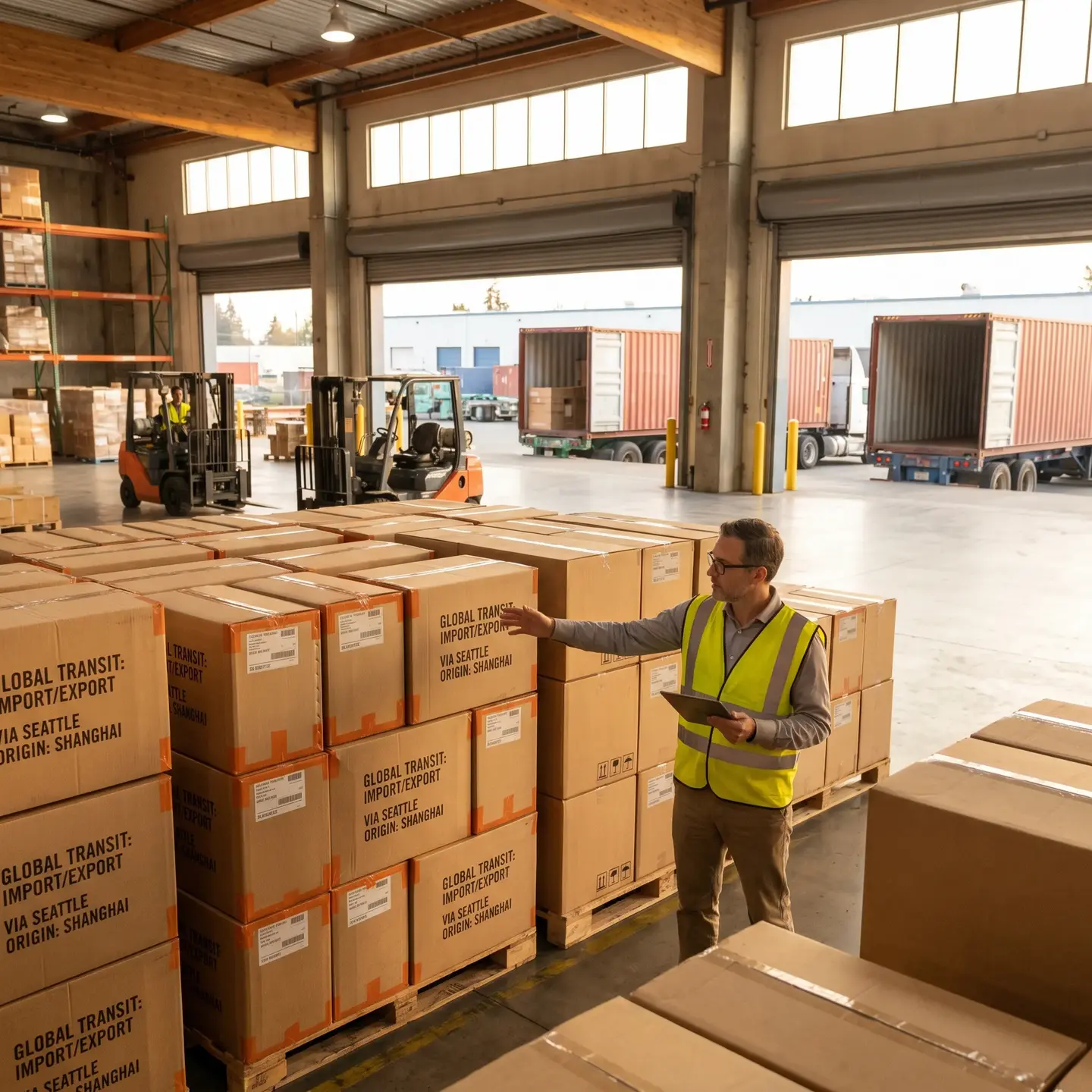
According to warehouse network optimization strategies research, positioning inventory across multiple corridors enables ground delivery to 80%+ of Canadian consumers within 1-2 business days.
Cross-Border Considerations
For US brands serving Canadian customers, warehouse positioning takes on additional strategic dimensions. Shipping cross-border from US facilities means customers face customs clearance delays, duty calculations, and unpredictable delivery timelines—particularly since the Section 321 de minimis suspension in August 2025.
Cross-border fulfillment for US brands through Canadian warehouse positioning eliminates these friction points. Inventory clears customs once during bulk import rather than per-order, and customers receive domestic shipping rates and speeds.
Canadian Warehouse Positioning: Strategic Considerations for Market Coverage
Canada presents specific geographic challenges that make warehouse positioning decisions consequential:
Population Concentration
Over 80% of Canada’s population lives within 150 kilometers of the US border, concentrated in major metropolitan corridors. This concentration means strategic warehouse positioning in 2-3 locations can reach most Canadian consumers with ground shipping.
Our facilities in Ottawa, Toronto, and Vancouver provide coverage across these corridors. Ottawa’s position near Montreal enables efficient service to Quebec markets with bilingual capabilities. Toronto serves the GTA and Ontario corridor. Vancouver covers Western Canada and provides advantages for brands sourcing products from Asia-Pacific suppliers. Learn more about ecommerce fulfillment in Vancouver.
Cross-Border Proximity Advantages
For US brands, Canadian warehouse positioning creates multiple strategic advantages:
- Customs efficiency: Bulk import shipments clear customs once rather than per-order
- Duty optimization: Products enter Canada before sale, enabling cleaner duty calculations
- Delivery consistency: Canadian customers receive domestic tracking and predictable delivery windows
- Returns simplicity: Canadian return addresses reduce friction and cost for reverse logistics
These advantages compound for brands with significant Canadian customer bases. The post-Section 321 environment makes in-country fulfillment increasingly attractive compared to cross-border shipping models.
Regulatory Compliance Positioning
Brands selling regulated products—natural health products, food and beverage, cosmetics—face additional positioning considerations. Warehouse facilities must maintain customs compliance capabilities including Health Canada and CFIA documentation, proper storage conditions, and audit-ready processes.
Positioning regulated product inventory in compliant Canadian facilities means products clear regulatory requirements before reaching customers. This is particularly important for US health and beauty brands entering Canadian markets where Health Canada requirements differ from FDA standards.
Evaluating Warehouse Capabilities: What Actually Matters
Beyond location, warehouse capabilities determine whether your operation can scale and maintain quality. Here is a framework for evaluating capabilities that impact business performance:
Receiving Capacity and Speed
How quickly inbound inventory becomes available for fulfillment affects your ability to maintain stock levels and respond to demand. Key questions:
- What is the average time from truck arrival to inventory availability?
- Can the facility handle container-scale receiving efficiently?
- What receiving appointment availability exists during peak seasons?
Storage Flexibility
Seasonal businesses need facilities that can scale storage allocation. Evaluate:
- How does the facility handle peak season capacity requirements?
- What flexibility exists in storage agreements for demand fluctuations?
- Are climate-controlled zones available for temperature-sensitive products?
Technology Integration
Real-time visibility across your ecommerce platforms and warehouse operations is foundational. Confirm:
- Direct integration with your ecommerce platform (Shopify, WooCommerce, BigCommerce, Amazon, NetSuite)
- Real-time inventory visibility and order status tracking
- Automated order routing and carrier selection capabilities
We maintain verified integrations with Shopify, Amazon, WooCommerce, BigCommerce, and NetSuite—not claimed compatibility, but documented integrations our operations team uses daily.
Compliance Capabilities
For regulated products, compliance infrastructure must be verifiable, not just claimed. Evaluate:
- What certifications does the facility hold, and what is their validity period?
- What compliance documentation can they provide for your product category?
- How do they handle Health Canada, CFIA, or other regulatory requirements?
Our Intertek SAI Global certification with 100% Superior rating (valid through August 2027) provides documented compliance for natural health products and ambient food items. We also fulfill cosmetics and personal care products in line with Health Canada requirements.
Carrier Relationships
Warehouse carrier partnerships directly affect shipping costs. According to distribution center operational benchmarks, facilities with diverse carrier relationships can reduce per-package costs by 8-15% through rate-shopping.
Our automated carrier rate-shopping across FedEx, UPS, Canada Post, Canpar, GLS, and UniUni ensures each package routes through the optimal carrier for cost and speed—not a single preferred carrier relationship that may not serve your specific shipping profile.
Distribution Capabilities That Drive Customer Experience
Distribution infrastructure translates warehouse positioning into customer-facing outcomes. Capabilities to evaluate:
Order Processing Speed
Same-day fulfillment capability determines how quickly orders move from placed to shipped. This affects whether you can offer next-day delivery options without expedited carrier premiums.
Orders received by 1:30 PM EST ship same-day from our facilities. This cutoff—later than many competitors—gives customers more of the day to place orders while still receiving same-day processing.
Carrier Network Breadth
Single-carrier operations limit delivery speed options and create vulnerability to carrier service disruptions. Multi-carrier capabilities enable:
- Delivery speed options (economy, standard, expedited) without premium surcharges
- Regional carrier optimization for specific delivery corridors
- Redundancy during carrier service interruptions
Final-Mile Partnerships
Last-mile delivery quality affects customer perception of your brand. Evaluate:
- What carriers service your primary customer regions?
- What delivery tracking visibility do customers receive?
- How does the facility handle delivery exceptions and customer inquiries?
Returns Infrastructure
Reverse logistics capabilities affect customer retention. Efficient returns processing—with clear return addresses, fast refund triggers, and inventory restocking—reduces friction that drives customers away after negative experiences.
Integrating Warehousing and Distribution for Cross-Border Commerce
For brands shipping internationally, warehouse positioning becomes even more consequential. The integration of warehousing and distribution capabilities determines whether cross-border commerce creates margin erosion or competitive advantage.
How Warehouse Location Affects Customs Clearance
When inventory positions in-country before sale, customs clearance happens once during bulk import rather than per-order. This eliminates customer-facing delays and unpredictable delivery timelines that characterize direct cross-border shipping.
For US brands, positioning inventory in Canadian warehouses means Canadian customers experience domestic shipping—no customs documentation, no duty calculations at delivery, no brokerage fees.
Inventory Positioning Strategy
The decision to pre-position inventory in foreign markets involves balancing import costs against delivery speed and customer experience. Key considerations:
- Demand predictability: Can you forecast Canadian demand accurately enough to position appropriate inventory levels?
- Import cost structure: Does bulk import reduce per-unit duty and shipping costs compared to per-order cross-border shipping?
- Working capital: Can your operation support inventory investment in a secondary market?
- Regulatory requirements: Does your product category require in-country compliance before sale?
The Post-Section 321 Environment
Since the Section 321 de minimis suspension in August 2025, US brands shipping to Canadian consumers face full duty exposure on cross-border shipments. This regulatory change significantly shifts the economics toward Canadian warehouse positioning.
Ecommerce fulfillment services from Canadian facilities eliminate per-order duty calculations and provide predictable cost structures that cross-border shipping no longer offers.
Evaluating Your Current Position
Apply this strategic framework to your current operation:
- Map your customer density: Where do 80% of your orders ship? Is your warehouse positioned to serve these customers with ground shipping?
- Calculate zone economics: What percentage of orders ship to zones 4+ from your current facility? What would repositioning inventory save per package?
- Assess delivery speed capability: Can you meet 2-day delivery expectations for your primary markets without expedited shipping premiums?
- Evaluate cross-border friction: If serving Canadian customers from US facilities, what is the customer experience impact of customs delays and duty calculations?
- Audit compliance infrastructure: Does your current warehousing partner have documented compliance capabilities for your product category?
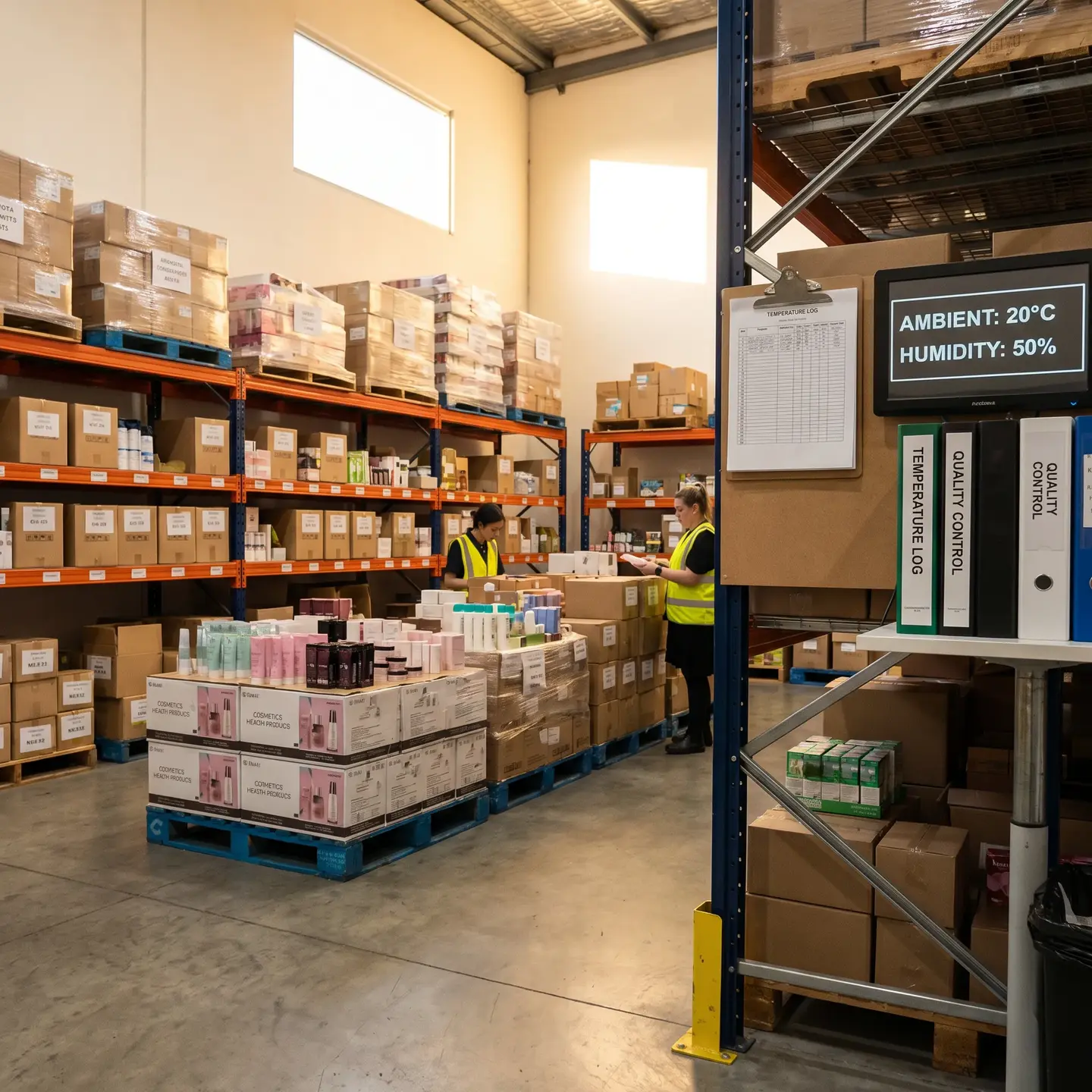
Strategic warehouse positioning is not a one-time decision. As your customer base evolves, demand patterns shift, and regulatory environments change, your distribution infrastructure must adapt. The brands that treat this as strategic infrastructure—continuously optimizing rather than setting and forgetting—build sustainable competitive advantages that compound over time.
We work with D2C brands processing 500+ orders monthly who recognize that warehouse positioning drives business outcomes. Our order fulfillment services in Canada are built around this principle — positioning inventory where it creates delivery speed and cost advantages rather than operational friction.
Frequently Asked Questions
Since the Section 321 de minimis suspension in August 2025, US brands shipping directly to Canadian consumers face full duty exposure on cross-border shipments. Positioning inventory in Canadian warehouses eliminates per-order duty calculations, enables bulk import customs clearance, and provides domestic shipping speeds—creating predictable cost structures that cross-border shipping no longer offers.
Single location works when 70%+ of orders ship within 2-day ground reach. Two locations make sense when serving distinct geographic markets with meaningful volume in each. Three+ locations are worth evaluating for continental markets where ground shipping from fewer locations can’t meet delivery speed requirements. For Canadian brands, positioning across Toronto, Montreal, and Vancouver enables 1-2 business day ground delivery to 80%+ of consumers.
Map where 80% of your orders ship and assess whether your facility can reach those customers with ground shipping. Calculate zone economics—what percentage of orders ship to zones 4+ and what per-package savings would repositioning achieve. Evaluate whether you can meet 2-day delivery expectations without expedited shipping premiums. If serving Canadian customers from US facilities, assess the customer experience impact of customs delays.
Four capabilities drive measurable outcomes: receiving capacity and speed, storage flexibility during peak seasons, technology integration for real-time visibility, and carrier relationships. Facilities with diverse carrier partnerships can reduce per-package costs by 8-15% through rate-shopping. For regulated products, compliance capabilities are equally critical—verify certifications and documentation rather than accepting claims.
Warehousing determines where inventory sits relative to customer demand—affecting availability, storage costs, and compliance positioning. Distribution determines how efficiently inventory moves from warehouse to customer—affecting delivery speed, transportation costs, and customer experience. Competitive advantage emerges when both are optimized together. A well-positioned warehouse with weak distribution still delivers poor results, and vice versa.

Scale Your Canada Fulfillment with Confidence.
Partner with Canada's premier 3PL to unlock faster shipping, lower costs, and seamless scalability for your ecommerce brand.
Talk to an Expert