
Fulfillment
Last Mile Delivery in Canada: Challenges, Costs, and How to Get Packages to Customers Faster
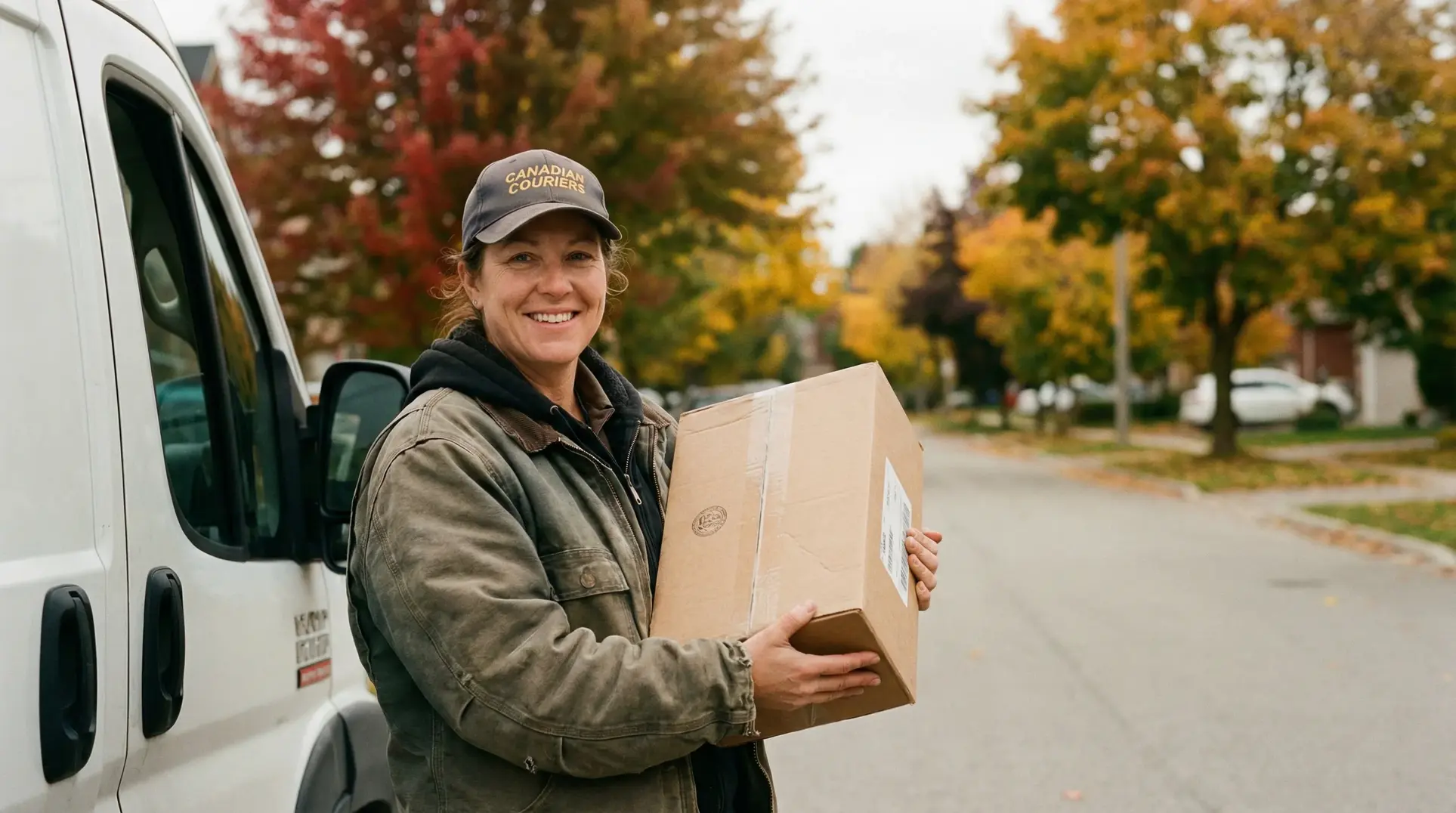
Getting packages into customers’ hands quickly and affordably represents one of the most complex challenges in Canadian ecommerce—and it’s the challenge that determines whether a brand earns repeat business or loses customers to competitors. Last mile delivery in Canada, the final leg of the shipping journey from a fulfillment center or local hub to the customer’s doorstep, accounts for up to 53% of total shipment costs according to industry research. It’s the most expensive, most visible, and most customer-sensitive part of the entire supply chain. For ecommerce businesses selling across Canada, understanding last mile delivery challenges and implementing strategies to overcome them isn’t optional—it’s the difference between sustainable growth and margin erosion that makes scaling impossible.
With fulfillment centers in Ottawa, Toronto, and Vancouver processing over 40,000 D2C orders every week, we’ve seen firsthand how the right fulfillment strategy transforms last mile performance. This guide breaks down what last mile delivery actually means, why it’s uniquely challenging in Canada, what drives those costs, and how smart fulfillment decisions upstream determine delivery speed and cost downstream.

Who This Guide Is For (And Who It Isn’t)
This article is designed for ecommerce operations managers, founders, and logistics leaders who sell to Canadian customers and want to:
- Reduce per-package shipping costs without sacrificing delivery speed
- Understand why Canadian last mile delivery operates differently than US logistics
- Evaluate how fulfillment location affects delivery performance
- Build carrier diversification strategies that prevent service disruptions
This guide is not for brands looking for quick fixes or single-carrier solutions. If you’re seeking a simple “use this carrier” recommendation, you won’t find it here—because that approach doesn’t work in Canada’s fragmented logistics landscape. We take a systems-based view: last mile delivery performance is determined by upstream fulfillment decisions, not just carrier selection.
What Is Last Mile Delivery?
Last mile delivery—also called final mile delivery—is the final stage of the shipping process: the journey from a distribution hub, fulfillment center, or local carrier facility to the customer’s doorstep. Unlike upstream logistics that move bulk freight between warehouses and regional facilities, last mile delivery handles individual packages destined for unique residential and business addresses.
The typical last mile delivery process follows five steps:
- Order entry: The order enters the fulfillment system and triggers pick, pack, and ship operations
- Hub arrival: The package reaches a transportation hub or local carrier facility
- Route assignment: Delivery personnel receive the package based on optimized route planning
- Scanning and loading: The package is scanned, loaded, and dispatched for delivery
- Customer delivery: The package reaches the customer with proof of delivery confirmation
What makes last mile delivery so significant? It’s the only part of the supply chain that customers directly experience. A package might travel flawlessly through international freight, customs clearance, and regional distribution—but if the last mile delivery fails, that’s what the customer remembers. Research from Deloitte shows that 68% of shoppers rank delivery speed as the main factor influencing purchasing decisions, and over 80% of consumers consider “fast” shipping to mean two days or less.
Why Last Mile Delivery in Canada Is Uniquely Challenging
Canada presents last mile delivery challenges that don’t exist—or exist at lesser scale—in the United States or Europe. Understanding these challenges is essential for any brand building a Canadian fulfillment strategy.
Geographic Vastness and Population Distribution
Canada is the second-largest country by land area with approximately 40 million people. The population density of roughly 4 people per square kilometer compares dramatically to 33 people per square kilometer in the United States. Most Canadians concentrate along a narrow corridor near the US border, but brands selling nationwide must still reach remote communities where delivery distances are extreme and carrier options are limited.
This creates a fundamental economic challenge: the infrastructure required to serve dispersed populations cannot generate the volume density needed to achieve low per-unit costs. No amount of operational optimization can overcome this basic math.
The Urban-Rural Divide
Approximately 80% of Canadians live in urban settings, but the remaining 20% spread across enormous territory. Last mile economics differ dramatically between:
- Downtown Toronto: Dense, multi-carrier competitive, same-day delivery viable
- Rural Northern Ontario: Limited carriers, long distances, significantly higher per-package costs
- Remote communities: Often only Canada Post provides service, with extended transit times
For ecommerce fulfillment operations, this means a single national shipping strategy rarely works. Different regions require different carrier selections, delivery expectations, and cost structures.

Carrier Landscape Fragmentation
Unlike the US where UPS, FedEx, and USPS dominate, the Canadian carrier market includes:
- Canada Post: The only carrier with universal coverage obligation
- FedEx and UPS: Strong for express and cross-border
- Purolator: Canadian-owned with extensive national coverage
- Canpar, GLS, UniUni: Regional and specialized options
- Regional players: Intelcom, TForce, Dragonfly, and others serving specific corridors
No single carrier is optimal for all Canadian destinations. The December 2024 Canada Post strike demonstrated why single-carrier dependence creates unacceptable business risk—brands relying solely on Canada Post experienced weeks of delivery disruption while competitors with multi-carrier strategies continued operating.
Bilingual Requirements
Packaging, shipping notifications, and customer communications must support both English and French, particularly for Quebec delivery. This isn’t merely a courtesy—it’s a regulatory and customer experience requirement that many non-Canadian logistics providers underestimate.
Weather and Seasonal Disruption
Canadian winters create delivery challenges that require contingency planning:
- Road closures affecting rural and remote routes
- Delivery delays during severe weather events
- Increased failed delivery attempts when customers can’t access mailboxes or porches
- Vehicle maintenance challenges for delivery fleets
Cross-Border Complexity Post-Section 321
The elimination of US Section 321 de minimis treatment on August 29, 2025 fundamentally changed economics for brands serving Canadian customers from US fulfillment centers. Previously, shipments under $800 USD could enter the US duty-free through simplified customs procedures. Now, all commercial shipments require formal entry procedures with duty assessment.
For Canadian brands with US customers, Section 321 compliance expertise has become essential. For US brands serving Canada, the new environment makes Canadian inventory positioning significantly more valuable—eliminating duties entirely for domestic Canadian orders while maintaining qualified access to US distribution.
Understanding Last Mile Delivery Costs in Canada
Last mile delivery costs compound from multiple factors, and understanding these drivers is the first step toward managing them effectively.
Primary Cost Drivers
- Distance from fulfillment center to customer (zone-based pricing): This is the largest controllable cost factor
- Package weight and dimensions: Dimensional weight calculations often exceed actual weight
- Carrier selection: Rates vary significantly between carriers for the same route
- Delivery speed: Express and same-day options carry substantial premiums over standard
- Failed delivery attempts: Industry estimates suggest failed delivery attempts cost $15–20+ per re-attempt
- Returns processing: Reverse logistics adds cost to every returned package
The Zone Positioning Insight
Here’s the insight that most last mile guides miss: the single most effective way to reduce last mile delivery costs is to position inventory closer to customers.
Fulfillment location determines shipping zone, and zone determines cost. A package shipped from Ottawa to Toronto crosses fewer zones than one shipped from Vancouver to Toronto. Carrier rate shopping optimizes within a zone, but zone selection is determined by where inventory sits before the order is even placed.
This is why fulfillment strategy—not just carrier strategy—determines last mile economics.
Cost Reduction Strategies That Work
- Distributed fulfillment: Position inventory in multiple locations near customer concentrations
- Carrier rate shopping: Automated comparison across carriers for every shipment
- Zone skipping: Consolidate shipments and induct them at local carrier hubs to skip intermediate zones
- Right-sized packaging: Reduce dimensional weight charges with appropriate box selection
- Volume consolidation: Batch shipments for carrier discount tiers
Research from McKinsey indicates that distributed fulfillment through micro-fulfillment centers can reduce transport costs by up to 30% while simultaneously cutting transportation carbon emissions by up to 26%.
Current Trends Shaping Last Mile Delivery in Canada
The Canadian last mile landscape is evolving rapidly. Understanding these trends helps brands make infrastructure decisions that remain competitive over multi-year horizons.
Multi-Carrier Strategy as Standard Practice
Relying on a single carrier is no longer viable for serious ecommerce operations. Brands need automated rate-shopping that selects the optimal carrier per shipment based on destination, speed requirement, and cost. The Canada Post strike demonstrated this clearly—brands with carrier diversification continued operating while single-carrier competitors lost weeks of delivery capability.
Same-Day and Next-Day Expectations
Consumers increasingly expect same-day or next-day delivery as standard options, not premium services. Consumer demand for rapid delivery in Canada continues accelerating. In 2024, Amazon introduced 7-hour same-day delivery windows across Southern Ontario and Metro Vancouver, resetting consumer expectations and prompting incumbents like Purolator to expand sortation capacity for sub-24-hour cycle times.
Meeting these expectations requires same-day fulfillment capability—orders processed and shipped the same business day they’re received—combined with fulfillment locations positioned close enough to major population centers to enable rapid last mile transit.
Real-Time Tracking and Visibility
Customer expectations for real-time tracking have become table stakes. Brands need unified tracking across multiple carriers, with automated status updates via SMS and email. The complexity of multi-carrier strategies makes centralized tracking visibility even more critical—customers don’t care which carrier delivers their package, they care about knowing when it will arrive.
Sustainability and Low-Emission Delivery
Electric vehicle fleets, cargo bikes, and carbon-neutral shipping options are gaining traction. Major Canadian carriers are investing heavily in EV infrastructure—Canada Post has committed to transforming its 14,000-vehicle last mile fleet to 100% electric by 2040, with a 50% electric target by 2030 and $1 billion earmarked for the transition. Consumer demand for sustainable delivery options continues rising, particularly among younger demographics.
Importantly, distributed fulfillment directly supports sustainability goals. Shorter delivery routes reduce emissions regardless of vehicle type. Positioning inventory closer to customers achieves environmental benefits while simultaneously reducing costs.
Technology-Driven Route Optimization
AI-powered route planning, predictive delivery windows, demand forecasting, and dynamic dispatch are becoming standard for carriers. Brands benefit indirectly through carrier partnerships that leverage these technologies—but the upstream benefit of distributed fulfillment remains: shorter routes are easier to optimize and less vulnerable to disruption.
How Fulfillment Strategy Determines Last-Mile Performance
This is the insight that separates effective last mile strategies from generic carrier optimization: the most impactful last mile decisions happen upstream, in fulfillment strategy.
Most last mile guides focus on what happens after the package leaves the warehouse—which carrier, which route, which vehicle. But where your inventory is stored determines the starting point for every delivery. A package that starts closer to the customer arrives faster and costs less, regardless of which carrier delivers it.
For brands selling across Canada, this means the choice of fulfillment partner—and specifically, the geographic distribution of that partner’s facilities—is the single most important last mile decision.
What Distributed Fulfillment Enables
With strategically positioned fulfillment centers in Ottawa, Toronto, and Vancouver, we position inventory within 1-2 day ground shipping of the vast majority of Canadian consumers. This distributed model delivers measurable outcomes:
- Reduced shipping zones: Lower per-package carrier costs
- Faster transit times: Same-day and next-day delivery becomes viable for more customers
- Lower carbon footprint: Shorter routes reduce emissions
- Carrier flexibility: Multiple facilities enable routing around regional carrier disruptions
Multi-Carrier Rate Shopping
We rate-shop across FedEx, UPS, Canada Post, Canpar, GLS, UniUni, and other carriers to select the optimal option for every package based on destination, speed requirement, and cost. This isn’t a single-carrier relationship—it’s true multi-carrier optimization that prevents dependence on any single provider.
Same-Day Fulfillment Capability
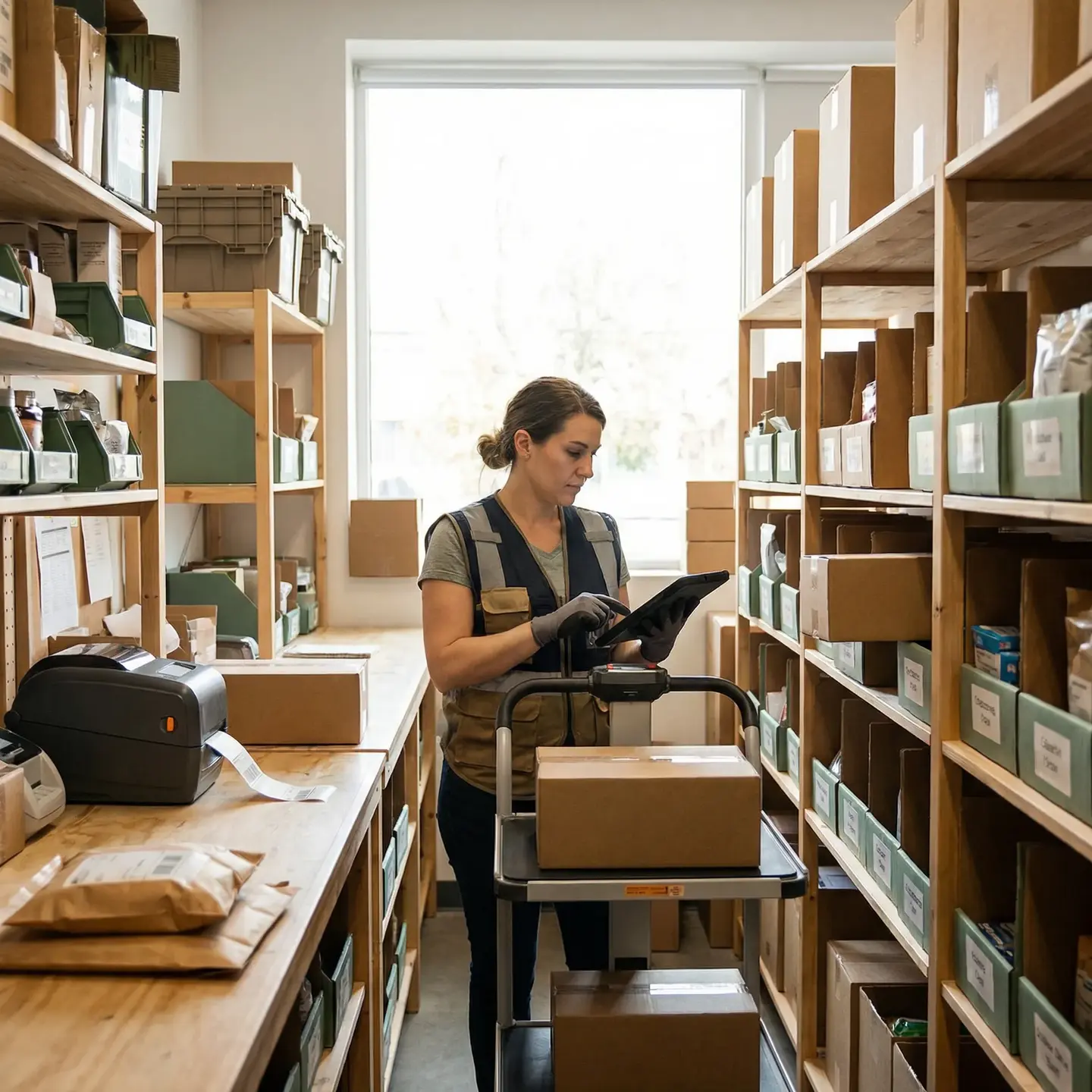
Orders received by 1:30 PM EST are picked, packed, and shipped the same business day. This means a morning order from a Toronto customer can be in transit the same afternoon, enabling next-day or even same-day delivery to nearby metro areas.
Seamless Platform Integration
Integration with Shopify, Amazon, WooCommerce, BigCommerce, NetSuite, and major ERP systems enables seamless order flow. No manual data entry delays between order placement and fulfillment—orders flow automatically from your sales channels into our fulfillment operations.
Cross-Border Expertise
For US brands expanding to Canada or cross-border sellers serving both markets, our understanding of post-Section 321 customs requirements supports efficient cross-border shipping. Canadian fulfillment positioning eliminates duties for domestic Canadian orders while maintaining qualified access to US distribution.
Specialized Handling and Compliance
For brands shipping health products, food, cosmetics, or other regulated items, last mile delivery must maintain compliance throughout the fulfillment and delivery chain. Our licensed handling for NHP, food, and cosmetics ensures that regulatory requirements don’t create last mile complications.
Choosing a Last Mile Delivery Partner in Canada
When evaluating last mile delivery solutions, consider these criteria that directly impact delivery performance and cost:
Geographic Coverage
- Can they reach all provinces, including remote and rural areas?
- Do they have facilities positioned near your customer concentrations?
- What’s their coverage for Canadian shipping specifically?
Carrier Diversity
- Are they locked into a single carrier relationship?
- Do they rate-shop across multiple carriers per shipment?
- How did they handle the Canada Post strike disruption?
Technology Integration
- Does their system connect to your ecommerce platform for automated order flow?
- Do they provide unified tracking across carriers?
- Can you access real-time inventory visibility?
Scalability
- Can they handle 3-5x volume surges during peak seasons?
- What’s their track record during holiday peaks and promotional events?
- Do they have excess capacity or are they already constrained?
Fulfillment-to-Delivery Integration
- Is last mile delivery coordinated with fulfillment operations?
- Or are fulfillment and delivery separate systems creating handoff delays?
- What’s the cutoff time for same-day shipping?
Regulatory Handling
- If you ship health, food, or cosmetics products, do they maintain compliance throughout?
- Are they licensed for the product categories you sell?
- Can they handle bilingual labeling and documentation requirements?
Sustainability Practices
- Do they offer or support low-emission delivery options?
- How does their distributed model affect carbon footprint?
- Can they provide sustainability reporting for your ESG requirements?
Taking the Next Step
Last mile delivery in Canada presents genuine challenges—geographic vastness, population dispersion, carrier fragmentation, and cross-border complexity all create obstacles that brands must navigate. But these challenges also create competitive advantage opportunities for businesses that approach last mile strategically rather than tactically.
The brands that succeed in Canadian ecommerce aren’t necessarily the ones with the lowest carrier rates or the fastest express options. They’re the ones that understand that last mile performance is determined upstream—by where inventory sits, by how fulfillment operations connect to delivery networks, by how carrier relationships are structured and managed.
We help brands transform their Canadian last mile performance through direct-to-consumer fulfillment that positions inventory closer to customers, multi-carrier optimization that selects the best option for every shipment, and same-day fulfillment capability that enables the delivery speeds customers expect.
If you’re evaluating how distributed Canadian fulfillment can reduce your last mile costs and improve delivery performance, we offer free fulfillment assessments that analyze your current fulfillment location, delivery speed, carrier costs, and customer distribution. Contact our team to get started.
Frequently Asked Questions
In major cities like Toronto and Vancouver, yes—with same-day fulfillment cutoffs around 1 PM EST and local hubs. Nationwide? No, rural areas lag due to distance, but distributed inventory gets 80% of customers next-day while cutting costs.[1]
Positioning inventory closer to customers, like in Ottawa, Toronto, and Vancouver hubs, reduces shipping zones—the biggest cost driver. This can slash transport costs by up to 30% via shorter routes, enabling faster 1-2 day ground delivery to most Canadians.[1][3]
Yes, since August 29, 2025, US shipments under $800 now face duties and formal customs, killing duty-free perks. Switch to Canadian fulfillment to eliminate duties on domestic orders and speed up delivery without border hassles.[1][3]
The December 2024 strike halted single-carrier brands for weeks while diversified ones kept shipping. Use multi-carrier rate shopping across Canada Post, FedEx, UPS, Purolator, and others to pick the best option per package and dodge disruptions.[1]
Canada’s vast land area and low population density—about 4 people per square kilometer—mean longer routes and fewer packages per stop, driving up costs to 53% of total shipping expenses. Urban areas like Toronto work fine, but rural spots spike per-package fees since carriers can’t spread costs over high volume.

Scale Your Canada Fulfillment with Confidence.
Partner with Canada's premier 3PL to unlock faster shipping, lower costs, and seamless scalability for your ecommerce brand.
Talk to an Expert