Fulfillment
Serving Western Canada: What Changes When Inventory Sits in British Columbia
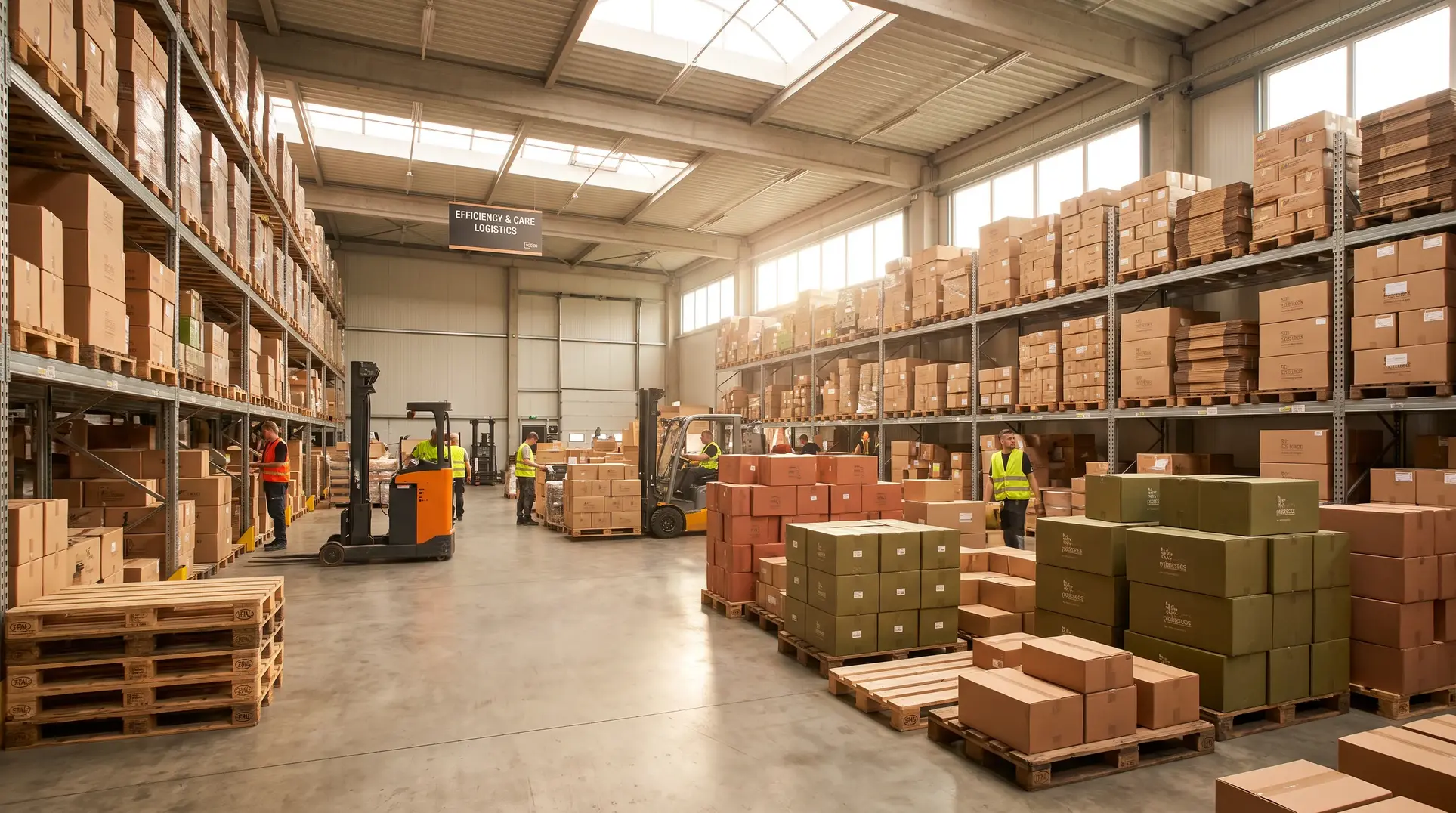
Positioning inventory in British Columbia fundamentally changes how your brand serves Western Canadian customers. The decision transforms cross-border parcel shipping into a Canadian domestic fulfillment operation, with faster delivery times, predictable checkout experiences, and access to domestic carrier networks. For operations managers evaluating whether a Vancouver node makes financial sense, the answer depends on quantifiable factors: your Western order concentration, average package characteristics, and the volume threshold where shipping savings offset dual-node complexity.
We work with established D2C brands processing significant order volumes who face this exact question. Through our eCommerce order fulfillment services across Ottawa, Toronto, and Vancouver, we have developed clear frameworks for evaluating when Western inventory positioning creates measurable value versus when it introduces unnecessary operational overhead.

Who This Article Is For
This analysis serves brands that meet specific criteria:
- You currently fulfill from Eastern Canada and ship meaningful volume to British Columbia and the Prairies
- You process 500+ orders monthly with established demand patterns
- You have the operational maturity to manage split inventory across multiple locations
- You make supply chain decisions based on data rather than assumptions
This article is not for brands shipping fewer than 100 orders monthly to Western Canada, companies without established Eastern fulfillment operations, or businesses seeking general 3PL selection guidance unrelated to network design.
Transit Time Reality: Eastern vs. Western Fulfillment Positions
The customer experience differential between Eastern and Western fulfillment is measurable in business days. When you ship from Ontario or Quebec to Western Canadian destinations, packages traverse multiple carrier zones and accumulate transit time at each stage.
Ground Delivery Comparisons by Market
Canada Post treats British Columbia, Alberta, Saskatchewan, and Manitoba as the Western region. Published service standards for ground shipping reveal the following patterns:
- Vancouver Metro: Shipping from Toronto typically requires 4-6 business days via Regular Parcel; from a BC node, 1-2 business days
- Victoria: Eastern origin adds 5-7 business days; Western origin delivers in 2-3 business days
- Calgary/Edmonton: Toronto origin requires 4-5 business days; BC origin delivers in 2-3 business days
- Saskatoon/Regina: Eastern fulfillment requires 4-6 business days; Western origin requires 3-4 business days
- Winnipeg: Both Eastern and Western origins show similar transit times of 4-5 business days, making this market neutral for positioning decisions
For Expedited Parcel and Express services, the differential narrows but remains meaningful. Priority and Xpresspost can achieve next-day delivery between major Western urban centres when inventory sits in BC, while the same services from Eastern Canada typically require 2-3 business days to Vancouver.
What Transit Times Mean for Conversion
Research consistently shows that delivery speed affects purchase decisions. Six in ten Canadian online shoppers expect orders fulfilled within two days, and 78% identify free shipping as the top factor influencing their purchase. A BC fulfillment position allows you to offer competitive delivery promises to Western customers without premium carrier surcharges. Ground service from Vancouver can match or beat express service from Toronto at a fraction of the cost.
Remote and northern destinations remain challenging regardless of node location. Northern BC, northern Alberta, rural Saskatchewan, and the territories can require 6-14 business days even from a Western warehouse. Your checkout logic should set postal-code-specific delivery promises rather than blanket Western Canada timelines.
Zone-Based Shipping Cost Structure for Western Canada
Carrier pricing follows zone classifications that directly reflect distance from origin. Understanding this structure reveals where Western inventory positioning creates per-package savings.
How Zone Pricing Works
Major carriers divide Canada into geographic zones. Each additional zone typically adds $1-4 per package depending on weight and service level. When you ship from Toronto to Vancouver, packages cross multiple zone boundaries. When you ship from Vancouver to Vancouver, you operate within the local zone.
The Canada Post zone-based rate structure demonstrates this clearly. A 2 kg Regular Parcel from Toronto to Vancouver (approximately Zone 7-8) costs significantly more than the same parcel shipped locally within BC (Zone 1-2).
Cost Differentials by Package Characteristics
The savings magnitude varies based on:
- Actual Weight: Heavier packages see larger absolute savings per zone eliminated
- Dimensional Weight: Light, bulky items often rate higher than actual weight. Canada Post uses density factors of 5,000 cm³/kg for Priority/Xpresspost and 6,000 cm³/kg for Regular Parcel
- Service Level: Express services show larger zone-based differentials than economy options
- Destination Density: Urban BC destinations (Vancouver, Victoria, Kelowna) show cleaner savings than rural or remote locations
Surcharges compound the zone effect. Current fuel surcharges run approximately 47.5% for Canada Post domestic services. Residential delivery surcharges, extended area fees, and peak-season premiums apply regardless of origin, but they apply to a smaller base rate when you eliminate zones.
Example Cost Comparison
Consider a typical D2C package: 1.5 kg actual weight, 30 cm × 25 cm × 15 cm dimensions, shipped via Expedited Parcel to a residential Vancouver address.
- From Toronto: Base rate approximately $18-22 plus fuel surcharge and residential fee
- From Vancouver: Base rate approximately $12-14 plus fuel surcharge and residential fee
- Per-Package Savings: $4-8 depending on negotiated rates
At 500 Western orders monthly, this translates to $2,000-4,000 in monthly shipping cost reduction, before accounting for reduced transit time enabling cheaper service levels.
The Volume Threshold Calculation: When a Second Node Pays for Itself
Shipping savings alone do not justify Western inventory. A second fulfillment node introduces costs that must be offset before the decision becomes financially sound.
Incremental Costs of Dual-Node Distribution
Operating inventory in two locations adds:
- Receiving Costs: Inbound processing at the Western facility, including inspection, put-away, and inventory reconciliation
- Storage Costs: Monthly pallet or cubic-foot charges for Western inventory allocation
- Inventory Carrying Cost: Capital tied up in duplicate safety stock across locations
- Stock Transfer Logistics: Costs to rebalance inventory between nodes when demand shifts
- Minimum Volume Commitments: Many 3PLs require minimum monthly order volumes per location
- Split-Order Complexity: Orders containing both Eastern and Western inventory may require consolidation or multiple shipments
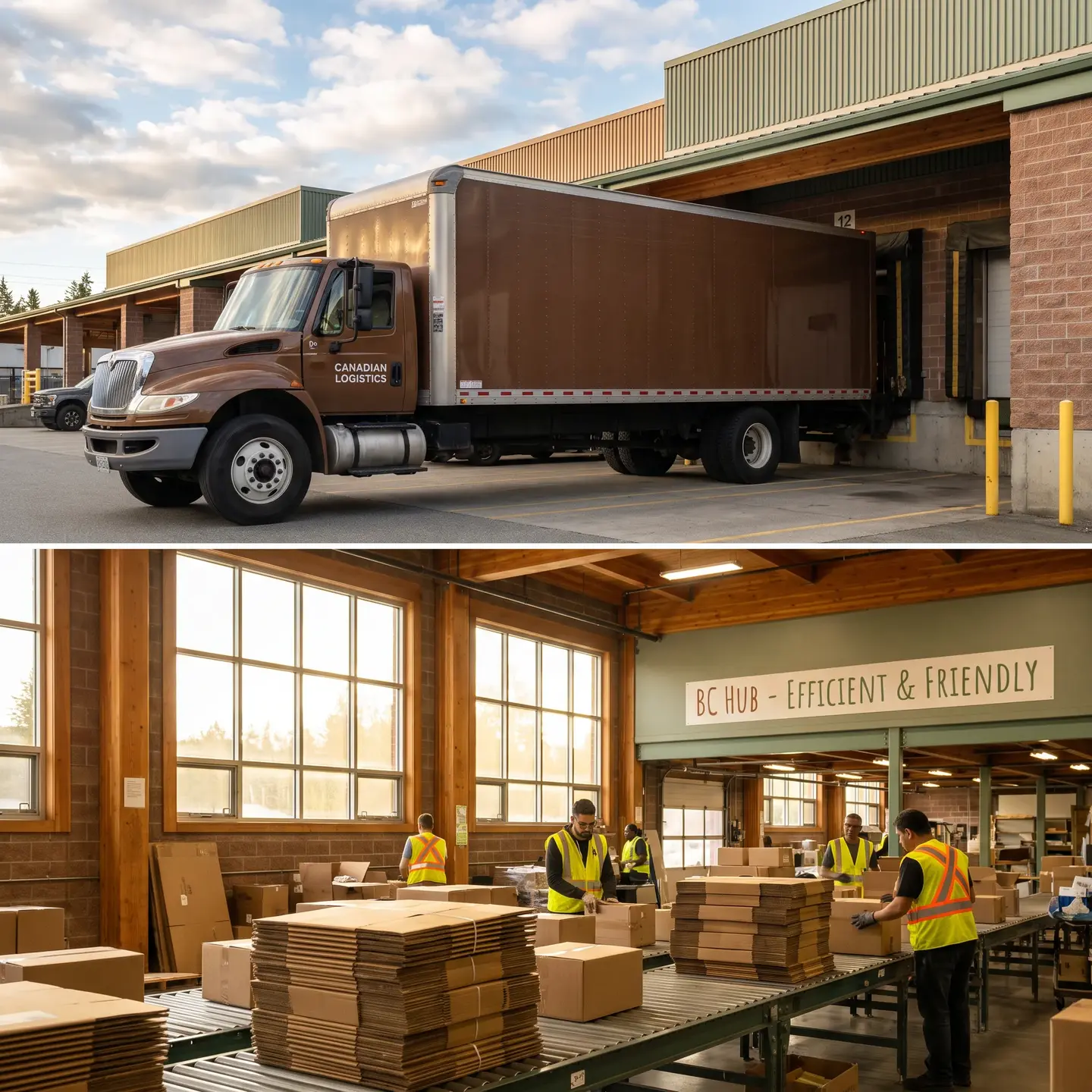
Break-Even Framework
The basic calculation compares monthly shipping savings against monthly incremental operating costs:
Monthly Shipping Savings = (Western Orders × Average Per-Package Savings)
Monthly Incremental Costs = Storage + Receiving Allocation + Inventory Carrying + Minimum Fees
When Monthly Shipping Savings > Monthly Incremental Costs, a Western node creates value.
Variables That Shift the Threshold
Your specific break-even point depends on:
- Western Order Concentration: If 40% of your Canadian orders ship to BC and Alberta versus 15%, the math changes dramatically
- Average Package Weight: Heavier products show larger zone-based savings, lowering the volume threshold
- SKU Count: Brands with 50 SKUs face different inventory allocation challenges than brands with 500 SKUs
- Inventory Turn Rate: Fast-turning inventory reduces carrying cost penalties from split stock
- Seasonal Concentration: If Western demand spikes align with capacity constraints, the threshold may need buffer adjustment
Scenario Examples
Scenario A: A health and beauty brand ships 1,200 orders monthly to Canada, with 35% (420 orders) destined for BC and Alberta. Average package weight is 1.8 kg with $5.50 per-package savings from Western positioning. Monthly shipping savings: $2,310. If incremental Western operating costs total $1,800 monthly, the node generates $510 in net monthly value.
Scenario B: A supplement brand ships 600 orders monthly to Canada, with 20% (120 orders) to Western destinations. Average savings per package is $4.00. Monthly shipping savings: $480. If minimum Western operating costs exceed $800 monthly, the node destroys value until volume increases.
Inventory Positioning Strategy: Split-Stock Considerations
Deciding to establish Western inventory is the first decision. Deciding what inventory to position West is equally important.
SKU Selection Criteria
Not every product belongs in both locations. Evaluate SKUs against:
- Velocity: High-volume SKUs justify the forecasting effort and reduce stockout risk from split inventory
- Margin: Products with higher contribution margins can absorb carrying cost penalties
- Replenishment Lead Time: Items with long supplier lead times need careful allocation to avoid Western stockouts
- Shelf Life: Dated products (NHPs, food, cosmetics) require FEFO management at each location, and split stock increases expiry risk
- Size/Weight: Heavy or bulky items show the strongest shipping savings and should be prioritized for Western positioning
Allocation Approaches
Three common models exist:
- Full Catalog West: Mirror your entire SKU range at both locations. Maximum service flexibility but highest inventory investment and complexity.
- Top-Sellers West: Position only your 20-30 highest-velocity Western SKUs in BC. Lower investment but some orders require Eastern fulfillment or split shipments.
- Product-Line Segmentation: Allocate specific product categories (e.g., all supplements in BC, all accessories in Ontario) based on category-level Western demand.
Most brands begin with the Top-Sellers approach, expanding Western SKU coverage as demand patterns validate the model.
Port Proximity and Inbound Logistics for Import-Heavy Brands
Vancouver’s position as Canada’s Pacific gateway creates additional strategic value for brands importing from Asia.
The Gateway Advantage
The Port of Vancouver handled a record 170.4 million tonnes and 3.779 million TEUs in 2025, with container volume rising 9% year over year. For brands sourcing from China, Vietnam, Korea, or other Asian markets, Vancouver offers the shortest ocean transit to North American soil.
Direct Vancouver receiving versus Eastern transload affects your supply chain in several ways:
- Container Drayage: Moving containers from port to warehouse within Metro Vancouver costs less than rail or truck transload to Eastern facilities
- Transit Time: Eliminating cross-Canada rail transit can reduce inbound lead time by 5-10 days
- Handling Touchpoints: Fewer transfers mean fewer damage opportunities and inventory reconciliation issues
- Cash Flow: Faster receiving means faster availability for sale
Considerations for Port-Direct Operations
Receiving directly at a Vancouver warehouse requires:
- Customs clearance coordination with your broker at the port of entry
- Drayage scheduling to manage appointment windows and avoid demurrage
- Receiving capacity aligned with container arrival schedules
- Quality inspection protocols appropriate for your product category
The Prince Rupert alternative, with 885,797 TEUs and 20% container growth in 2025, offers another Pacific option, particularly for rail-connected replenishment to Alberta or points east.
Cross-Border Implications: US Brand Considerations
US-based brands using Canadian fulfillment to serve Canadian customers face additional complexity when evaluating Vancouver positioning. Our cross-border fulfillment capabilities address these specific requirements.
What Changes for International Brands
When inventory moves into Canada, the brand typically becomes the importer of record, accepting CBSA import compliance requirements including:
- Customs Classification: Proper HS code assignment for every SKU, with duties and taxes calculated accordingly
- CARM Registration: The CBSA Assessment and Revenue Management system became mandatory for commercial imports in October 2024
- GST/HST Registration: Non-resident vendors selling goods located in Canadian fulfillment warehouses may be required to register under the normal GST/HST system
- Product Admissibility: Health Canada, CFIA, or other regulator requirements must be satisfied before goods can enter commerce
Why Bulk Import Improves Customer Experience
Canadian courier de minimis thresholds are limited. Direct US-to-Canada consumer shipments are duty- and tax-free only to C$40; shipments between C$40.01-C$150 are duty-free but taxable. This creates unpredictable charges at delivery that damage customer experience.
Bulk import into Canadian inventory converts these parcel-level surprises into merchant-controlled landed cost. You can offer duty-paid pricing with predictable checkout totals, eliminating delivery-time collection fees and customs delays.
The Section 321 Reality
Note that the United States suspended duty-free de minimis treatment for inbound shipments on August 29, 2025. This affects return logistics and any US-bound fulfillment from Canadian inventory. US-bound shipping remains available, but the economics changed significantly: formal customs entries, duties, and fees now apply regardless of shipment value.
Phased Expansion: Testing Western Fulfillment Before Full Commitment
A risk-managed approach to Western expansion reduces downside while validating the business case.
Phase 1: Baseline Measurement (4-6 Weeks)
Before committing to Western inventory, establish clear metrics from your current Eastern-only operation:
- Western order count by province and postal code prefix
- Average package weight and dimensions for Western orders
- Current shipping cost per Western order by carrier and service
- Current transit time performance versus delivery promise
- Western customer complaints related to delivery speed or cost
Phase 2: Partial SKU Allocation (8-12 Weeks)
Position your 10-20 highest-velocity Western SKUs in a BC facility:
- Monitor fill rate from Western inventory versus Eastern backfill
- Track per-order shipping cost differential
- Measure transit time improvement
- Document inventory carrying cost and stockout frequency
Phase 3: Expansion Decision (Ongoing)
Use Phase 2 data to inform full expansion:
- If savings exceed costs with partial SKUs, expand Western catalog coverage
- If stockouts or carrying costs erode savings, adjust allocation methodology
- If volume grows, revisit the break-even calculation with updated figures
Key Performance Indicators to Track
Throughout the phased approach, monitor:
- Cost per Western Order: Total fulfillment and shipping cost divided by Western orders
- Delivery Promise Achievement: Percentage of Western orders delivered within the promised window
- Inventory Turns by Location: How quickly Western stock moves versus Eastern
- Western Customer Satisfaction: Delivery-related feedback and repeat purchase rates
- FEFO Compliance: For dated products, percentage of units shipped within acceptable shelf-life parameters
Operational Requirements for Regulated Products
Brands in health, beauty, food, and NHP categories face additional Western inventory considerations beyond shipping economics.
Natural Health Products
Before an NHP can be sold in Canada, it requires a product licence (NPN), and the importer must hold a site licence. Storage and distribution facilities are not licensable activities, but they remain subject to Part 3 GMP requirements. A BC warehouse handling NHPs should provide:
- Documented temperature and humidity monitoring
- Lot and expiry tracking with FEFO allocation
- Rapid lot-level recall capability
- Records retained for one year after product expiry
Food Products
Food importers generally require an SFC licence, a preventive control plan, and evidence that foreign suppliers provide protections comparable to Canadian requirements. Warehouse requirements include sanitation controls, temperature monitoring, allergen separation, and traceability records available within 24 hours of CFIA request.
Cosmetics
Cosmetics require notification to Health Canada within ten days of first Canadian sale. New fragrance-allergen disclosure rules expanded in April and August 2026, requiring updated formulation tracking and label version control.
For all regulated categories, split inventory across multiple locations multiplies compliance touchpoints. Each facility needs appropriate documentation, monitoring systems, and quality agreements.
Making the Decision
The strongest case for BC inventory positioning exists when:
- Your Western Canadian order concentration exceeds 25-30% of total Canadian volume
- Your average package characteristics show meaningful zone-based savings ($4+ per package)
- Your volume exceeds the threshold where shipping savings offset incremental operating costs
- Your product category benefits from Western port proximity for Asian sourcing
- Your customer feedback indicates delivery speed affects conversion and satisfaction
The case weakens when:
- Western orders represent less than 15% of Canadian volume
- Your SKU count creates unmanageable split-inventory complexity
- Your products have short shelf life with FEFO requirements that dual-node distribution complicates
- Your volume falls below minimum commitment thresholds that make the economics unfavorable
We operate fulfillment centres in Ottawa, Toronto, and Vancouver specifically to serve brands at different stages of this network expansion journey. For operations managers ready to model the specific economics of Western inventory positioning, the framework above provides the quantitative foundation for a data-driven decision rather than an assumption-based gamble.
Frequently Asked Questions
For a typical 1.5 kg package shipped to Vancouver, positioning inventory locally may save approximately $4–8 per order compared with shipping from Toronto.
It typically makes sense when Western Canada represents over 25–30% of your Canadian orders and per-package shipping savings exceed the node’s added storage, receiving, inventory, and minimum-fee costs.
It can reduce delivery times to major BC and Alberta cities, but remote and northern destinations may still require 6–14 business days. Use postal-code-specific delivery promises rather than one blanket Western estimate.
Confirm importer-of-record responsibilities, HS classification, duties, taxes, GST/HST obligations, and CARM registration before moving inventory into a Canadian warehouse.
Start with high-velocity, high-margin, heavy or bulky SKUs that have predictable Western demand. Avoid duplicating slow-moving or short-shelf-life products until the model is validated.

Scale Your Canada Fulfillment with Confidence.
Partner with Canada's premier 3PL to unlock faster shipping, lower costs, and seamless scalability for your ecommerce brand.
Talk to an Expert