Fulfillment
NHP Fulfillment in Canada: Compliance Requirements for Natural Health Products

Fulfilling natural health products in Canada requires more than standard warehouse operations—it demands specialized infrastructure, documented compliance systems, and deep understanding of Health Canada’s regulatory framework. For nutraceutical and supplement brands, the difference between a compliant NHP fulfillment partner and a general ecommerce warehouse can determine whether products reach customers safely or trigger costly recalls and regulatory penalties. At Ottawa Logistics Fulfillment, we process thousands of regulated health product orders weekly through our Regulated Products program, maintaining the Intertek SAI Global certification with a 100% Superior rating that validates our compliance infrastructure. This article examines what NHP fulfillment actually requires from an operational perspective—the facility certifications, storage protocols, tracking systems, and documentation processes that separate truly compliant partners from those making superficial claims.
Who This Article Is For—and Who It Isn’t
This content is designed for operations managers, supply chain directors, and founders at nutraceutical and supplement brands who already understand that NHPs require different handling than standard consumer goods. You’re likely processing 500 or more orders monthly, you’ve obtained your Natural Product Numbers (NPNs), and now you need a fulfillment partner who can maintain compliance at scale while delivering the speed and integration capabilities modern D2C brands require.

This article is not for brands in the early stages of product development seeking guidance on the NPN application process or formulation compliance—those are manufacturer responsibilities outside the fulfillment scope. It’s also not for low-volume sellers who can manage inventory in-house or brands selling non-regulated consumer goods who don’t need the specialized infrastructure we describe here.
Understanding Natural Health Products in Canada’s Regulatory Framework
Health Canada introduced the Natural Health Products Regulations (NHPR) under the Food and Drugs Act on January 1, 2004, creating a distinct regulatory category with tailored rules that govern everything from product authorization to post-market surveillance. NHPs encompass a wide range of products that your brand likely manufactures or distributes:
- Vitamins and minerals
- Probiotics and digestive health supplements
- Herbal remedies and botanical extracts
- Homeopathic medicines
- Traditional medicines including Ayurvedic and Traditional Chinese Medicine products
- Amino acids and protein supplements
- Essential fatty acids and omega supplements
While obtaining an NPN remains your responsibility as the product holder, fulfillment operations must support ongoing compliance through proper handling, storage, documentation, and distribution protocols. The regulatory framework doesn’t end at product registration—it extends throughout the entire supply chain, including every facility that stores, handles, or ships your products to Canadian consumers.
This distinction matters because many 3PLs conflate “handling NHPs” with simply receiving and shipping supplement bottles. The NHPR creates specific obligations for any facility involved in the distribution chain, and your brand’s compliance exposure extends to the partners you select. According to Health Canada’s Natural and Non-prescription Health Products Directorate, the nutraceutical market in Canada continues expanding, with projected growth of 5.62% over the next five years—making compliant fulfillment infrastructure increasingly critical for brands positioning themselves in this market.
Health Canada Site Licensing and GMP Requirements for NHP Fulfillment Facilities
The foundation of compliant NHP fulfillment is facility-level certification. Health Canada requires any establishment involved in manufacturing, packaging, labeling, or importing NHPs to hold a valid site license. For fulfillment operations, this requirement extends to facilities that store and distribute licensed natural health products, particularly when any repackaging, kitting, or labeling activities occur.
What Site Licensing Actually Means for Fulfillment
A Health Canada site license isn’t a one-time paperwork exercise—it represents ongoing operational standards that facilities must maintain and document. According to Health Canada’s Site Licensing bulletin, licensed facilities must demonstrate:
- Physical facility standards including cleanliness, pest control, environmental controls, and adequate space for proper product segregation
- Quality management systems documenting procedures for receiving, storage, distribution, and recall management
- Staff training programs ensuring personnel understand GMP requirements and their specific responsibilities
- Record-keeping systems maintaining traceability documentation for every product that moves through the facility
- Security measures preventing unauthorized access and protecting product integrity
Good Manufacturing Practices in Distribution
GMP compliance in fulfillment operations focuses on preventing contamination, mix-ups, and errors that could compromise product safety or efficacy. Your NHP fulfillment partner should maintain documented procedures covering:
- Receiving protocols that verify incoming shipments against documentation and inspect for damage or temperature excursions
- Storage assignments that segregate NHPs from non-regulated products and prevent cross-contamination
- Picking and packing procedures that verify correct products and quantities while maintaining lot-level traceability
- Shipping protocols that protect product integrity during transit
- Deviation handling processes for addressing any non-conformance issues
The critical question for brands evaluating potential partners: Can the facility provide documentation of their Health Canada site license, their most recent audit results, and their GMP compliance procedures? Any hesitation or inability to produce this documentation should raise immediate concerns about actual versus claimed capabilities.
Storage and Handling Requirements: Temperature Control and Environmental Monitoring
Not all NHPs require the same storage conditions, but many nutraceutical products are significantly more sensitive than standard consumer goods. Temperature, humidity, and light exposure can all impact product stability and efficacy—and shipping compromised products to consumers creates both regulatory exposure and brand reputation damage.

Temperature-Controlled Storage for Sensitive Products
Consider the diverse storage requirements across common NHP categories:
- Probiotics often require refrigerated storage between 2-8°C to maintain viable colony counts
- Certain vitamins (particularly B vitamins and vitamin C) degrade more rapidly at elevated temperatures
- Botanical extracts and herbal tinctures may be sensitive to light exposure and temperature fluctuations
- Protein powders and amino acid supplements can be affected by moisture and humidity
- Essential fatty acids and omega supplements are susceptible to oxidation at higher temperatures
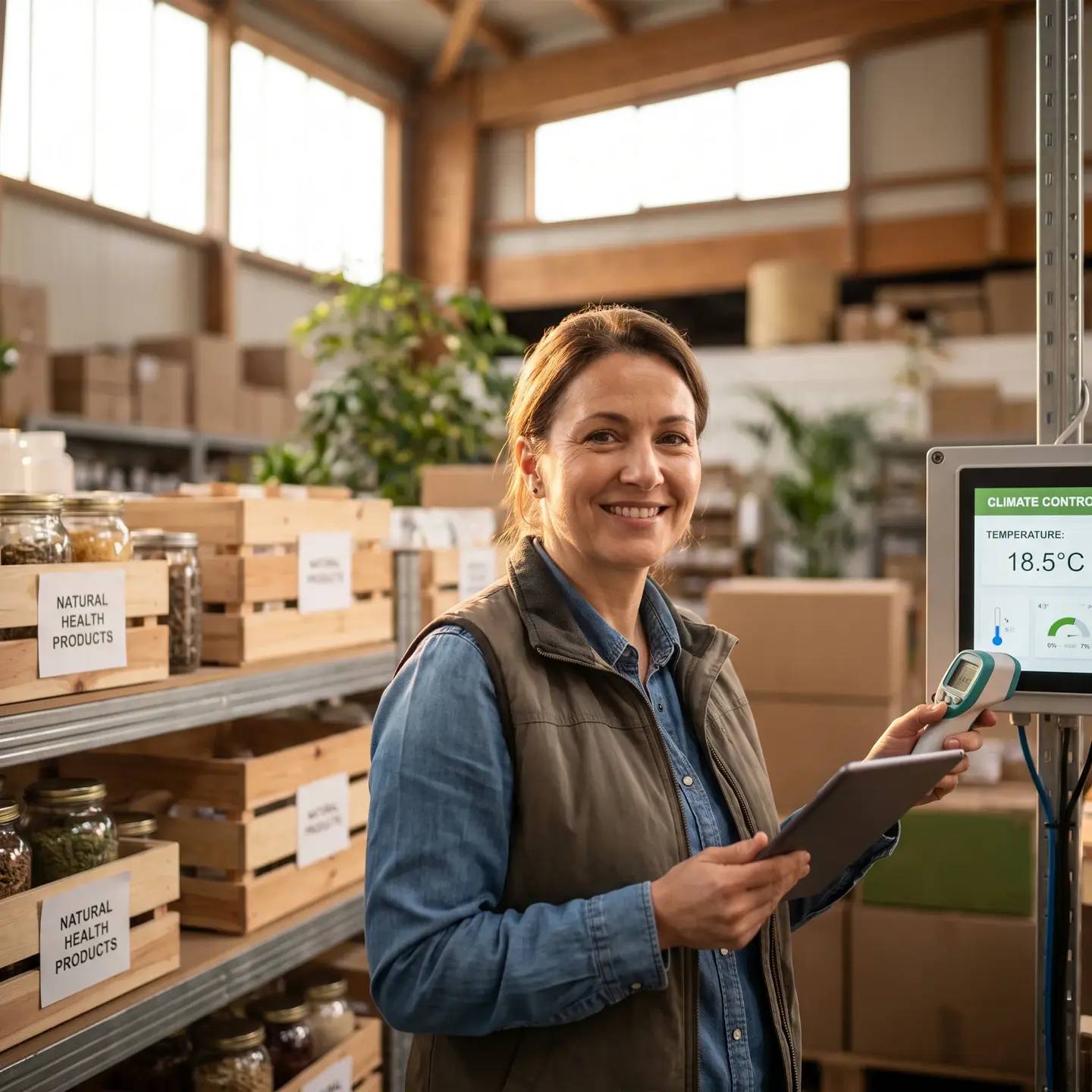
Our climate-controlled warehousing maintains dedicated zones for temperature-sensitive NHPs, with continuous monitoring systems that alert staff to any deviations before product integrity is compromised.
Environmental Monitoring Systems
Compliant NHP storage requires more than a thermostat—it demands documented monitoring with recorded data that demonstrates consistent maintenance of required conditions. Your fulfillment partner should provide:
- Continuous temperature and humidity logging with electronic records
- Automated alerts when conditions approach or exceed acceptable ranges
- Regular calibration of monitoring equipment with documented verification
- Backup systems and emergency procedures for equipment failures
- Historical data retention that supports regulatory inquiries or audits
This infrastructure exists not just to satisfy regulatory checkboxes but to protect your products and your customers. When a probiotic supplement loses efficacy because of temperature excursions during storage, your brand reputation suffers regardless of where the failure occurred in the supply chain.
Lot Tracking, Expiration Management, and FEFO Protocols
Lot-level traceability and expiration management represent perhaps the most significant operational differences between standard ecommerce fulfillment and compliant NHP distribution. These systems directly support your recall management capabilities and post-market surveillance obligations under Health Canada’s framework.
Why Lot Tracking Matters Beyond Compliance
When Health Canada issues a recall—or when your own quality systems identify a product issue—you need immediate answers to critical questions:
- Which specific lots are affected?
- Where is remaining inventory from those lots located?
- Which customers received products from affected lots?
- Can you rapidly remove affected inventory from active stock?
Without lot-level tracking through your fulfillment operation, these questions become nearly impossible to answer quickly and accurately. Your recall response stretches from hours to days, regulatory exposure increases, and customer safety may be compromised.
FEFO: First-Expired-First-Out Picking Protocols
First-Expired-First-Out (FEFO) picking ensures that inventory with the nearest expiration dates ships first, preventing situations where newer inventory sits in the warehouse while older product expires on the shelf. This protocol requires warehouse management systems capable of:
- Capturing expiration dates during receiving and associating them with specific inventory locations
- Automatically directing pickers to the oldest acceptable inventory for each order
- Blocking expired or soon-to-expire inventory from allocation before problems reach customers
- Generating reports on inventory aging to support purchasing and promotional decisions
The customer experience implications are substantial. Receiving a supplement with only two months remaining on the expiration date—when you purchased a 90-day supply—generates returns, complaints, and lost trust. FEFO protocols prevent these scenarios while ensuring your inventory turns efficiently and waste is minimized.
System Requirements for Compliant Inventory Management
Your NHP fulfillment partner’s warehouse management system should support:
- Lot-level receiving that captures manufacturer lot numbers, production dates, and expiration dates during inbound processing
- Location tracking that associates lot information with specific bin, shelf, or pallet positions
- FEFO picking logic built into order allocation rather than relying on manual picker judgment
- Expiration alerts that identify inventory approaching dates when it should no longer ship
- Quarantine capabilities that can immediately remove affected lots from active inventory
- Real-time visibility through your ecommerce platform integration so inventory data reflects lot-level accuracy
Our regulated product fulfillment capabilities incorporate these systems as core infrastructure, not optional add-ons, because NHP compliance cannot be achieved without them.
Documentation, Labeling, and Packaging Requirements in Fulfillment Operations
The final compliance layer before products reach customers involves documentation verification, labeling compliance, and packaging standards that maintain product integrity through transit.
Labeling Verification Before Shipment
All NHPs sold in Canada must bear compliant labels including the eight-digit Natural Product Number (NPN) or DIN-HM, bilingual information in English and French, proper health claims, and required warnings or contraindications. According to Health Canada’s labeling guidance, fulfillment operations should include verification checkpoints that confirm:
- NPN numbers match the products being shipped
- Labels are intact, legible, and properly affixed
- Required bilingual information is present for products sold to Canadian consumers
- No damage or alteration has occurred to original manufacturer labeling
These verification steps protect your brand from the consequences of shipping non-compliant products—whether due to manufacturer labeling errors or damage during transit and storage.
Shipping Documentation Requirements
Compliant NHP fulfillment maintains documentation trails that support traceability and regulatory inquiry response:
- Lot numbers associated with each shipment
- Ship dates and carrier information
- Customer identification enabling recall notification if necessary
- Temperature monitoring data for cold-chain products during transit
Packaging Standards for Product Integrity
Packaging must protect NHP integrity during shipping while maintaining compliance with any specific requirements for your product category. This includes appropriate cushioning to prevent breakage, temperature protection for sensitive products during seasonal extremes, and light protection for photosensitive formulations.
Evaluating NHP Fulfillment Partners: Questions to Ask and Capabilities to Verify
Selecting a fulfillment partner for NHPs requires due diligence beyond standard 3PL evaluation. Use this framework to assess whether potential partners have actual compliance infrastructure or simply marketing claims.
Facility Licensing Verification
Ask directly and expect documentation:
- Can you provide your current Health Canada site license number and expiration date?
- What activities are authorized under your license (storage, distribution, packaging, labeling)?
- When was your most recent Health Canada inspection and what were the results?
- Do you hold any third-party quality certifications (like our Intertek SAI Global 100% Superior rating)?
System Capabilities Assessment
Verify that their technology supports NHP requirements:
- Does your WMS capture lot numbers and expiration dates at receiving?
- How does your system enforce FEFO picking protocols?
- Can you demonstrate real-time inventory visibility with lot-level detail?
- What integrations do you support for our ecommerce platform (Shopify, WooCommerce, BigCommerce)?
- How would you execute a lot-specific recall, and how quickly?
Operational Experience Questions
Understand their actual NHP handling experience:
- What percentage of your current volume involves NHPs or other regulated health products?
- What specific NHP categories do you regularly handle (probiotics, herbal products, vitamins)?
- How do you train staff on GMP requirements specific to NHP handling?
- Can you provide references from current NHP brand clients?
Scalability and Value-Added Services
Ensure they can grow with your brand:
- What volume capacity do you have for peak season fluctuations?
- Do you offer compliant kitting and assembly services for subscription boxes or promotional bundles?
- Can you support same-day fulfillment requirements? (Our cutoff is 1:30 PM EST)
- What is your geographic distribution capability for faster Canadian delivery?
Our compliance services and ecommerce fulfillment services are built specifically to answer these questions affirmatively, with documented evidence rather than marketing assertions.
Positioning for Growth in Canada’s Expanding Nutraceutical Market
The infrastructure required for compliant NHP fulfillment—facility licensing, environmental controls, lot tracking systems, documentation protocols—represents investment that enables growth rather than overhead that constrains it. As Canada’s nutraceutical market continues its projected expansion, brands with compliant fulfillment infrastructure in place are positioned to scale confidently while competitors struggle with regulatory constraints.
For US and international brands entering the Canadian market, establishing in-country fulfillment eliminates cross-border friction while ensuring products are stored and shipped in full compliance with Health Canada requirements. Our distributed Canadian network across Ottawa, Toronto, and Vancouver enables 1-2 day ground delivery to most Canadian consumers—meeting the delivery speed expectations that modern D2C brands require while maintaining the compliance infrastructure that regulated products demand.
July 2025 marked the launch of Health Canada’s Red Tape Review, with a report published in September 2025 outlining commitments to simplify application requirements and post-authorization obligations for NHPs. While this may streamline certain regulatory processes, the fundamental requirements for compliant storage, handling, and distribution remain—and brands with established compliant fulfillment partnerships will be positioned to benefit from any streamlined processes while competitors are still building basic compliance infrastructure.
The question isn’t whether your brand needs compliant NHP fulfillment—it’s whether your current or prospective partner can actually deliver it. With documented Health Canada compliance, Intertek SAI Global certification, and the operational sophistication to process 40,000+ orders weekly while maintaining lot-level traceability and FEFO protocols, we’ve built the infrastructure that Canadian NHP fulfillment requires. The brands that choose partners with genuine compliance capabilities today are the brands positioned for growth in tomorrow’s expanding market.
Frequently Asked Questions
NHP fulfillment requires Health Canada compliance, lot-level traceability, and stricter storage and shipping controls than standard warehouses. The partner must manage regulated inventory properly, not just pick and pack it.
Check their site license, WMS capabilities, and GMP procedures. Ensure they capture lot numbers, enforce FEFO, support recall handling, and provide documented proof of compliance—not just marketing claims.
Yes, if the facility stores, distributes, packages, or labels regulated NHPs, it needs proper licensing. Always ask for the current site license and recent inspection results before signing on.
Some NHPs lose stability or efficacy when exposed to heat, humidity, or light. Temperature-controlled storage protects sensitive products like probiotics, certain vitamins, botanical extracts, and omega supplements from damage.
They make recalls and inventory control faster and safer. With lot-level tracking and FEFO picking, you ship older stock first, avoid expired products, and quickly identify affected inventory during issues.

Scale Your Canada Fulfillment with Confidence.
Partner with Canada's premier 3PL to unlock faster shipping, lower costs, and seamless scalability for your ecommerce brand.
Talk to an Expert