Compliance
Customs Brokerage Explained: How Professional Clearance Protects Your Cross-Border Operations

A shipment of premium skincare products sits at the Canadian border for eleven days. The US-based brand thought they had everything in order—commercial invoices, packing lists, proof of payment. What they didn’t have was proper HS code classification for their botanical ingredients, accurate duty calculations accounting for Canadian tariff schedules, or documentation that satisfied Health Canada’s cosmetics requirements. By the time the goods finally cleared, the brand had accumulated $4,200 in storage fees, missed a major promotional launch window, and received dozens of customer complaints about delayed orders. This scenario plays out repeatedly for D2C brands entering the Canadian market without understanding that customs clearance isn’t administrative paperwork—it’s a specialized regulatory function that directly determines whether your cross-border operations succeed or fail.
What Customs Brokers Actually Do: Beyond Paperwork Processing
The term “customs brokerage” often creates a misleading impression of document shuffling and form filing. In reality, licensed customs brokers operate as regulatory experts who interpret complex trade law, classify products under internationally standardized systems, and navigate the compliance requirements that determine whether your goods enter Canada smoothly or get detained at the border.

At its core, a customs broker serves as the intermediary between your business and the Canada Border Services Agency (CBSA). They’re licensed professionals who must pass rigorous examinations and maintain continuing education requirements to stay current with evolving Canadian import regulations. This isn’t optional expertise—it’s legally mandated competency.
The broker’s primary responsibilities include:
- Tariff classification — Assigning the correct Harmonized System (HS) codes that determine duty rates, tax obligations, and regulatory requirements
- Customs valuation — Calculating the appropriate value for duty purposes based on transaction value, adjustments, and applicable regulations
- Regulatory compliance — Ensuring goods meet all partner government agency requirements (Health Canada, CFIA, etc.)
- Documentation review — Verifying that commercial invoices, certificates of origin, and supporting documents align with declared goods
- CBSA submission — Filing entries through the Customs Assessment Revenue Management (CARM) system accurately and within required timeframes
The critical distinction lies between transactional brokers who simply process paperwork and strategic compliance partners who actively prevent problems. A transactional broker files what you give them. A sophisticated broker reviews your product information, identifies classification issues before they become border delays, and ensures your documentation supports smooth clearance.
For D2C brands shipping products that fall under Health Canada oversight—natural health products, cosmetics, food items—broker expertise becomes particularly valuable. These categories trigger additional compliance requirements that go far beyond standard customs procedures, requiring knowledge of both border regulations and domestic market authorization. Our Compliance (Hub) exists specifically because we’ve seen how quickly cross-border operations unravel when customs brokerage is treated as an afterthought.
The Customs Clearance Process: From Border to Delivery
Understanding how goods actually clear Canadian customs reveals where professional expertise adds value—and where mistakes create cascading problems that delay your entire supply chain.
Pre-Arrival Preparation
Effective customs clearance starts before your shipment leaves its origin. During this phase, your broker reviews commercial documentation, confirms product classifications, and identifies any regulatory requirements that must be satisfied. This is where classification errors get caught and corrected, duty calculations get verified, and permit or licensing requirements get addressed.
Brands that skip this step often discover problems only after goods are physically at the border—the worst possible time to learn that your documentation doesn’t match your products or that you need a license you don’t have.
Arrival and Examination
When goods arrive at the Canadian border, CBSA officers review the submitted documentation and may select shipments for physical examination. Your broker acts as your representative during this process, responding to queries, providing additional documentation if requested, and communicating with CBSA to resolve any issues.
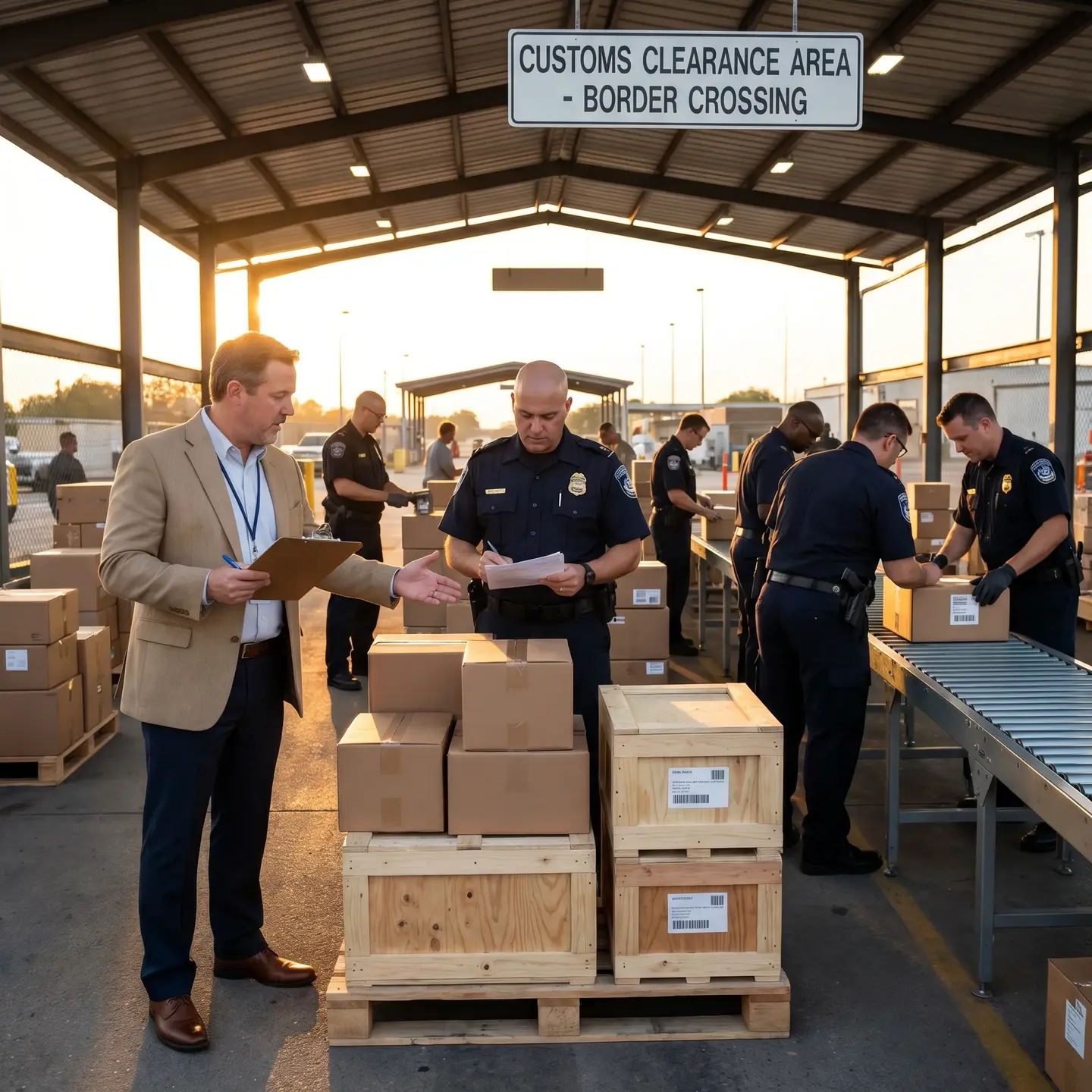
Examination selection isn’t random. Shipments with classification inconsistencies, unusual valuations, or documentation discrepancies face higher scrutiny. Professional customs management reduces examination risk by ensuring consistency across all submitted information.
Duty and Tax Assessment
Once CBSA accepts your customs entry, duties and taxes become payable. Under the CARM system, importers must now register for the CARM Client Portal registration to manage their import accounts and payment obligations. This represents a significant change in how businesses interact with Canadian customs, requiring direct account management that many international brands find unfamiliar.
Your broker calculates applicable duties based on:
- The HS classification assigned to your products
- The country of origin and any applicable trade agreements
- The customs value as determined by valuation rules
- Any additional fees or levies specific to your product category
GST is collected at the border on most imported goods, adding another layer of calculation and payment management. Incorrect duty assessments don’t just cost money immediately—they can trigger audits, reassessments, and penalties down the line.
Release and Post-Clearance
After duties are paid and CBSA authorizes release, goods can proceed to their destination—whether that’s your Canadian fulfillment center or direct delivery to customers. However, customs compliance doesn’t end at release. Importers must maintain records for six years and may face post-entry audits that examine historical accuracy.
This is where the integration between customs brokerage and fulfillment operations matters most. When clearance and warehousing operate under coordinated management, goods move seamlessly from border to shelf, inventory systems update in real-time, and your Canadian operations maintain the speed and reliability your customers expect.
When Customs Brokerage Is Required vs. Optional
Canadian law doesn’t mandate that all importers use licensed customs brokers. However, the practical and regulatory complexity of commercial importing makes professional brokerage strongly advisable for D2C brands operating at scale.
Self-Clearance: Technically Possible, Practically Challenging
Importers can technically handle their own customs clearance by registering as an importer, obtaining a business number with an import/export account, and filing entries directly through CARM. Some businesses with simple, repetitive shipments and dedicated compliance staff successfully manage this process internally.
However, self-clearance becomes problematic when:
- Your product range spans multiple HS classifications requiring specialized knowledge
- You import goods subject to partner government agency oversight (Health Canada, CFIA)
- Your shipment volumes exceed what internal staff can manage alongside other responsibilities
- You lack staff with Canadian customs expertise (particularly challenging for US-based brands)
- Classification or valuation errors could expose you to significant financial penalties
For most D2C brands processing 500+ orders monthly—our minimum volume threshold—the complexity and risk of cross-border commerce makes professional brokerage not just helpful but essential.
When Professional Brokerage Becomes Necessary
Certain circumstances effectively require broker engagement:
- Regulated products — If you import natural health products, food, cosmetics, or other categories subject to Health Canada or CFIA oversight, broker expertise in regulatory compliance becomes critical
- First-time importing — Brands entering the Canadian market need guidance navigating requirements they’ve never encountered before
- Volume operations — When you’re processing hundreds or thousands of cross-border shipments, the risk of errors multiplies beyond what periodic self-clearance can safely manage
- Complex supply chains — Multi-country sourcing, varying product categories, or split shipments require sophisticated classification and documentation management
Review the CBSA customs broker requirements to understand the licensing and competency standards these professionals must meet. This isn’t a casual designation—it represents verified expertise in Canadian trade law and customs procedures.
The Cost of Customs Problems: Delays, Duties, and Penalties
Understanding what goes wrong without professional customs management helps clarify why established brands invest in sophisticated compliance infrastructure. The costs aren’t theoretical—they’re predictable consequences of inadequate preparation.
Border Delays and Storage Fees
When CBSA holds a shipment for examination, missing documentation, or compliance review, the clock starts running. Freight terminals charge storage fees that accumulate daily. For air freight, demurrage can reach hundreds of dollars per day; container shipments held at port can cost even more.
Beyond direct fees, delays disrupt your entire supply chain. Inventory you expected to have available for fulfillment sits at the border. Customer orders go unfilled. Marketing campaigns built around product launches fall apart. The downstream costs often exceed the storage charges themselves.
Incorrect Duty Assessments
Classification errors create financial exposure in both directions. Overpaying duties wastes money that could have supported growth. Underpaying duties—even unintentionally—creates liability that CBSA can pursue years after the original entry.
When CBSA audits reveal systematic undervaluation or misclassification, penalties can reach significant multiples of the unpaid duties. More importantly, repeated compliance failures can result in increased scrutiny, mandatory examinations, and even loss of import privileges.
Customer Experience Damage
For D2C brands, the customer-facing impact of customs problems may outweigh the direct financial costs. When shipments to your Canadian fulfillment center get delayed, you can’t fulfill orders. When you can’t fulfill orders, customers receive late deliveries—or no deliveries at all.
In an ecommerce environment where two-day delivery has become baseline expectation, customs-related delays destroy the customer experience you’ve worked to build. Negative reviews, social media complaints, and customer churn follow. Rebuilding trust after fulfillment failures costs far more than preventing them through proper compliance management.
Regulatory Compliance Failures
For brands selling products under Health Canada oversight—which includes natural health products, cosmetics, and food items—customs compliance intersects with market authorization requirements. Goods that clear customs but don’t meet domestic regulatory standards can be recalled, seized, or blocked from sale.
This is where the expertise gap between basic customs brokers and sophisticated compliance partners becomes critical. A broker who handles only border paperwork won’t catch the Health Canada compliance issue that results in a product recall six months after entry. A partner with regulated product fulfillment expertise understands both the customs and domestic regulatory requirements your products must satisfy.
Evaluating Customs Brokerage Capabilities in a 3PL Partner
For D2C brands operating cross-border fulfillment, customs brokerage shouldn’t exist in isolation. The most effective model integrates clearance services with warehousing, fulfillment, and shipping under coordinated management—eliminating the handoff friction that creates delays when multiple service providers must coordinate.
Key Capability Indicators
When evaluating customs brokerage capabilities—whether standalone or within a 3PL partnership—assess the following:
- Classification expertise — Can they demonstrate deep knowledge of HS codes relevant to your product categories?
- Regulatory knowledge — Do they understand partner government agency requirements for regulated products?
- Technology integration — Does their customs system integrate with CARM and communicate with inventory management platforms?
- Response time — How quickly do they address CBSA queries or documentation requests?
- Track record — What’s their history of examination rates, clearance timelines, and compliance audits?
The Integration Advantage
When customs brokerage operates within integrated ecommerce fulfillment operations, several operational advantages emerge:
- Visibility — Single-source tracking from border to fulfillment to customer delivery
- Speed — Coordinated handoffs between clearance and warehousing eliminate waiting time
- Accountability — One partner responsible for the entire Canadian supply chain, not multiple vendors pointing fingers
- Scalability — Infrastructure that handles volume spikes without the coordination complexity of fragmented services
For US brands pursuing cross-border fulfillment for US brands, this integration becomes particularly valuable. Rather than coordinating between a US-based customs broker, a Canadian broker, and separate fulfillment providers, you work with a single partner who manages the entire cross-border process.
Beyond Clearance: Compliance as Infrastructure
The most sophisticated approach treats compliance and customs clearance services as operational infrastructure rather than transactional services. This means:
- Proactive classification review before problems occur
- Documentation systems designed for audit readiness
- Regulatory monitoring that catches requirement changes before they affect your shipments
- Compliance expertise embedded in fulfillment operations, not bolted on as an afterthought

Since 1918, we’ve operated with the understanding that cross-border success requires more than moving boxes—it requires managing the regulatory complexity that determines whether those boxes reach Canadian customers quickly, affordably, and without disruption.
Making the Customs Brokerage Decision
Your need for professional customs brokerage depends on several factors that you should evaluate honestly:
Volume and Frequency
Occasional personal imports might tolerate self-clearance mistakes. Commercial operations processing hundreds of shipments annually cannot absorb that risk. If you’re moving significant inventory into Canada regularly, professional brokerage isn’t optional—it’s operational infrastructure.
Product Complexity
Simple, single-category product lines with clear classifications present lower risk than diverse catalogs spanning multiple HS chapters. Regulated products—NHP, food, cosmetics—add compliance layers that require specialized knowledge.
Risk Tolerance
How much can your business afford if things go wrong? A single customs detention that delays a major shipment can cost more than years of professional brokerage fees. For established brands with real revenue at stake, the math strongly favors professional compliance management.
Strategic Priority
Is the Canadian market a strategic growth priority or an experimental side project? Brands committed to building sustainable Canadian operations need compliance infrastructure that supports long-term success, not just short-term cost minimization.
For D2C brands processing 500+ orders monthly, selling regulated products, or building serious Canadian market presence, professional customs brokerage—ideally integrated with your fulfillment operations—represents one of the most valuable investments you can make in cross-border success. The question isn’t whether you can afford professional customs management. It’s whether you can afford the consequences of going without it.
Frequently Asked Questions
Avoid providers lacking HS classification expertise for your product category, CARM integration, quick CBSA response times, or integrated fulfillment capabilities. Look for low exam rates and regulatory knowledge for Health Canada products to prevent handoff delays in your cross-border operations.
Beyond storage fees, customs errors cause supply chain disruptions like unfulfilled orders and missed launches, over or underpaid duties triggering audits and penalties, and customer complaints from delays. These hidden costs often exceed broker fees, especially with GST compliance and six-year record-keeping requirements.
Top brokers proactively review product details for correct HS codes, verify valuations, ensure Health Canada and CFIA compliance, and submit via CARM. They catch issues before arrival to reduce exam risks, unlike basic brokers who simply process information you provide.
Self-clearance works for simple, low-volume shipments if you have expertise and a business number. However, D2C brands with 500+ monthly orders or regulated products like cosmetics benefit from brokers who prevent classification errors and Health Canada compliance issues that cause costly delays.
Improper HS code classification for botanical ingredients, incorrect duty calculations, and missing Health Canada cosmetics documentation caused CBSA detention. Storage fees accumulated daily while the brand missed their product launch deadline, resulting in significant financial loss and operational disruption.

Scale Your Canada Fulfillment with Confidence.
Partner with Canada's premier 3PL to unlock faster shipping, lower costs, and seamless scalability for your ecommerce brand.
Talk to an Expert