Shipping
EXW Shipping Terms: What Ex Works Means for Buyers Importing to Canada

When an overseas manufacturer sends you a quote with “EXW” listed as the shipping terms, that number on the page looks incredibly attractive. It’s the lowest possible price they can offer because it represents only the cost of goods sitting at their factory door. What that quote doesn’t show you—and what catches many Canadian e-commerce brands off guard—is the cascade of responsibilities, costs, and compliance obligations that become yours the moment you accept those terms. For brands importing regulated products like natural health products, cosmetics, or food items to Canadian fulfillment centers, understanding what EXW truly means is the difference between a profitable supply chain and a costly lesson in hidden expenses.
Who This Guide Is For
This article is designed for operations managers, supply chain directors, and founders at established D2C e-commerce brands who receive EXW quotes from overseas suppliers and need to evaluate whether these terms make financial and operational sense. If you’re processing 500+ orders monthly, sourcing inventory from international manufacturers, and shipping to Canadian consumers, the implications of Incoterms directly impact your bottom line and operational complexity.

This guide is not intended for marketplace-only Amazon sellers, brands just starting out with minimal order volume, or companies that work exclusively with domestic Canadian suppliers. The nuances we cover here apply specifically to brands navigating international supply chains with products destined for Canadian warehouses.
What EXW Shipping Terms Actually Mean
EXW, or “Ex Works,” is one of 11 International Chamber of Commerce Incoterms 2020 rules that define the responsibilities of buyers and sellers in international trade. Under EXW, the seller’s obligation ends the moment goods are made available at their premises—typically a factory, warehouse, or production facility. From that point forward, every cost, every risk, and every compliance obligation transfers to you as the buyer.
In practical terms, when you accept an EXW quote, you’re agreeing to:
- Arrange and pay for loading goods onto a transport vehicle at the supplier’s location
- Handle all transportation from the factory to the port of export
- Manage export customs clearance and documentation in the supplier’s country
- Arrange and pay for international freight (ocean or air)
- Secure cargo insurance for the entire journey
- Complete import customs clearance in Canada
- Pay all Canadian duties, taxes, and brokerage fees
- Coordinate final delivery to your fulfillment center
The International Trade Administration Incoterms guide confirms that EXW represents maximum responsibility for buyers—and this is precisely where many e-commerce brands encounter unexpected challenges. The quote that appeared to save you money suddenly requires expertise, relationships, and infrastructure you may not have.
Complete Breakdown of Buyer Responsibilities Under EXW
Understanding EXW requires examining each responsibility you assume, because each one carries both direct costs and potential complications.
Origin-Side Logistics
Your responsibilities begin at the supplier’s door. You must arrange for a vehicle to pick up the goods, which means coordinating with local trucking companies in a foreign country. Unlike your supplier, who likely ships regularly and has negotiated rates with local carriers, you’re arranging a one-off pickup without established relationships or volume leverage.
Loading the goods onto the transport vehicle is also your responsibility under EXW. While some suppliers will assist with loading as a courtesy, they have no contractual obligation to do so. If loading damages occur, risk has already transferred to you—even though the goods haven’t left the supplier’s property.
Export Customs Clearance
This is where EXW creates the most significant operational challenges for Canadian importers. You are responsible for obtaining export licenses, completing export documentation, and clearing goods through customs in a country where you likely have no legal entity, no local knowledge, and no established relationships with customs brokers.
For regulated products like nutraceuticals, cosmetics, and food items, export compliance requirements vary dramatically by country. Certain products require specific certifications or inspections before they can legally leave the origin country. If you’re importing ingredients for natural health products or food-grade materials, you may need export health certificates that only authorized local parties can obtain.
International Transport and Insurance
Arranging international freight without the supplier’s involvement means you’re building a logistics solution from scratch. You’ll need to select a freight forwarder, choose between air and ocean freight, determine the appropriate container type for your volume, and coordinate pickup timing with your export clearance schedule.
Cargo insurance is technically optional under EXW, but it’s practically essential. From the moment goods are made available at the supplier’s premises, you bear all risk of loss or damage. Without comprehensive insurance, a shipping incident could mean total loss of your inventory investment.
Canadian Import Clearance
Once goods arrive in Canada, you must clear them through the Canada Border Services Agency. This involves accurate HS code classification, proper valuation declaration, and payment of applicable duties and taxes. For regulated products, you’ll also need to satisfy requirements from Health Canada or the Canadian Food Inspection Agency.
The Canada Border Services Agency importing guide outlines the documentation and compliance requirements for commercial imports. Working with experienced Canadian customs brokerage services ensures accurate classification and smooth clearance—but this represents another cost and relationship you must manage.
The Hidden Costs That Make EXW Quotes Deceptive
The fundamental problem with EXW is that the attractive price on your quote excludes an extensive list of origin-side expenses. Let’s examine how a seemingly competitive EXW quote transforms into a significantly higher landed cost.

Origin-Side Cost Accumulation
Consider this realistic scenario: You receive an EXW quote of $10,000 for a shipment of cosmetic products from an Asian manufacturer. Before those goods even leave the origin country, you’ll likely incur:
- Local trucking from factory to port: $400-800 depending on distance and cargo type
- Terminal handling charges at origin: $150-300 per container
- Export documentation and customs broker fees: $200-400
- Fumigation or inspection certificates (if required): $100-250
- Freight forwarder coordination fees: $150-350
Without established carrier relationships, you’re also likely paying retail rates rather than the negotiated pricing your supplier enjoys through their regular shipping volume. This premium can add 15-25% to standard freight costs.
The Comparison That Reveals True Cost
That $10,000 EXW quote might result in $11,500-13,500 in actual costs before international freight, insurance, and Canadian-side expenses are even calculated. Meanwhile, an FOB quote of $10,800 from the same supplier could deliver a lower total cost because:
- The supplier handles local trucking at their negotiated rates
- Export clearance is completed by parties with proper authorization
- Terminal handling is coordinated efficiently
- Your freight forwarder can focus exclusively on the international leg
The lesson here isn’t that EXW is inherently bad—it’s that the quoted price tells you almost nothing about your actual landed cost.
Export Compliance Challenges for Canadian Importers
For e-commerce brands importing regulated products, the export compliance burden under EXW creates operational nightmares that extend beyond simple cost calculations.
Legal Standing in Foreign Jurisdictions
When you accept EXW terms, you become responsible for export clearance in a country where you likely have no legal entity. Many countries require that the party filing export documentation be a registered local business or have a licensed representative. As a Canadian company, you may not have the legal standing to complete these formalities directly.
This forces you to rely on freight forwarders or customs brokers in the origin country who file on your behalf—but this arrangement creates murky liability. If documentation errors occur or compliance issues arise, determining responsibility becomes complicated across international jurisdictions.
Regulated Product Complications
If you’re importing natural health products, cosmetics, or food ingredients, export requirements in the origin country may include:
- Export licenses for controlled ingredients
- Health certificates from local authorities
- Inspection reports from approved testing facilities
- Documentation confirming manufacturing facility compliance
Your supplier likely knows how to obtain these documents efficiently. Under EXW, however, coordinating this paperwork becomes your responsibility—without their institutional knowledge, local relationships, or understanding of which officials need to authorize what.
We’ve seen brands discover compliance gaps only after goods are stuck at origin, waiting for export clearance that can’t be obtained because the buyer lacks the required local authorization. These delays cascade into missed sales windows, increased storage charges, and sometimes complete loss of perishable inventory.
When EXW Terms Make Sense
Despite these challenges, EXW can be appropriate in specific circumstances. Understanding when to accept these terms—and when to negotiate alternatives—protects your supply chain and margins.
Situations Where EXW May Work
EXW terms can be acceptable when:
- You have established freight forwarding infrastructure in the origin country—either your own team or a long-standing partner who manages origin logistics for multiple shipments
- You’re consolidating shipments from multiple suppliers in the same region—where controlling pickup timing and routing creates genuine efficiency gains
- Your volume justifies dedicated logistics resources—where the scale of your imports makes it economical to maintain origin-side expertise
- You’re working with a supplier who genuinely cannot handle export logistics—some smaller manufacturers lack the capability to offer FOB or FCA terms
Situations Where EXW Should Be Avoided
EXW is generally inadvisable when:
- You’re a first-time importer—without established relationships in the origin country, EXW complexity can derail your first shipments
- Your shipment volume is small—the fixed costs of origin-side logistics don’t scale well with smaller quantities
- You’re importing regulated products—the compliance burden is already high; adding foreign export compliance multiplies risk
- Your supplier has significantly better carrier rates—their shipping volume likely yields discounts you can’t access independently
EXW vs. FOB and FCA: Better Alternatives for Canadian Importers
When evaluating supplier quotes, understanding alternative Incoterms helps you negotiate arrangements that reduce risk and often lower total costs.
FOB (Free on Board)
Under FOB terms, the supplier handles all origin-side logistics including export clearance. Their responsibility ends when goods are loaded onto the vessel at the port of origin. This means:
- The supplier manages local trucking at their negotiated rates
- Export documentation is completed by parties with proper local authorization
- Risk transfers to you only after goods are safely loaded onto the ship
- You control international freight selection and Canadian-side logistics
For Canadian importers, FOB typically offers the best balance between cost control and risk management.
FCA (Free Carrier)
FCA works similarly to FOB but applies to any mode of transport, not just ocean freight. The supplier delivers goods to a named carrier at a specified location (often a freight terminal) and completes export formalities. This term is particularly useful when your shipments move by air or use multimodal transport.
Both FOB and FCA shift the export compliance burden to the supplier—the party best positioned to navigate their own country’s regulatory requirements. The quoted price may appear higher than EXW, but total landed cost is often lower, and operational complexity decreases significantly.
How to Calculate True Landed Cost from an EXW Quote
When you receive an EXW quote, converting it to a meaningful landed cost requires systematic cost accumulation.
Step-by-Step Landed Cost Calculation
- Start with the EXW quoted price—this is your baseline product cost
- Add origin trucking—request a quote from your freight forwarder for factory-to-port transport
- Add export clearance costs—include customs broker fees, documentation charges, and any required certificates
- Add terminal handling at origin—your forwarder can provide these port-specific charges
- Add international freight—ocean or air freight from origin port to Canadian port of entry
- Add cargo insurance—typically 0.3-0.5% of cargo value for comprehensive coverage
- Add Canadian customs brokerage—fees for import clearance and CBSA filings
- Add duties and taxes—based on HS code classification and product value
- Add final delivery—transport from port of entry to your Canadian fulfillment center
The total represents your true landed cost per shipment. Divide by units to determine per-unit cost for accurate product costing and pricing decisions.
Requesting Comparable Quotes
To make informed Incoterm decisions, request quotes from your supplier under multiple terms—EXW, FOB, and FCA if available. Then work with your freight forwarder to calculate landed costs for each scenario. This comparison reveals which arrangement delivers the lowest total cost while maintaining acceptable operational complexity.
Negotiating Better Terms When Suppliers Insist on EXW
Some suppliers only quote EXW, either because they lack export logistics capability or prefer to minimize their involvement. When you can’t simply choose a different supplier, several negotiation strategies can reduce your burden.
Practical Negotiation Tactics
- Request that the supplier arrange and invoice for export clearance and local trucking—even if you technically pay, having them coordinate reduces your complexity
- Ask for introductions to the supplier’s freight forwarders—these providers already have relationships and may offer better rates than you’d find independently
- Negotiate loading at the supplier’s cost—this removes ambiguity about liability if damage occurs during loading
- Request factory-loaded containers—for larger shipments, having the supplier load directly into your container reduces handling and potential damage
Leveraging 3PL Partnerships
Working with a Canadian 3PL that offers cross-border fulfillment services provides access to established freight forwarding networks that can manage origin-side logistics on your behalf. Rather than building these relationships from scratch, you benefit from your fulfillment partner’s existing carrier contracts, forwarder relationships, and customs expertise.
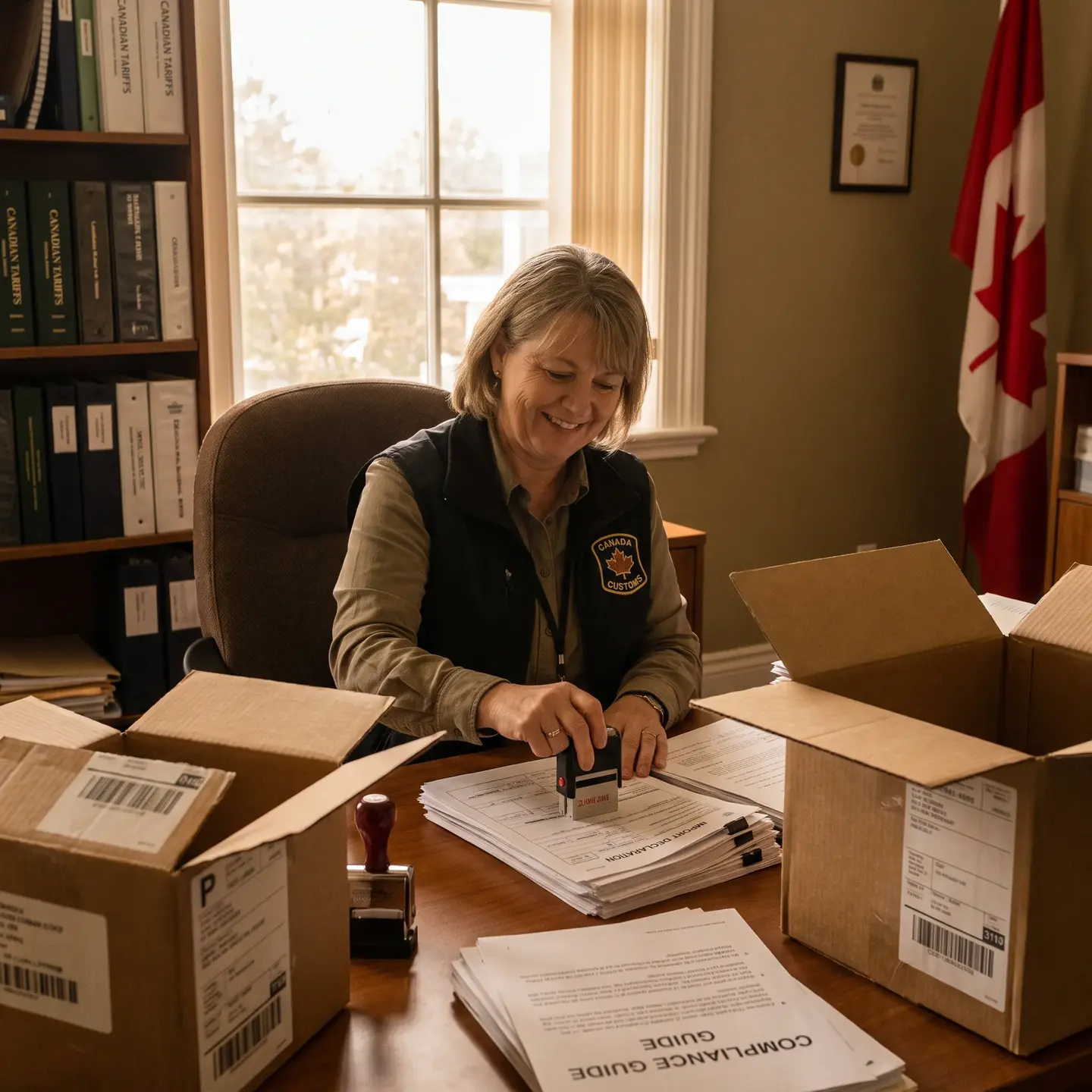
This approach is particularly valuable for brands importing regulated products. A fulfillment partner with experience in natural health products, food, and cosmetics understands both the Canadian compliance requirements and the origin-side documentation that must accompany these shipments.
Making the Right Decision for Your Supply Chain
EXW shipping terms represent maximum buyer responsibility—from the factory door in a foreign country all the way to your Canadian fulfillment center. The quoted price may appear attractive, but true cost calculations often reveal that alternatives like FOB or FCA deliver lower landed costs with significantly reduced operational complexity.
For established D2C brands importing to Canada, the key questions when evaluating EXW quotes are:
- Do we have the infrastructure and relationships to manage origin-side logistics efficiently?
- Can we navigate export compliance in the supplier’s country without legal standing there?
- Does our total landed cost under EXW actually beat alternatives like FOB?
- Are the compliance risks for our regulated products acceptable under this arrangement?
If the answers raise concerns, negotiating better Incoterms or partnering with a 3PL that offers cross-border expertise may serve your supply chain more effectively than accepting an EXW arrangement that appears cheap on paper but proves expensive in practice.
Understanding these distinctions is what separates brands that struggle with international sourcing from those that build reliable, cost-effective supply chains into the Canadian market.
Frequently Asked Questions
You may need to coordinate foreign export licenses, health certificates, inspections, and other compliance documents without local legal standing or established relationships.
Often, yes. FOB and FCA generally shift export clearance and origin logistics to the supplier while allowing you to control the international and Canadian transport legs.
The quoted price excludes origin trucking, export documentation, terminal fees, international freight, insurance, brokerage, duties, taxes, and final delivery. Calculate the full landed cost before comparing suppliers.
Ask your freight forwarder to price every stage from factory pickup through delivery to your Canadian fulfillment center, then add duties and taxes based on the correct tariff classification.
EXW means the supplier only makes the goods available at its premises. You handle loading, export clearance, freight, insurance, Canadian import clearance, duties, taxes, and delivery.

Scale Your Canada Fulfillment with Confidence.
Partner with Canada's premier 3PL to unlock faster shipping, lower costs, and seamless scalability for your ecommerce brand.
Talk to an Expert