Shipping
International Freight to Canada: Documentation, Timing, and Coordination for Smooth Imports
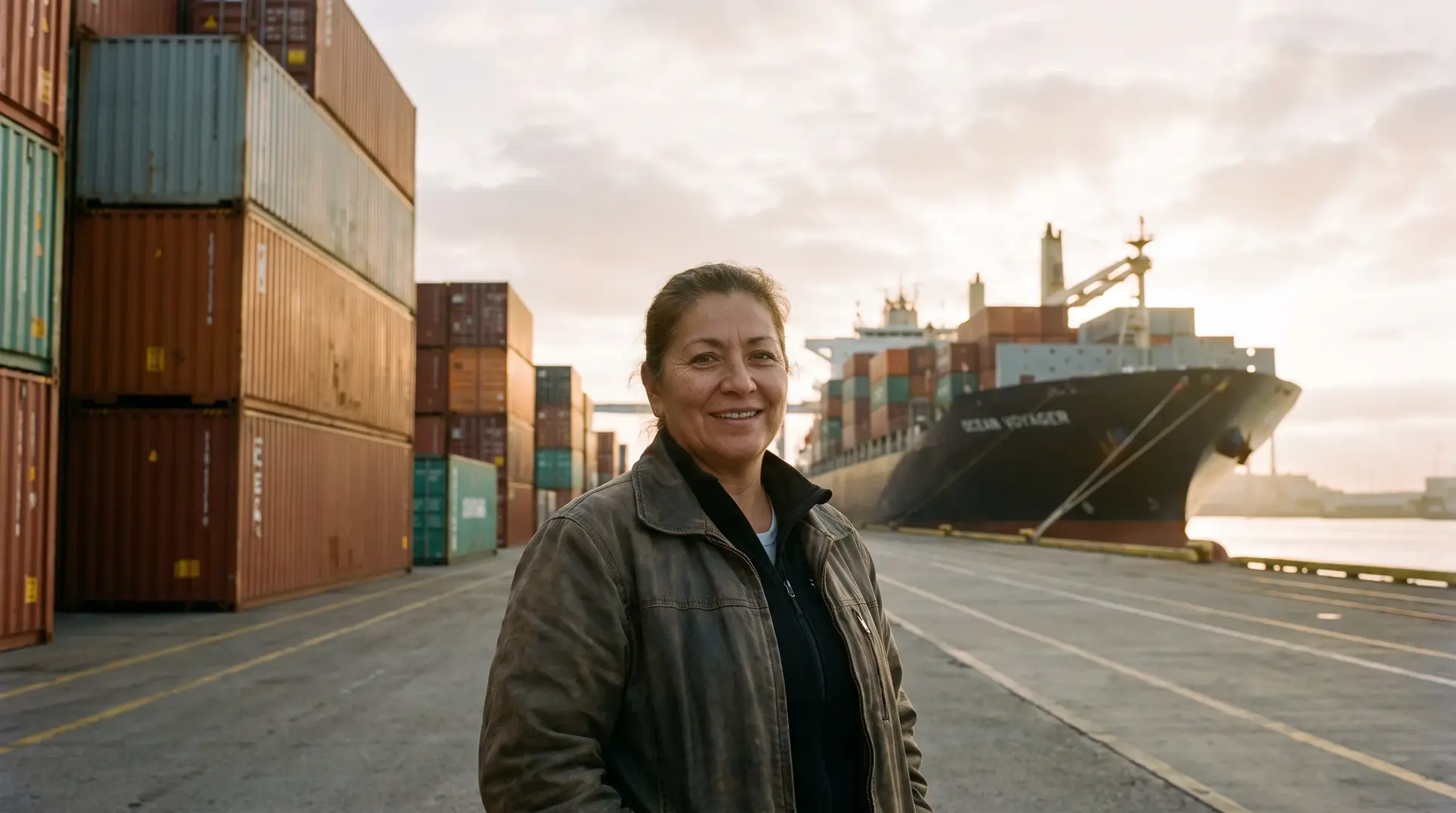
Bringing international freight into Canada requires more than booking a shipping lane and waiting for containers to arrive. For direct-to-consumer brands importing inventory from Asia, Europe, or Latin America, the difference between a smooth import and a costly delay often comes down to three factors: documentation accuracy, realistic timing expectations, and coordination across every handoff point from factory floor to fulfillment center shelf. When any of these elements breaks down, the consequences ripple through your entire operation—stockouts, storage fees, missed sales windows, and frustrated customers who expected their orders days ago.
We work with brands every day who have learned these lessons the hard way. A pallet sitting at the Port of Vancouver waiting for a corrected commercial invoice is not inventory available for sale. A container that clears customs but arrives at a fulfillment center without a receiving appointment scheduled creates demurrage charges that erode your margins. This guide addresses the operational mechanics that determine whether your international freight to Canada moves efficiently or encounters expensive delays.

Who This Guide Is For—And Who It Isn’t
This article is designed for operations managers, supply chain directors, and founders at established D2C brands who are currently importing or planning to import commercial freight volumes into Canada. You are likely managing palletized shipments, full or partial container loads, or air cargo—not individual parcels or small-package international shipments.
This guide is for you if:
- You import inventory from international origins (Asia, Europe, Latin America) to serve Canadian customers
- You manage ocean freight (FCL or LCL) or air cargo shipments to Canada
- You need to understand documentation requirements, lead time planning, and port selection
- You want to coordinate freight arrival with Canadian fulfillment operations seamlessly
This guide is not for you if:
- You ship individual parcels or small packages internationally
- You need guidance on last-mile delivery or express shipping services
- You are looking for detailed customs brokerage procedures or tariff classification guidance
- You are focused on exporting from Canada rather than importing to Canada
The International Freight Import Journey to Canada
Understanding the complete journey from factory departure to Canadian warehouse arrival reveals why so many brands underestimate the complexity of international imports. Each handoff point represents a potential failure point where coordination gaps create delays.
Mapping the End-to-End Process
A typical import journey includes these distinct phases:
- Factory preparation and consolidation — Your goods are manufactured, packaged, and prepared for export, including all documentation
- Origin port handling — Cargo is transported to the departure port, cleared for export, and loaded onto the vessel or aircraft
- International transit — Ocean or air transport to the Canadian port of entry
- Canadian port arrival and customs clearance — Cargo is unloaded, documents are reviewed, and goods are released by CBSA
- Drayage to fulfillment center — Ground transportation from port to your Canadian warehouse
- Receiving and put-away — Inventory is verified, checked into the warehouse management system, and made available for fulfillment
Brands frequently focus on phase three—the ocean or air transit—while underestimating the time consumed by every other phase. A shipment that spends 28 days crossing the Pacific still requires 7-10 additional days for customs clearance, drayage, and warehouse receiving before a single unit can ship to a customer.
Ocean Freight vs. Air Freight: Making the Right Mode Selection
Your choice between ocean and air freight should be driven by inventory velocity, margin structure, and urgency—not simply by cost per kilogram.
Ocean freight makes sense when:
- You have predictable demand patterns and can plan 6-8 weeks ahead
- Your products have sufficient margin to absorb capital tied up in transit inventory
- You are shipping bulky or heavy items where air freight costs would be prohibitive
- You have established safety stock buffers to cover transit time variability
Air freight makes sense when:
- You need inventory urgently to cover unexpected demand or stockouts
- Your products have high value density (high value relative to weight)
- You are launching new products and need to test market response quickly
- Seasonal windows are tight and ocean transit would miss the selling period
For full container loads (FCL), ocean freight from Asia to Canadian ports typically ranges from 25-35 days of transit time. Less-than-container-load (LCL) shipments add consolidation time at both origin and destination, often extending total transit by 5-10 days. Air freight from Asia to Canada generally takes 3-7 days of transit, but this does not include customs clearance and ground handling on either end.
Documentation Requirements for Canadian Imports
Documentation errors are among the most common causes of import delays, and they are entirely preventable. The critical point that many brands miss: your documentation must be finalized before freight departs origin, not when it arrives in Vancouver or Montreal. Retroactive documentation creates customs holds that can add 5-10 days to your timeline.
Essential Documents for Commercial Imports
Every commercial import to Canada requires these core documents:
- Commercial invoice — Details the transaction between buyer and seller, including product descriptions, quantities, values, and terms of sale. Must match the actual contents of the shipment exactly.
- Packing list — Outlines the contents, weight, and number of packages in the shipment. Used to verify that all items are accounted for during customs inspection and warehouse receiving.
- Bill of lading (ocean) or air waybill (air) — The carrier’s contract for transporting your goods and proof of shipment.
- Certificate of origin — Certifies where the goods were manufactured, which affects applicable tariffs and trade agreement eligibility.
- Product-specific certifications — Depending on your products, you may need health certificates, safety certifications, or regulatory permits.
For detailed requirements on what must be included in each document, the CBSA commercial import requirements provide authoritative guidance.
Business Number and Importer Account Requirements
Before importing commercial goods into Canada, your business must have a Business Number (BN) and an import-export program account (RM account) registered with the Canada Revenue Agency. Without this, you cannot legally import commercial goods or claim input tax credits on duties and taxes paid.
Foreign brands entering the Canadian market can register for a BN even without a physical presence in Canada. This registration should be completed well before your first shipment is ready to depart—the process can take several weeks, and attempting to clear customs without proper registration creates immediate delays.

Advance Commercial Information Requirements
CBSA requires advance commercial information (ACI) for commercial shipments arriving in Canada. This means your customs broker or carrier must transmit shipment data electronically before your goods arrive at the Canadian port of entry. The advance commercial information requirements specify what data must be provided and when.
Failure to provide accurate ACI data can result in:
- Shipment holds at the port of entry
- Detailed examinations that delay release by days
- Penalties for non-compliance
- Storage and demurrage charges while issues are resolved
Documentation Preparation Timeline
We recommend completing all documentation at least 5-7 business days before your freight departs the origin factory. This allows time to:
- Review documents for accuracy and completeness
- Correct any discrepancies before shipping
- Transmit advance data to your customs broker
- Address any questions from freight forwarders or carriers
Waiting until freight is in transit or, worse, already at the Canadian port creates pressure that leads to errors and delays.
Timing and Lead Time Planning: Realistic Expectations
The most common planning failure we see is brands calculating lead times based solely on ocean or air transit, ignoring the substantial time consumed by every other phase of the import journey.
Realistic Transit Time Ranges by Origin and Mode
Ocean freight from Asia (FCL):
- Shanghai to Vancouver: 18-24 days port-to-port
- Shenzhen to Vancouver: 20-26 days port-to-port
- Shanghai to Montreal: 32-38 days port-to-port (via Panama or Suez)
Ocean freight from Europe (FCL):
- Rotterdam to Montreal: 12-16 days port-to-port
- Hamburg to Montreal: 14-18 days port-to-port
Air freight:
- Asia to Toronto Pearson: 3-5 days airport-to-airport
- Europe to Toronto Pearson: 2-4 days airport-to-airport
These ranges represent the transit portion only. To calculate when inventory will actually be available for sale, you must add:
- Customs clearance: 1-3 days for routine shipments; 5-10+ days if documentation issues arise
- Drayage from port to fulfillment center: 1-3 days depending on distance and carrier availability
- Receiving and put-away at fulfillment center: 1-3 days for standard receiving
Example: Realistic Planning for Asia-Origin Shipments
A brand shipping 10 pallets from Shenzhen to a fulfillment center in Ontario via LCL ocean freight should plan for:
- LCL consolidation at origin: 3-5 days
- Ocean transit to Vancouver: 22-28 days
- LCL deconsolidation at Vancouver: 2-4 days
- Customs clearance: 2-3 days
- Rail or truck transit Vancouver to Ontario: 4-6 days
- Receiving and put-away: 2-3 days
Total: 35-49 days from factory departure to inventory available for sale
Brands who plan for “30 days” based on ocean transit alone routinely face stockouts because they failed to account for these additional phases.
Seasonal Variability and Peak Periods
Lead time reliability varies significantly throughout the year. Key periods of increased variability include:
- Chinese New Year (January/February): Factories close for 2-4 weeks, and the surge of shipments before and after creates port congestion
- Golden Week (October): Chinese factories close for a week, causing similar pre/post surge patterns
- Peak import season (August-October): Brands stocking for Q4 holidays create capacity constraints across ocean and air networks
- Winter weather: Canadian port operations can slow during severe weather events
During these periods, we recommend adding 5-10 days of buffer to your standard lead time calculations.
Safety Stock Strategy Based on Lead Time Variability
Your safety stock calculations should be based on lead time variability, not average lead times. If your average lead time is 40 days but your actual range is 35-55 days, planning for 40 days leaves you exposed to stockouts 50% of the time.
A better approach: calculate your safety stock based on the 90th percentile lead time (the time within which 90% of your shipments arrive). This ensures adequate buffer for the variability that is normal in international freight.
Port and Entry Point Considerations
Choosing the right Canadian port of entry affects your total landed cost, transit time, and reliability. The optimal choice depends on where your inventory originates and where it needs to end up.
Major Canadian Entry Points
Port of Vancouver:
- Primary gateway for Asia-origin ocean freight
- Best choice when your fulfillment center is in British Columbia or Western Canada
- Requires cross-country rail or truck if fulfilling from Ontario or Quebec
Port of Montreal:
- Primary gateway for Europe-origin ocean freight
- Optimal for brands with fulfillment centers in Ontario or Quebec
- Longer transit from Asia (must route through Panama or Suez) but shorter ground segment to Eastern Canadian fulfillment
Toronto Pearson International Airport:
- Primary air cargo hub for international freight to Canada
- Fastest option for urgent shipments regardless of origin
- Higher per-kilogram costs but eliminates weeks of transit time
Aligning Port Selection with Fulfillment Location
One of the most common mistakes we see is brands selecting a port based on ocean transit time without considering the full journey to their fulfillment center.
Shipping to Vancouver when your fulfillment center is in Ontario adds 4-6 days of cross-country drayage plus additional costs for rail or truck transportation. In many cases, routing through Montreal (despite longer ocean transit) results in faster inventory availability and lower total landed cost because the ground segment is dramatically shorter.
When evaluating port options, calculate your total landed cost including:
- Ocean or air freight to the port
- Port handling and customs clearance costs
- Drayage from port to fulfillment center
- Transit time for each segment
The port with the lowest freight rate is not always the port with the lowest total cost.
Coordinating International Freight with Canadian Fulfillment Operations
The handoff between freight arrival and fulfillment readiness is where coordination gaps most often create expensive problems. Freight arriving at port does not mean inventory is available for sale—multiple steps must still occur, and each requires proactive coordination.
Scheduling Receiving Appointments
Fulfillment centers operate on appointment-based receiving schedules. Cargo that arrives without a scheduled appointment may wait days for an available slot, particularly during peak seasons. This delay happens after you have already paid for ocean transit, customs clearance, and drayage—adding time without adding value.
Best practice: Schedule your receiving appointment as soon as you have a confirmed estimated arrival date at the Canadian port. Build in buffer time for customs clearance variability, but secure your appointment window early.
Advance Shipping Notices (ASNs)
Providing your fulfillment center with accurate advance shipping notices allows them to:
- Prepare receiving staff and equipment
- Pre-create inventory records in the warehouse management system
- Identify any discrepancies between expected and received inventory immediately
- Accelerate put-away so inventory becomes available for sale faster
ASNs should include SKU-level detail matching your commercial invoice and packing list exactly. Discrepancies between these documents create receiving delays as warehouse staff reconcile conflicting information.
Avoiding Detention and Demurrage Charges
Detention and demurrage charges accumulate when cargo sits at ports or in containers longer than the allowed free time. These charges can reach hundreds of dollars per day and add up quickly when coordination failures prevent timely pickup.
Common causes of detention and demurrage:
- Documentation errors that delay customs clearance
- No receiving appointment scheduled at the fulfillment center
- Drayage carrier not booked in advance
- Fulfillment center at capacity during peak season
Preventing these charges requires proactive coordination across your entire supply chain—from your freight forwarder and customs broker to your drayage provider and fulfillment partner.
The Value of Unified Freight and Fulfillment Coordination
When different providers handle freight forwarding, customs brokerage, drayage, and fulfillment, each handoff creates an opportunity for miscommunication and delay. Provider A may not know that Provider B is behind schedule, and neither may communicate the issue to you until it has already created a costly delay.
Working with a 3PL that coordinates both freight forwarding services and Canadian warehousing and fulfillment eliminates many of these handoff gaps. When the same partner manages freight arrival timing, customs coordination, and warehouse receiving, they can proactively adjust schedules, communicate delays, and ensure inventory moves from port to shelf as efficiently as possible.
Our compliance coordination capabilities ensure that documentation requirements are met before freight departs origin, and our cross-docking services can accelerate the movement of time-sensitive inventory through to final delivery.

Key Principles for Smooth International Imports
After coordinating thousands of international shipments into Canada, we have identified the principles that consistently separate smooth imports from costly delays:
- Complete documentation before departure. Every document—commercial invoice, packing list, certificates—must be finalized and accurate before freight leaves the origin factory. Retroactive corrections create cascading delays.
- Plan lead times that include all handoff steps. Ocean transit is only one component. Add customs clearance, drayage, and warehouse receiving to calculate when inventory will actually be available for sale.
- Select ports aligned with your fulfillment location. The lowest ocean freight rate means nothing if it adds a week of cross-country drayage and inflates your total landed cost.
- Coordinate receiving before freight arrives. Schedule appointments, provide ASNs, and confirm capacity at your fulfillment center before cargo reaches the Canadian port.
- Build buffers for variability. Base your safety stock on realistic lead time ranges, not averages. Account for seasonal variability and capacity constraints during peak periods.
- Unify coordination where possible. Working with a partner who manages both freight coordination and fulfillment operations eliminates handoff gaps that create delays and unexpected costs.
Moving Forward with Confidence
International freight to Canada is not inherently complicated, but it demands disciplined coordination across multiple parties and phases. Brands that treat international imports as an operational system—rather than a series of disconnected transactions—consistently achieve faster inventory turns, lower landed costs, and fewer supply chain surprises.
Whether you are establishing your first Canadian fulfillment presence or optimizing an existing import program, the principles outlined in this guide provide a foundation for reliable international freight operations. For brands ready to explore how unified freight and fulfillment coordination can strengthen their Canadian supply chain, we invite you to connect with our team to discuss your specific requirements.
Frequently Asked Questions
Transit is only one part of the journey. Customs clearance, drayage, and warehouse receiving can add several more days before inventory is actually available to sell.
Book your drayage and receiving appointment early, send an accurate ASN, and make sure your fulfillment partner has the space and details needed before the cargo arrives.
Have your commercial invoice, packing list, bill of lading or air waybill, certificate of origin, and any product-specific certifications completed and accurate before departure.
Finish all documentation at least 5–7 business days before departure. That gives you time to catch errors before they turn into customs holds and storage charges.
This guide is for established D2C brands importing palletized freight, FCL/LCL ocean shipments, or air cargo into Canada. It is not meant for small parcels, last-mile delivery, or export workflows.

Scale Your Canada Fulfillment with Confidence.
Partner with Canada's premier 3PL to unlock faster shipping, lower costs, and seamless scalability for your ecommerce brand.
Talk to an Expert