Fulfillment
Cross-Border Returns Management: Handling International Returns Without Destroying Margins
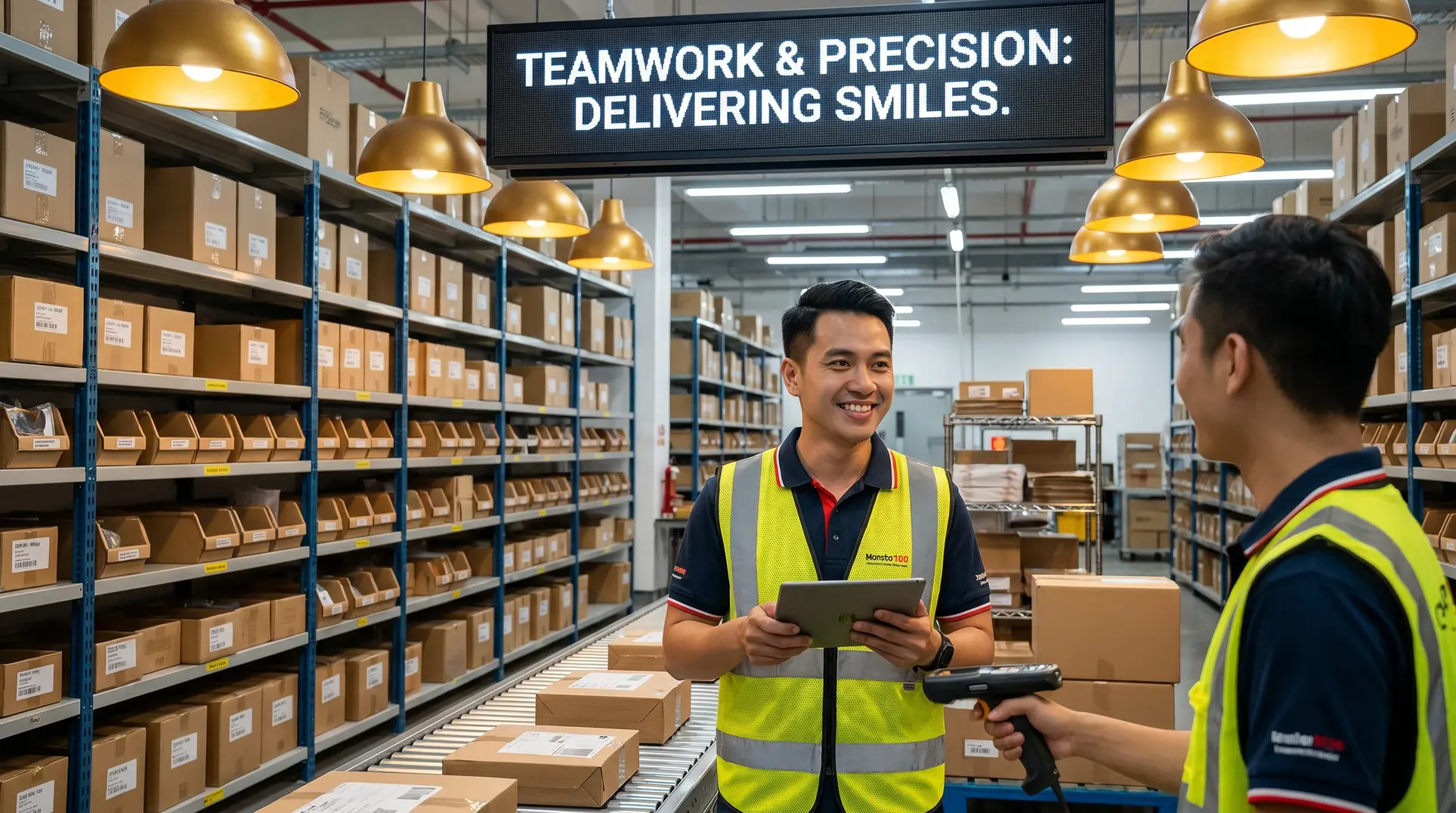
Consider this scenario: a US-based skincare brand expands into Canada, thrilled by the $5.5 trillion global B2C ecommerce market projected by 2027. Orders flow in, customer acquisition costs look reasonable, and the expansion appears successful—until returns start arriving. A $50 serum returned from Toronto now carries a $25 international shipping charge, customs paperwork, and a two-week processing delay. At a 15% return rate, margins evaporate. What seemed like smart market expansion becomes a financial drain.
This is the reality facing international brands serving Canadian customers without a strategic approach to returns. While 59% of shoppers now purchase from retailers outside their home countries, the operational complexity of managing those returns can undermine profitability entirely. The brands that succeed in cross-border commerce aren’t necessarily those with the best products or marketing—they’re often those who’ve solved the returns equation before it becomes a margin problem.

At Ottawa Logistics Fulfillment, we’ve spent over a century helping brands navigate Canadian logistics complexity. What we’ve learned is that returns management isn’t a customer service function to optimize after launch—it’s a strategic supply chain decision that should drive your fulfillment network design from day one.
Who This Article Is For—And Who It Isn’t
This article is written for operations managers, supply chain directors, and founders at established D2C brands processing 500+ orders monthly who are either currently selling into Canada from abroad or planning expansion. You’re likely based in the US, UK, EU, Australia, or Singapore, and you’re seeking tactical frameworks for building returns processes that protect unit economics while maintaining customer satisfaction.
This content is not designed for:
- Early-stage startups with fewer than 100 orders monthly
- Amazon-only sellers using FBA exclusively
- Brands seeking general ecommerce advice rather than Canada-specific operational strategies
If you’re conducting due diligence before Canadian market entry or already experiencing returns-related margin pressure, this article provides the operational framework you need.
The International Returns Challenge: Why Complexity Multiplies for Cross-Border Brands
Domestic returns are straightforward. A customer initiates a return, ships the product back at a predictable cost, and your warehouse restocks it within days. The regulatory environment is familiar, shipping costs are stable, and the entire process operates within a single legal and logistical framework.
International brands serving Canadian customers face an entirely different reality:
- Geographic separation from inventory: When your warehouse sits in another country, every Canadian return either ships internationally (expensive and slow) or gets written off entirely
- Regulatory complexity: Products that cross borders face customs requirements in both directions, adding cost, documentation, and delay
- Currency and cost unpredictability: Exchange rate fluctuations, carrier surcharges, and brokerage fees create variable cost structures that complicate margin forecasting
- Extended refund cycles: International return processing typically takes 2-4 weeks compared to 3-5 days for domestic returns, damaging customer satisfaction and increasing support inquiries
The margin impact compounds quickly. A product with healthy 40% gross margins in domestic sales can become margin-neutral or negative when international return shipping, customs fees, and extended processing times are factored in. For brands with return rates above 10%—common in categories like apparel, beauty, and consumer goods—this isn’t a minor operational issue. It’s a structural threat to Canadian market viability.
Return Shipping Economics: The Math That Destroys Margins
Understanding the true cost structure of international returns requires examining each component that erodes profitability:
Direct Shipping Costs
The differential between domestic Canadian return shipping and international return shipping is substantial:
- Domestic Canadian return: $8-15 for standard parcels depending on weight and zone
- International return to US: $25-50+ depending on weight, carrier, and service level
- International return to UK/EU: $40-75+ with longer transit times
For a $50 average order value product, international return shipping alone can consume 50-100% of the original gross margin.
Hidden Cost Multipliers
Beyond direct shipping, international returns carry additional cost layers:
- Extended processing time: 2-4 week return cycles mean refunds take longer, increasing customer service inquiries and negative reviews
- Inventory depreciation: Products in transit for weeks may miss seasonal windows or face obsolescence
- Write-off decisions: Many brands discover it’s cheaper to refund customers and let them keep products than pay international return shipping—destroying both margin and inventory
- Customer lifetime value impact: Poor return experiences reduce repeat purchase rates, compounding the cost beyond the single transaction
The “Free Returns” Expectation
Canadian consumers increasingly expect free or low-cost returns as standard, particularly from brands competing with major retailers who offer seamless return experiences. International brands face a difficult choice: absorb return shipping costs that destroy margins, or implement customer-paid returns that reduce conversion rates and customer satisfaction.
Research shows that 70% of shoppers only purchase from countries they trust, with Canada ranking among the most trusted origins. This cuts both ways—Canadian consumers trust international brands, but they also expect the return experience to match domestic standards.
In-Country Returns Processing: How Canadian Fulfillment Transforms the Equation
Here’s the strategic insight that changes everything: when inventory is already positioned within Canada, international brand returns become domestic Canadian returns.
This isn’t a minor operational adjustment—it fundamentally restructures the returns economics:
Before: Fulfilling from Outside Canada
- Return shipping: $25-50+ (international)
- Processing time: 2-4 weeks
- Customs complexity: Required for each return
- Write-off rate: High (often cheaper than shipping)
- Customer experience: Poor (slow refunds, complex process)
After: Canadian Fulfillment Infrastructure
- Return shipping: $8-15 (domestic Canadian rates)
- Processing time: 3-5 business days
- Customs complexity: None (domestic movement)
- Write-off rate: Minimal (restocking economically viable)
- Customer experience: Comparable to domestic brands

For a brand with 1,000 monthly Canadian orders and a 15% return rate, this differential translates to thousands of dollars in monthly savings—often enough to justify Canadian fulfillment infrastructure on returns economics alone, before considering the outbound shipping and delivery speed advantages.
Our Canadian fulfillment for US brands is specifically designed around this principle. By positioning inventory across our Ottawa, Toronto, and Vancouver facilities, international brands convert what would be complex cross-border logistics into simple domestic Canadian operations—both outbound and on returns.
Inventory Disposition Strategies for Returned Products
Receiving returns at a Canadian fulfillment center is only the first step. The real margin protection comes from systematic disposition processes that maximize recovery value while minimizing handling costs.
Restocking Protocols for Resalable Items
Not all returns are equal. A well-designed disposition workflow segments returns by condition and recovery potential:
- Grade A (Like New): Unopened, undamaged packaging—immediately restockable at full value
- Grade B (Open Box): Opened but undamaged product—restockable with inspection, potentially at slight discount
- Grade C (Minor Damage): Cosmetic damage to packaging or product—liquidation or secondary market channels
- Grade D (Unsalvageable): Damaged, expired, or non-compliant—disposal or donation
Quality Inspection Requirements
Effective returns processing requires defined inspection protocols:
- Visual inspection for damage and completeness
- Verification that product matches return authorization
- Assessment of resale eligibility based on category-specific criteria
- Documentation for inventory management and analytics
Liquidation and Secondary Market Options
For products that can’t be restocked at full value, Canadian-based disposition options preserve some recovery:
- Canadian liquidation channels: B-stock marketplaces, outlet retailers, discount chains
- Donation programs: Tax-advantaged donation to qualified Canadian charities
- Recycling and disposal: Compliant destruction when required by regulation or brand policy
The key advantage of in-country inventory disposition: you’re not paying international shipping to move products that will ultimately be liquidated or destroyed. Every disposition decision happens within Canada at domestic cost structures.
Our reverse logistics capabilities include complete disposition management, from quality inspection through restocking, liquidation, or compliant disposal—all within Canadian borders.
Building Returns Into Your Canadian Fulfillment Strategy
Returns management should be a front-end strategic decision made during market expansion planning, not an afterthought addressed when margins start eroding. Here’s a framework for evaluating your approach:
Setting Return Policies for the Canadian Market
Your return policy should balance customer expectations with operational reality:
- Return windows: 30 days is standard for most categories; consider extending for gift-heavy seasons
- Free vs. customer-paid returns: Free returns drive conversion but require margin headroom; customer-paid returns reduce return rates but may impact acquisition
- Condition requirements: Clearly communicate restocking requirements to reduce disputes
- Exchange vs. refund: Encourage exchanges where possible to retain the sale
Fulfillment Partner Selection Criteria
When evaluating Canadian fulfillment partners, assess reverse logistics capabilities specifically:
- Returns receiving infrastructure: Can they process returns efficiently with defined inspection protocols?
- Platform integration: Does returns processing integrate with your ecommerce platform for seamless customer experience?
- Disposition capabilities: Can they handle restocking, liquidation, and compliant disposal?
- Geographic coverage: Multiple Canadian locations reduce return shipping costs by positioning processing closer to customers
- Regulated product experience: For NHPs, cosmetics, and food products, does the partner have compliance infrastructure?
Integration for Customer Experience
Returns processing should integrate seamlessly with your ecommerce platform:
- Automated return merchandise authorization (RMA) generation
- Pre-paid return label creation at domestic Canadian rates
- Real-time tracking visibility for customers
- Automated refund processing upon inspection completion
Measuring True Returns Cost
Track the complete cost picture, including often-overlooked components:
- Direct return shipping costs
- Receiving and inspection labor
- Inventory depreciation during processing
- Write-off costs for non-resalable items
- Customer service time per return
- Disposal costs for items requiring destruction
Only with complete visibility can you make informed decisions about return policy, fulfillment partner selection, and market positioning.
Regulated Product Considerations in Returns Processing
For brands selling natural health products, cosmetics, food and beverage, or other regulated categories, returns processing carries additional compliance requirements that general content consistently overlooks.
Natural Health Products (NHPs)
Health Canada regulates NHPs with specific requirements that extend to returns:
- Returned NHPs may not be eligible for resale if packaging has been opened or tampered with
- Temperature-sensitive products require documented chain of custody during return transit
- Lot tracking requirements mean returns must be traceable to original production batches
- Expired products require compliant disposal, not liquidation
Cosmetics and Beauty Products
Cosmetics face similar constraints:
- Opened products are typically not resalable due to contamination concerns
- Packaging integrity verification is required before restocking
- Expiration date management affects disposition decisions
Food and Beverage
Food products have the most stringent return requirements:
- Temperature control documentation may be required throughout return transit
- Most returned food products cannot be restocked regardless of condition
- Disposal must comply with CFIA requirements
Working with a 3PL experienced in regulated product fulfillment ensures compliance throughout the returns process—not just on the outbound side. Our Intertek SAI Global certification with a 100% Superior rating reflects the documented compliance infrastructure required for these categories.
The Strategic Advantage of Fulfillment Partner Selection
Global B2C ecommerce continues expanding rapidly, with revenue projected to reach $5.5 trillion by 2027 at a 14.4% compound annual growth rate. Within this growth, 66% of Gen Z shoppers make online purchases globally—a demographic that will dominate consumer spending for decades.
For international brands, the Canadian market represents significant opportunity. But capitalizing on that opportunity requires treating fulfillment network design as a strategic decision with direct P&L impact—not a tactical afterthought.

The brands succeeding in Canadian ecommerce share common characteristics:
- They position inventory within Canada, converting cross-border complexity into domestic simplicity
- They partner with fulfillment providers offering complete reverse logistics capabilities
- They treat returns cost modeling as a core input to market expansion decisions
- They maintain compliance infrastructure for regulated product categories
At Ottawa Logistics Fulfillment, our distributed network across Ottawa, Toronto, and Vancouver—processing over 40,000 orders weekly—provides international brands with the infrastructure to serve Canadian customers at domestic service levels. Same-day fulfillment for orders received by 1:30 PM EST, automated carrier rate-shopping across six carriers, and complete reverse logistics capabilities create the operational foundation for profitable Canadian market expansion.
Our customs compliance expertise helps international brands navigate the regulatory landscape, while our bilingual English/French operations ensure complete Canadian market coverage.
Returns don’t have to destroy margins. With strategic fulfillment positioning and a partner equipped to handle reverse logistics efficiently, international brands can offer Canadian customers the return experience they expect while protecting the unit economics that make market expansion worthwhile.
The question isn’t whether to address returns management—it’s whether to address it strategically before expansion, or reactively after margins have already eroded.
Frequently Asked Questions
Use clear grading and disposition rules: restock like-new items, inspect and possibly discount open-box products, route cosmetically damaged goods to liquidation or secondary channels, and reserve disposal or donation for truly unsalvageable or non-compliant items.
If you’re an established D2C brand processing roughly 500+ orders monthly and either already shipping into Canada or planning to, you’re at the stage where returns can materially erode margins and should be built into your expansion and fulfillment strategy from day one.
You’re likely treating them as international returns—paying $25–$50+ per parcel, absorbing customs and brokerage, and waiting 2–4 weeks for processing—instead of domestic Canadian returns, where costs drop to roughly $8–$15 and refunds can be processed in 3–5 days.
Expect tighter rules around resale: many opened items can’t be restocked, temperature-sensitive goods need documented chain of custody, lot and batch tracking must be maintained, and expired or compromised products must be disposed of in line with Canadian regulations.
Positioning inventory in Canada turns cross-border returns into domestic ones, cutting shipping costs, eliminating customs on returns, shortening refund timelines, and making it economically viable to restock rather than write off inventory.

Scale Your Canada Fulfillment with Confidence.
Partner with Canada's premier 3PL to unlock faster shipping, lower costs, and seamless scalability for your ecommerce brand.
Talk to an Expert