Fulfillment
Micro-Fulfillment Centers: What They Are, How They Work, and Why They Matter for Ecommerce
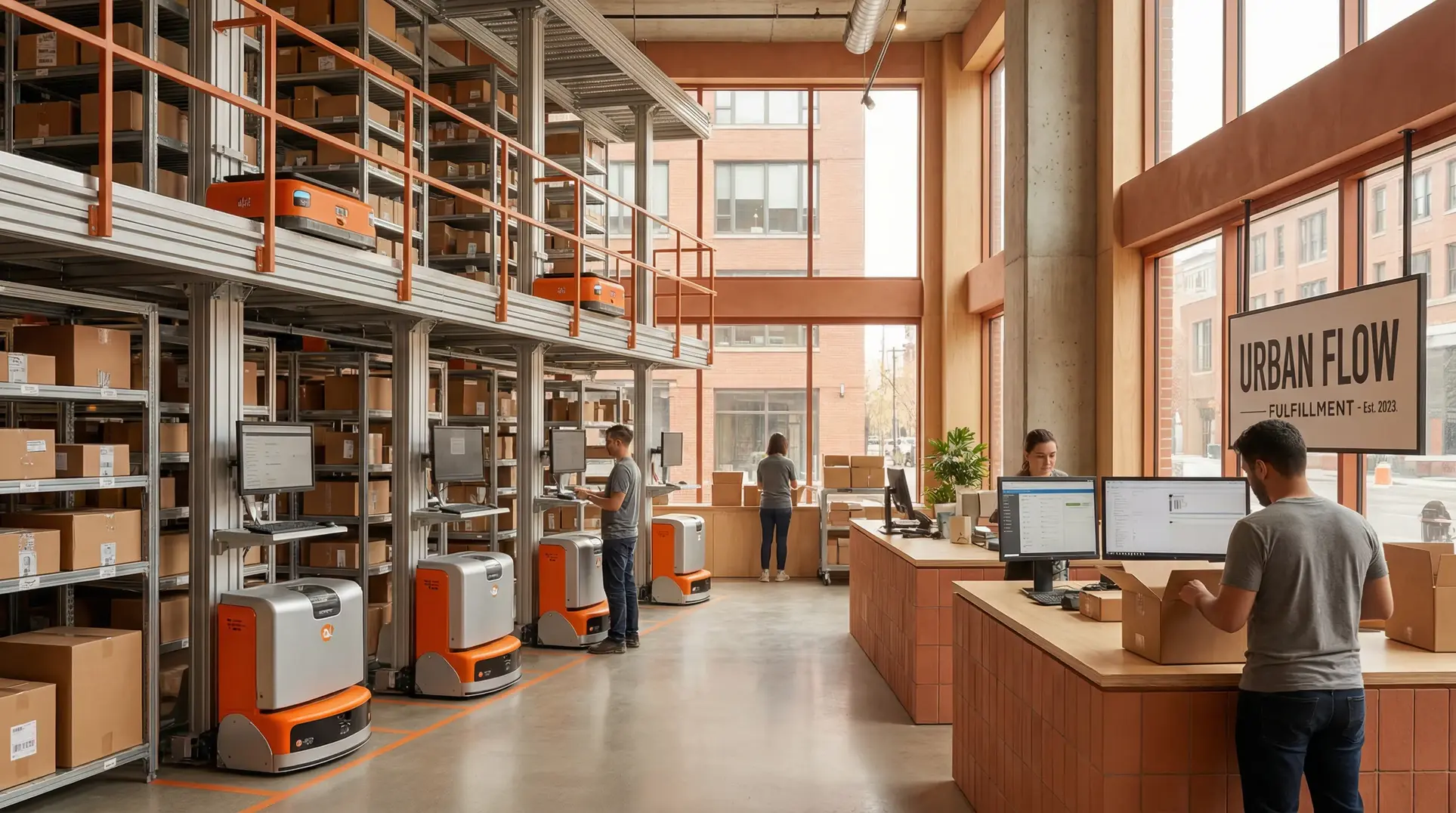
The way ecommerce brands fulfill orders is undergoing a fundamental transformation. As consumer expectations for faster delivery continue to intensify—with 68% of shoppers now ranking shorter delivery windows as the primary factor influencing their purchasing decisions—traditional fulfillment models built around massive regional warehouses are struggling to keep pace. This shift has given rise to a new approach: micro-fulfillment. At Ottawa Logistics, we have witnessed this evolution firsthand across our fulfillment network in Ottawa, Toronto, and Vancouver, where we process over 40,000 direct-to-consumer orders weekly. In this comprehensive guide, we explain what micro-fulfillment centers are, how they operate, why they matter for ecommerce businesses, and how brands can access these benefits without building their own automated facilities.
What Is a Micro-Fulfillment Center?
A micro-fulfillment center (MFC) is a small-scale, often highly automated warehouse typically under 25,000 square feet, strategically positioned in urban or suburban areas to bring inventory closer to end consumers. Unlike traditional large-scale distribution centers—which can span 100,000 to over 1,000,000 square feet and are typically located in industrial zones far from population centers—MFCs prioritize proximity to customers over storage capacity.
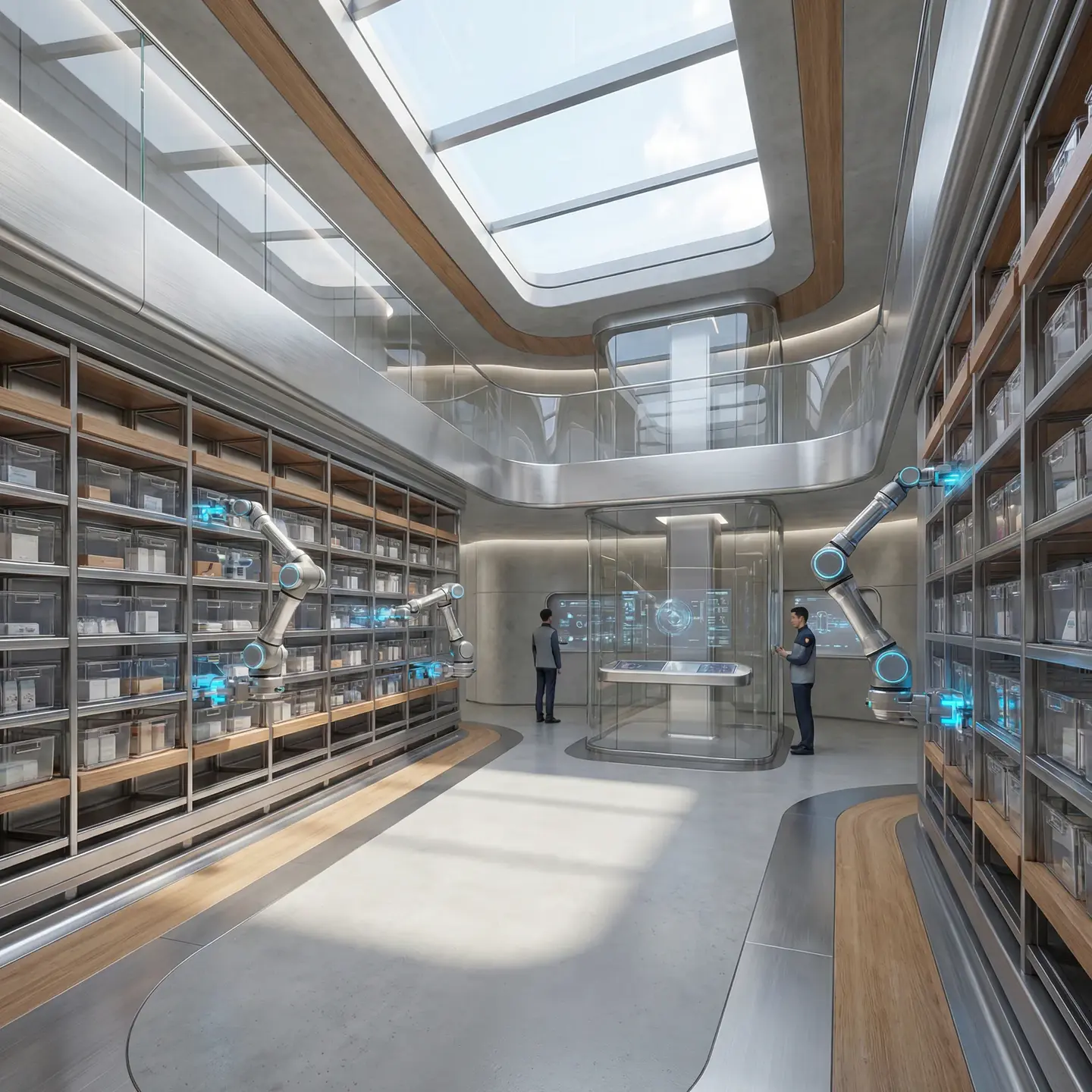
The defining characteristics of micro-fulfillment centers include:
- Compact footprint: Typically ranging from 3,000 to 10,000 square feet for smaller urban facilities, up to 10,000–25,000 square feet for more established operations
- Strategic urban positioning: Located within 3 to 10 miles of dense customer populations
- High automation density: Utilizing robotics and automated systems to maximize throughput within limited space
- Limited but optimized SKU range: Capable of holding up to 15,000 different SKUs, focusing on high-velocity items
- Speed-first design: Optimized for rapid order processing and last-mile efficiency rather than bulk storage
Micro-fulfillment centers can take several forms: standalone purpose-built facilities, converted retail spaces, repurposed sections of existing stores, or nodes within a broader distributed fulfillment network. The key distinction is that MFCs optimize for speed and last-mile efficiency rather than bulk storage and long-haul distribution.
Who This Article Is For
This guide is designed for ecommerce operations managers, founders, and logistics decision-makers evaluating whether distributed or micro-fulfillment strategies could improve their delivery speed and reduce costs—particularly for Canadian and cross-border operations. If you are currently using a single centralized warehouse and considering distributing inventory across multiple locations, or if you are an international brand evaluating Canadian market entry, this information is directly relevant to your strategic planning.
This article is not intended for warehouse automation engineers seeking technical implementation specifications, or for brands with order volumes below 500 units per month where traditional fulfillment models remain economically appropriate.
How Micro-Fulfillment Centers Work
Understanding the operational workflow of a micro-fulfillment center reveals why these facilities can achieve such dramatic improvements in speed and efficiency compared to traditional warehousing.
The Operational Workflow
- Inventory reception and stowing: Products arrive from regional distribution centers or directly from suppliers, are inspected and validated, then stowed in high-density storage systems—often using automated storage and retrieval systems (AS/RS)
- Order receipt and routing: When a customer places an order, the warehouse management system instantly identifies optimal pick paths and determines which facility should fulfill the order based on proximity, inventory availability, and carrier options
- Automated retrieval: Robots or automated systems retrieve items from storage and transport them to picking stations
- Order consolidation: Workers or robotic arms complete the order assembly at ergonomic picking stations
- Packing and dispatch: Orders are packed and prepared for last-mile delivery through local carriers, bike couriers, electric vehicles, or traditional parcel networks
Key Automation Technologies
The technology stack powering modern micro-fulfillment includes:
- Automated Storage and Retrieval Systems (AS/RS): Shuttle-based systems that store containers in high-density vertical racks and retrieve them in optimized sequences
- Autonomous Mobile Robots (AMRs): Robots that navigate the facility, transporting containers between storage zones, picking stations, and packing areas
- Robotic picking arms: AI-powered systems that learn with each pick, progressively improving performance and expanding the range of items they can accurately select
- Goods-to-person systems: Technology that brings products directly to stationary workers rather than requiring workers to walk through aisles
- AI-driven inventory management: Systems that predict demand patterns and optimize product slotting based on order velocity
- Real-time inventory visibility: RFID, barcode scanning, and IoT sensors maintaining accurate stock levels across the network
These technologies work together to enable throughput rates up to 10 times that of traditional manual warehouse operations. Vertical storage solutions can reduce space requirements by up to 85% compared to conventional warehouse configurations, making urban real estate viable for fulfillment operations.
Benefits of Micro-Fulfillment for Ecommerce
The advantages of micro-fulfillment extend across multiple dimensions of ecommerce operations, from customer experience to environmental impact.
Faster Delivery Times
MFCs enable same-day or next-day delivery as a standard offering rather than a premium service. When strategically located, these facilities can achieve fulfillment windows of 2–3 hours from order placement to dispatch. This capability directly addresses the growing consumer expectation for rapid delivery—a critical competitive factor when 68% of shoppers prioritize delivery speed in their purchasing decisions.
At Ottawa Logistics, our same-day fulfillment service processes orders received by 1:00 PM EST for dispatch the same business day—a capability enabled by our distributed facility network across Canada’s major population centers.
Reduced Fulfillment and Delivery Costs
Last-mile delivery represents approximately 41% of total supply chain costs for most ecommerce operations. Micro-fulfillment addresses this challenge through proximity:
- MFCs can reduce transport costs by up to 30%
- Shorter delivery routes enable integration of lower-cost delivery methods like electric vehicles and cargo bikes
- Reduced delivery distances translate to fewer delivery attempts and lower failed-delivery costs
- Industry estimates suggest micro-fulfillment can reduce cost per order by up to 75% compared to traditional centralized fulfillment
Our carrier rate-shopping system automatically compares rates across FedEx, UPS, Canada Post, Canpar, GLS, and UniUni for every order, finding the optimal combination of speed and cost based on the destination and service requirements.
Superior Space Efficiency
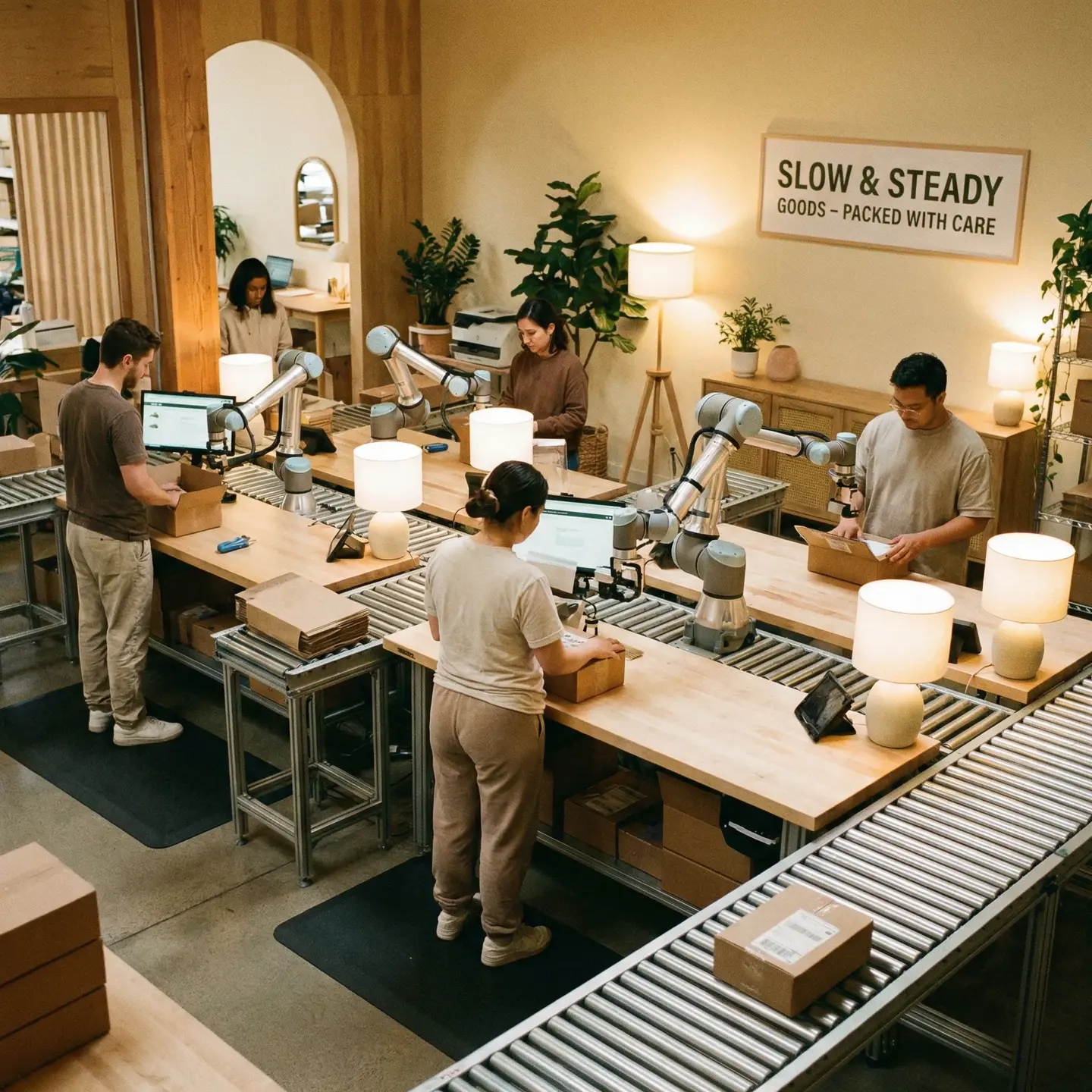
Advanced automation allows MFCs to maximize storage density within compact footprints. This efficiency transforms the economics of urban fulfillment, making it viable to operate facilities in locations where traditional warehouse square footage costs would be prohibitive. A 10,000 square foot micro-fulfillment center with modern automation can handle the throughput of a traditional 50,000+ square foot manual warehouse.
Scalability Without Massive Capital Investment
Micro-fulfillment networks scale incrementally by adding nodes rather than committing to enormous fixed infrastructure projects. Specialty providers can operationalize a new facility within approximately 30 days in existing space. This modularity allows brands to:
- Add capacity for seasonal surges without long-term lease commitments
- Test new geographic markets with limited initial investment
- Adjust network configuration as customer distribution patterns evolve
Environmental Sustainability
The sustainability benefits of proximity-based fulfillment are substantial:
- Shorter transportation routes can reduce carbon emissions by up to 26%
- Energy-efficient automation systems reduce consumption compared to traditional fulfillment
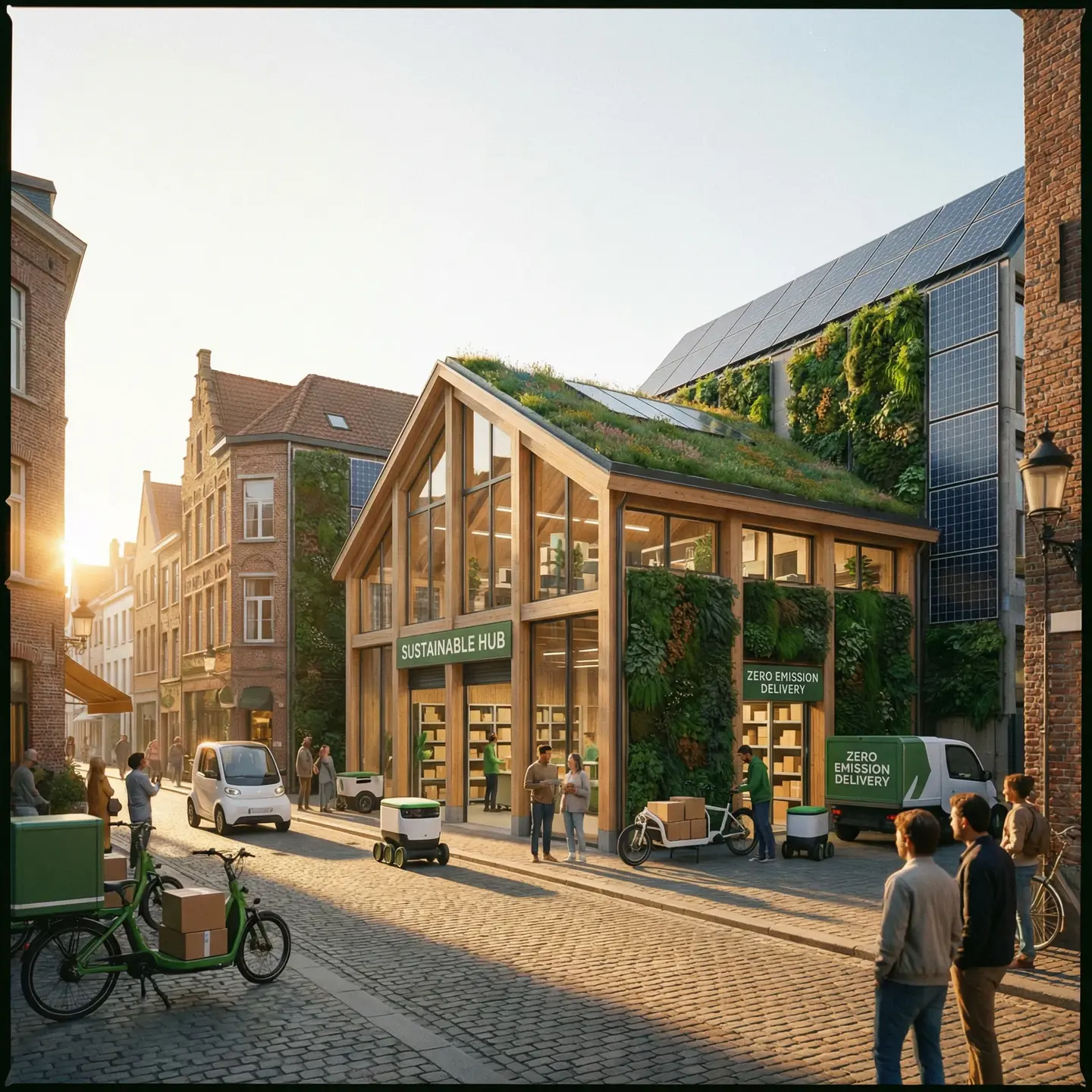
- Integration with electric vehicles and bike couriers for last-mile delivery further reduces environmental impact
- Smaller facility footprints require proportionally less energy for heating, cooling, and lighting
Micro-Fulfillment Center vs. Dark Store vs. Traditional Warehouse
Understanding the distinctions between these fulfillment models helps clarify when each approach makes strategic sense.
Traditional Warehouse / Distribution Center
- Size: 100,000–1,000,000+ square feet
- Location: Industrial zones outside city centers
- Operations: Manual or partially automated, optimized for bulk storage and regional distribution
- Delivery timeline: Typically 2–7 days
- Best for: High-volume storage, wholesale distribution, B2B fulfillment
Micro-Fulfillment Center
- Size: 3,000–25,000 square feet
- Location: Urban or suburban areas within 3–10 miles of customer concentrations
- Operations: Highly automated, optimized for speed and last-mile efficiency
- Delivery timeline: Same-day to next-day
- Best for: High-velocity D2C fulfillment, omnichannel retail, rapid delivery requirements
Dark Store
- Size: Variable, typically existing retail footprints of 10,000–50,000 square feet
- Location: Former retail locations in urban and suburban areas
- Operations: Retail-style layout converted entirely to fulfillment, no walk-in customers
- Delivery timeline: Same-day, often sub-two-hour for grocery
- Best for: Grocery delivery, quick commerce, rapid deployment using existing real estate
The critical distinction: MFCs are purpose-built or purpose-configured for automated fulfillment and achieve maximum throughput density. Dark stores repurpose existing retail space, retaining retail shelving layouts that are less efficient but faster to deploy. Both prioritize proximity to consumers over storage volume—a fundamental departure from traditional warehouse thinking.
Challenges and Considerations
Honest evaluation of micro-fulfillment requires acknowledging the barriers and complexities involved in implementation.
High Upfront Investment
Automated MFC systems require significant capital for robotics, software, and integration—typically $3 to $8 million per facility depending on automation density and site conditions. Payback periods generally run 2–3 years, exposing investments to demand volatility and technology obsolescence risks. However, Robotics-as-a-Service (RaaS) models are emerging that lower barriers for smaller retailers by converting capital expenditure to operational expense.
Technology Integration Complexity
MFCs must integrate seamlessly with existing warehouse management systems, ecommerce platforms, ERP systems, and carrier networks. Poor integration creates data silos and operational bottlenecks that undermine the speed advantages micro-fulfillment promises. Our platform integrations with Shopify, Amazon, WooCommerce, BigCommerce, and NetSuite demonstrate the technical depth required for effective distributed fulfillment.
Limited SKU Range
Compact facilities can only hold high-velocity items efficiently. Slower-moving inventory still requires traditional warehouse storage, meaning most brands need a hybrid approach combining centralized storage for long-tail products with distributed nodes for fast-moving items. This reality shapes inventory strategy and requires sophisticated inventory management across multiple facility types.
Workforce Transformation
While MFCs reduce manual labor needs, they require skilled technicians for operating and maintaining automated systems. US warehouse demand for robotics technicians is expected to grow by 22% as automation advances. Finding qualified workers in competitive labor markets remains challenging, and cross-training requirements create dependency on fewer, more specialized employees.
Urban Real Estate Constraints
Finding suitable space in dense metropolitan areas that meets zoning requirements, can support heavy automated equipment loads, and provides adequate access for inbound inventory remains difficult. Some municipalities have implemented restrictions on “dark store” operations or limited delivery vehicle activity, requiring extended permitting processes.
Micro-Fulfillment Strategies for Canadian Ecommerce
The strategic question for most ecommerce brands is not whether to build their own automated micro-fulfillment centers—the capital requirements and operational complexity make this impractical for all but the largest retailers. The question is how to access micro-fulfillment benefits through partnership with distributed fulfillment providers.
The Distributed 3PL Approach
Ottawa Logistics operates fulfillment centers in Ottawa, Toronto, Vancouver and Bedford/Dallas, Texas—a four-node network covering Canada’s major population centers and US. This distributed model delivers the core benefits of micro-fulfillment:
- Proximity to consumers: Inventory positioned near the majority of Canadian customers
- Faster delivery times: Reduced transit distances enable faster final-mile delivery
- Lower shipping costs: Shorter zones translate to reduced carrier charges
- Scalable capacity: Add or reduce capacity without capital investment in facilities
For brands selling in Canada, partnering with a distributed 3PL achieves the same outcomes as building proprietary MFCs—without the multi-million dollar investment, technology integration burden, or workforce management complexity.
Capabilities That Enable Micro-Fulfillment Results
Our infrastructure supports the speed and efficiency micro-fulfillment promises:
- Same-day fulfillment: Orders received by 1:30 PM EST ship the same business day
- Intelligent carrier selection: Rate-shopping across multiple carriers finds the optimal route and cost for every order
- Real-time visibility: Order tracking and inventory visibility across all facilities
- Value-added services: Kitting and assembly, subscription box preparation, and promotional bundle creation within the fulfillment workflow
- Regulatory compliance: Licensed handling for NHP, food, and cosmetics—critical for health and beauty brands and food and beverage companies using distributed fulfillment
- Bilingual support: English and French customer service for the complete Canadian market
Cross-Border Considerations
The end of U.S. Section 321 de minimis treatment (effective August 29, 2025) has significant implications for fulfillment strategy. Brands that previously shipped to Canadian customers from U.S. fulfillment centers duty-free now face per-shipment duties. Canadian-based distributed fulfillment eliminates these duties for domestic orders while our compliance expertise supports U.S.-bound shipments where Section 321 remains applicable.
For U.S. brands expanding into Canada, positioning inventory within Canada through a distributed 3PL model eliminates customs delays and duty complications for Canadian customers—delivering the speed advantages micro-fulfillment promises without the cross-border friction.
The Micro-Fulfillment Market: Growth and Outlook
Understanding the scale and trajectory of micro-fulfillment adoption provides important context for strategic planning.
Market Size and Projections
The global micro-fulfillment center market was valued at USD 6.61 billion in 2025 and is projected to reach USD 53.25 billion by 2032—a compound annual growth rate of 34.7%. Ecommerce applications account for 41.4% of the market in 2025, with grocery representing another significant segment.
Regional Growth Patterns
Growth rates vary significantly by region:
- China: 45.9% CAGR, driven by massive urban populations and domestic automation suppliers
- India: 42.5% CAGR, accelerating as ecommerce penetration extends beyond tier-one cities
- Germany: 39.1% CAGR, reflecting both economic strength and sustainability emphasis
- United States: 28.9% CAGR, with North America currently dominating global market share
Underlying Drivers
Several structural forces sustain micro-fulfillment growth:
- Global ecommerce sales projected to grow from $5.8 trillion in 2023 to $8 trillion by 2027
- The same-day delivery market expected to grow by over 20% in 2025
- Persistent labor shortages in logistics driving automation adoption
- Urban real estate costs making traditional large-format warehouses economically unviable near population centers
Companies with micro-fulfillment or distributed fulfillment strategies have scaled operations faster than competitors using traditional centralized fulfillment. This is not a niche trend—it represents a fundamental restructuring of how ecommerce fulfillment operates.
Taking Action: Evaluating Your Fulfillment Strategy
The practical question for ecommerce brands is not whether micro-fulfillment matters—the market data and consumer expectations make that clear. The question is how to access these benefits given your specific order volumes, customer distribution, and growth trajectory.
Key Questions to Evaluate
- Where are your customers concentrated? Mapping customer locations reveals whether distributed inventory positioning would meaningfully reduce delivery distances and times.
- What delivery speed do your customers expect? If competitors offer same-day or next-day delivery and you cannot, you are at a measurable competitive disadvantage.
- What are your current fulfillment costs? Understanding your cost per order—including picking, packing, and shipping—provides a baseline for evaluating alternatives.
- What is your order velocity? Distributed fulfillment economics improve with volume. Most micro-fulfillment models require 1,000+ daily orders to achieve optimal efficiency.
- Do you ship cross-border? The recent Section 321 changes make Canadian fulfillment positioning strategically important for brands serving both U.S. and Canadian customers.
The Partnership Path
For most ecommerce brands, building proprietary micro-fulfillment infrastructure is neither practical nor necessary. A distributed 3PL with strategically positioned facilities delivers equivalent benefits:
- Inventory closer to customers without capital investment
- Faster delivery without building automation in-house
- Scalable capacity without long-term real estate commitments
- Technology integration without building engineering teams
Our ecommerce fulfillment and D2C fulfillment services provide the speed and efficiency that micro-fulfillment promises, backed by 80+ years of logistics expertise and a network purpose-built for Canadian ecommerce.
If you are evaluating whether distributed fulfillment could improve your delivery speed, reduce costs, or support expansion into Canadian markets, we invite you to request a fulfillment assessment. We will evaluate your current operations, customer distribution, and growth plans to determine how our distributed Canadian fulfillment network can deliver micro-fulfillment results for your brand—without the complexity of building it yourself.
Frequently Asked Questions
No, it’s not economical for low volumes—stick to traditional models. MFCs shine for brands hitting 1,000+ daily orders needing rapid Canadian delivery, where distributed networks like Ottawa Logistics’ Ottawa-Toronto-Vancouver setup deliver the perks without your own build.
It’s a compact, automated warehouse under 25,000 sq ft in urban areas, focusing on speed over storage—think 3-10 miles from customers with robots handling high-velocity items. Unlike huge traditional warehouses in industrial zones, MFCs cut delivery to same-day by prioritizing proximity, not bulk.
Orders route to the nearest facility via smart WMS, robots retrieve and pack in 2-3 hours, then local carriers or e-bikes handle last-mile. Ottawa Logistics cuts off at 1 PM EST for same-day dispatch across major cities, dodging cross-border duties post-Section 321 changes.
Expect $3-8M upfront for automation, plus integration headaches and limited SKUs for slow-movers—payback in 2-3 years if demand holds. Skip it: Partner with a 3PL for the same speed and cost cuts (up to 75% per order) without the risk or tech hassle.
Absolutely for high-velocity D2C like fashion, beauty, or subs—holds 15,000 SKUs optimized for fast picks. Ottawa Logistics adds kitting, bilingual support, and compliance for NHP/food/cosmetics, giving US brands entering Canada duty-free speed without customs delays.

Scale Your Canada Fulfillment with Confidence.
Partner with Canada's premier 3PL to unlock faster shipping, lower costs, and seamless scalability for your ecommerce brand.
Talk to an Expert