
Compare
In-House vs. Outsourced Fulfillment in Canada (2026): The Real Cost of Control, Flexibility, and Scale

For years, the assumption among Canadian e-commerce founders was straightforward: if you want control over your fulfillment, you build it yourself. Own the warehouse. Hire the team. Control every touchpoint. In 2026, that assumption no longer holds universally true. The economic environment in Canada has shifted in ways that fundamentally alter the math behind fulfillment infrastructure decisions. Labour costs have structurally increased. Industrial real estate remains expensive in core markets like the Greater Toronto Area and Vancouver. Technology requirements have escalated dramatically. Regulatory complexity has intensified as the USMCA review process unfolds and cross-border scrutiny tightens. This is not a philosophical debate about operational philosophy. It is a capital allocation decision under volatile conditions—one that affects cash flow, scalability, and long-term profitability.
We wrote this article to provide the most data-backed, strategic comparison available for Canadian e-commerce brands evaluating their fulfillment infrastructure in 2026. Whether you are a founder weighing your first 3PL partnership, a COO analyzing total cost of ownership, or a finance leader modeling capital expenditure scenarios, this analysis is designed to inform board-level decisions with current Canadian labour, real estate, and trade data.
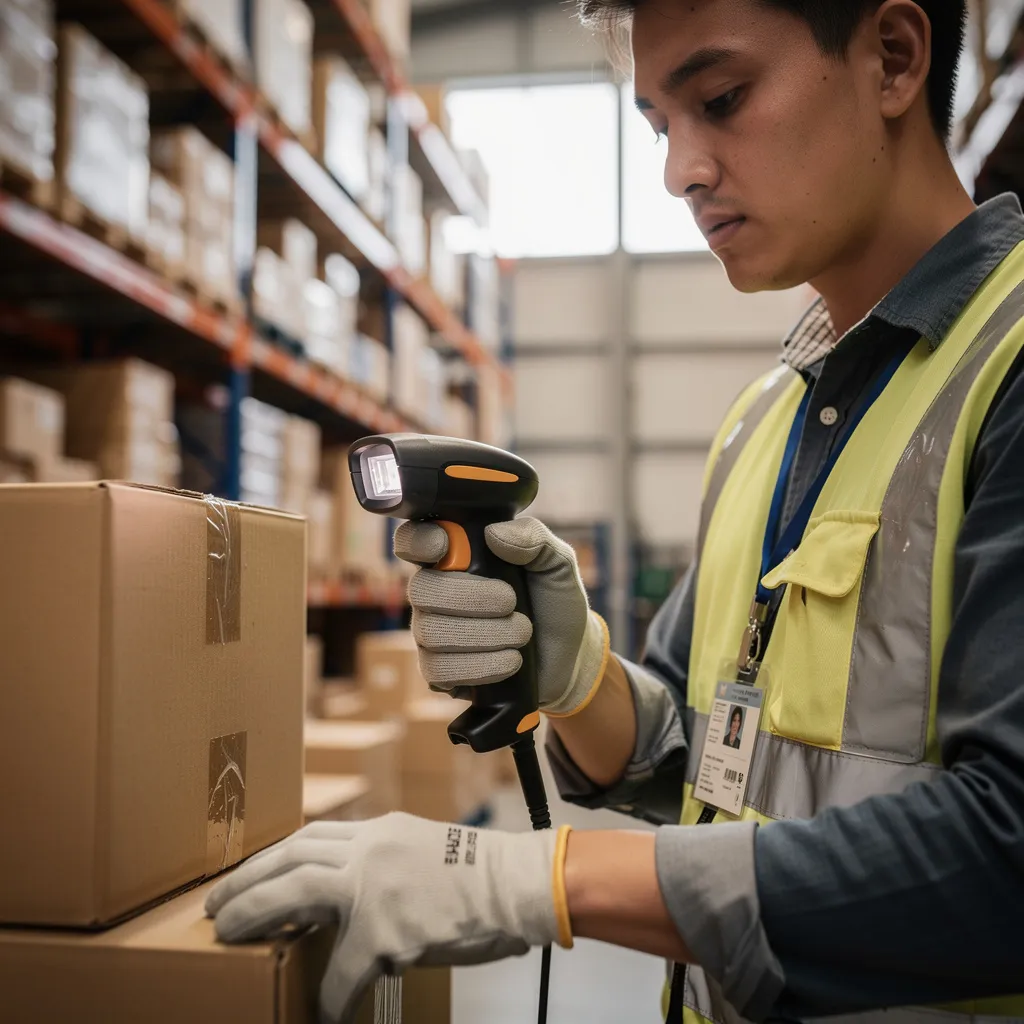
Who This Article Is For—and Who It Is Not For
This article is written for mid-market to enterprise e-commerce brands processing 300 or more orders monthly who are seriously evaluating the financial and operational trade-offs between in-house fulfillment and third-party logistics partnerships. It is particularly relevant for:
- Canadian brands expanding cross-border into the United States
- U.S. brands establishing Canadian fulfillment infrastructure
- Direct-to-consumer brands experiencing rapid growth or seasonal volatility
- Finance and operations leaders conducting total cost of ownership analysis
This article is not for brands seeking a simple promotional comparison or businesses with fewer than 100 orders monthly where the infrastructure decision remains straightforward. If you are looking for a quick checklist or surface-level overview, this analysis may be more detailed than you need. If you are evaluating fulfillment as a strategic infrastructure decision, read on.
The Canadian Labour Market Reality in 2026
Any honest assessment of in-house fulfillment costs must begin with labour economics. According to Statistics Canada’s Q1 2025 Job Vacancy and Wage Survey, the average offered hourly wage rose to $28.90, representing a 6.1 percent year-over-year increase. This outpaced the broader labour force average wage growth of 3.6 percent, indicating that employers in sectors like transportation and warehousing are paying premium wages to attract talent in a structurally tight market.
While total job vacancies declined nearly 20 percent year-over-year and the ratio of unemployed persons per vacancy rose to 2.9 (up from the 2022 record low of 1.1), labour shortages remain embedded in warehousing and logistics operations. The aging workforce, digital skill gaps, and competition from larger fulfillment operators create persistent recruitment challenges that mid-market brands struggle to overcome.
The DHL Insight 2030 survey reinforces this structural reality: 69 percent of supply chain executives anticipate higher labour costs through the end of the decade, while 66 percent expect ongoing labour shortages. Labour is not a cyclical challenge that will resolve itself. It is a structural constraint that affects every in-house fulfillment operation in Canada.
The True Fixed Cost Burden of In-House Fulfillment
In-house fulfillment operates as a fixed cost model in a market where volatility is rising. Many founders calculate fulfillment costs through a deceptively simple formula: warehouse rent plus employee wages. This calculation systematically underestimates true operational expenses by 30 to 50 percent.
Industrial Real Estate Costs
Industrial net rents in the Greater Toronto Area remain among the highest in Canada, historically hovering in the high teens per square foot even as national average rents softened toward the mid-teens. National availability rates have risen toward the 6 percent range following the 2024–2025 construction wave, but the forward pipeline for 2026–2027 is projected to shrink by nearly 40 percent, creating potential renewed supply constraints.
Critically, businesses leasing warehouse space must size for peak season capacity—typically the October through December period when order volumes can surge 300 to 400 percent above baseline. This means paying for underutilized space during the remaining nine months of the year, creating a structural inefficiency that compounds the real estate cost burden.
The Complete In-House Cost Stack
Beyond rent, in-house fulfillment requires investment across multiple cost categories:
- Facility costs: Utilities, insurance, maintenance, racking, and equipment
- Labour costs: Base wages plus CPP contributions, EI premiums, WSIB coverage, Employer Health Tax, benefits, and management overhead
- Technology costs: Warehouse management system, order management platform, shipping integrations, hardware, and ongoing maintenance
- Operational costs: Packaging materials, equipment depreciation, quality control, and returns processing
- Hidden costs: Recruitment expenses, training investment for replacements, and management distraction from strategic activities
Labour replacement costs deserve particular attention. In competitive markets like the GTA, replacing a trained warehouse picker who leaves for a larger facility carries an average cost of $4,000 in lost productivity, recruitment fees, and training investment. With annual turnover rates in warehouse operations ranging from 30 to 50 percent, a business with three full-time pickers should expect to recruit and train at least one new team member every year simply to maintain operational continuity.
The Automation and Technology Gap
Modern fulfillment increasingly requires sophisticated technology infrastructure that most in-house operations struggle to deploy. Deloitte’s 2026 manufacturing outlook reveals that 80 percent of executives plan to allocate at least 20 percent of improvement budgets toward automation hardware and analytics. Additionally, 60 percent of leaders expect to spend over $1 million on supply chain technology, with nearly one-fifth planning investments exceeding $10 million.
For most mid-market Canadian brands, that level of capital expenditure is unrealistic. This creates a widening efficiency gap between sophisticated logistics operators deploying enterprise-grade systems and in-house teams relying on basic warehouse management plugins and spreadsheet-based inventory tracking.
The technology requirements for competitive fulfillment in 2026 include:
- Warehouse management systems with pick path optimization
- Multi-point barcode verification at receiving, picking, packing, and shipping stages
- Real-time inventory synchronization across multiple sales channels
- Demand forecasting algorithms for predictive inventory planning
- Carrier rate shopping engines for cost optimization
- Performance analytics dashboards for operational visibility
According to industry research, 73 percent of executives expect heavier reliance on artificial intelligence within five years. Supply chains are moving toward what analysts call “Connected Intelligence,” where planning, procurement, and fulfillment systems operate as integrated networks rather than isolated functions.

The Outsourced Model: Converting Fixed Costs to Variable Costs
Third-party logistics providers operate on a fundamentally different financial model that converts fixed capital expenditure into variable operating expense. Rather than investing in warehouse leases, equipment, and permanent staff, brands pay per pallet stored, per order fulfilled, and per shipment processed. This structure enables businesses to flex down in February when demand is low and flex up in November when order volumes surge.
This is not about “giving up control.” It is about financial agility—the ability to match fulfillment costs to actual revenue rather than carrying fixed overhead regardless of sales performance.
The Shipping Leverage Advantage
3PLs operating at scale negotiate master carrier agreements with Canada Post, FedEx, Purolator, and UPS that individual brands shipping 1,000 to 3,000 packages monthly simply cannot access. The volume-based discounts secured through these agreements create procurement arbitrage that directly benefits client brands.
Consider this calculation: a $2 savings per parcel at 2,000 orders monthly equals $4,000 in monthly savings, or $48,000 annually. For many growing brands, this shipping leverage alone covers a substantial portion of 3PL management fees, creating scenarios where outsourcing becomes cost-neutral or even cost-negative compared to in-house operations.
Technology Access Without Capital Investment
Professional 3PLs have invested heavily in technology infrastructure that clients access as part of standard service offerings. This includes:
- Enterprise-grade warehouse management systems
- Real-time customer portals with inventory visibility and order tracking
- Native integrations with major e-commerce platforms including Shopify, WooCommerce, BigCommerce, and Amazon
- Automated carrier rate shopping for cost optimization
- Quality control systems maintaining 99 percent or higher accuracy rates
Businesses gain access to technology capabilities that would require substantial capital investment and technical expertise to develop independently, without the associated overhead of maintaining and upgrading these systems.
Regulatory Complexity and Cross-Border Considerations
The 2026 trade environment has introduced new layers of complexity for Canadian businesses serving U.S. customers. The ongoing USMCA review process, increased scrutiny of rules of origin, and evolving tariff structures require sophisticated compliance capabilities that many in-house operations lack.
Approximately 53 percent of Canadian exports to the United States claimed NAFTA/USMCA tariff preferences in 2025, underscoring the reliance on structured trade frameworks. Trade policy volatility, tariff risk, and customs modernization initiatives make compliance expertise more critical than ever for businesses operating cross-border fulfillment.
For brands expanding into the U.S. market or Canadian businesses optimizing cross-border distribution, the regulatory navigation capabilities of experienced logistics partners provide value beyond simple cost comparison. Compliance infrastructure and customs brokerage expertise represent strategic advantages in an environment where regulatory missteps can result in shipment delays, unexpected duties, and customer dissatisfaction.
The Macro Supply Chain Context
Supply chain volatility has become normalized rather than exceptional. According to industry analysis, 70 percent of executives expect cybersecurity disruptions to impact supply chains by 2030. Global instability from geopolitical tensions, trade uncertainty, and fragile transportation routes creates persistent lead time uncertainty and supplier reliability challenges.
Resilience in 2026 extends beyond operational redundancy to include:
- Digital risk management and cybersecurity protocols
- ESG metrics and sustainability reporting
- Multimodal orchestration capabilities
- Geographic distribution for risk mitigation
Professional 3PLs with sophisticated demand forecasting capabilities, relationships with multiple suppliers, and experience managing inventory through volatile periods provide valuable buffers against supply chain disruption that individual in-house operations struggle to replicate.
The Hybrid Model: Balancing Control and Flexibility
Many successful brands now operate hybrid fulfillment networks that balance customer experience control with capital discipline. The logic follows a “core versus context” framework: high-density regions or strategic nodes may remain in-house for brand control and customization, while secondary regions and cross-border markets are outsourced to preserve flexibility and optimize capital allocation.
This approach recognizes that the binary choice between “all in-house” and “all outsourced” often misses the optimal solution. A Toronto-based brand might maintain direct fulfillment capabilities for Ontario customers while partnering with 3PLs for western Canada distribution and U.S. market fulfillment.
When Outsourced Fulfillment Makes Strategic Sense
The break-even point—the volume at which outsourced fulfillment becomes economically superior to in-house operations—typically occurs between 200 and 500 orders monthly, depending on warehouse location, local labour costs, technology infrastructure, and specific 3PL pricing structures.
Outsourced fulfillment generally makes strategic sense when:
- Order volumes exceed 300 monthly and are growing
- Seasonal demand volatility creates peak-to-trough swings exceeding 100 percent
- Cross-border expansion requires compliance expertise and geographic distribution
- Capital preservation is prioritized over operational ownership
- Technology infrastructure requirements exceed internal capabilities
- Management bandwidth is constrained and better deployed toward growth activities
Positioning Ottawa Logistics in the Canadian 3PL Landscape
As a Canadian-based fulfillment partner with strategically located facilities in Ottawa, Toronto, and Vancouver, we provide an example of the outsourced model operating within the current Canadian economic environment. Our infrastructure serves both domestic brands scaling nationally and cross-border sellers optimizing distribution between Canada and the United States.
Our approach integrates e-commerce fulfillment, warehousing, shipping, and compliance services under one operational framework. This includes real-time inventory management, carrier rate shopping for cost optimization, and freight forwarding capabilities for complex distribution requirements.
For U.S. brands expanding into Canada and Canadian brands optimizing cross-border distribution, our cross-border infrastructure provides regulatory navigation and compliance capabilities aligned with the evolving trade environment. We position ourselves as a flexible infrastructure option for high-growth e-commerce and B2B brands seeking to convert fixed costs into variable costs while maintaining service quality and operational visibility.
To understand why brands choose Ottawa Logistics as their fulfillment partner, the answer lies in our approach to flexibility, cross-border expertise, regulatory awareness, and technology-enabled fulfillment operations.

Reframing the Decision for 2026
The question is no longer “Which model gives me more control?” The relevant question is “Which model optimizes total cost of ownership, risk exposure, and scalability under Canadian economic conditions?”
A comprehensive evaluation should include:
- Full facility costs including rent, utilities, and peak season underutilization
- Complete labour costs including statutory obligations, benefits, and turnover
- Technology infrastructure investment and maintenance
- Management overhead and opportunity cost
- Compliance complexity and regulatory risk exposure
- Shipping rates versus achievable carrier discounts
- Scalability constraints and capital requirements for growth
Summary: Matching Model to Strategy
In-house fulfillment makes sense for brands operating at extreme scale with dedicated infrastructure, businesses with high intellectual property sensitivity requiring direct operational control, or companies with ultra-dense regional concentration where geographic distribution provides no advantage.
Outsourced fulfillment makes sense for capital-light growth strategies, cross-border expansion requiring compliance expertise, volatility management during seasonal demand swings, and rapid scaling without facility constraints.
Hybrid models are increasingly dominant for brands seeking to balance control over core customer experience elements with flexibility and capital efficiency in secondary markets.
In 2026, the Canadian fulfillment landscape rewards strategic infrastructure decisions grounded in data rather than assumptions. The efficiency gap between professional 3PL operations and typical in-house fulfillment has widened, driven by automation investments, technology capabilities, and shipping leverage that individual brands cannot practically replicate. For growing e-commerce brands navigating volatile conditions, the question is not whether to outsource, but how to structure fulfillment infrastructure to optimize total cost of ownership while preserving the flexibility to scale.
Frequently Asked Questions
A hybrid model can be effective when a brand maintains high order density in a core region while seeking flexibility in secondary or cross-border markets. For example, a business may retain direct control over fulfillment in a concentrated Ontario market while outsourcing western Canadian or U.S. distribution to manage compliance complexity and seasonal volatility. Hybrid structures allow businesses to preserve operational control where strategically necessary while reducing fixed infrastructure exposure elsewhere.
Competitive fulfillment operations increasingly rely on advanced warehouse management systems, real-time inventory synchronization across multiple sales channels, barcode verification at multiple handling stages, and carrier rate optimization tools. Deloitte’s 2026 outlook indicates that 80% of executives are allocating at least 20% of improvement budgets toward automation and analytics, with many planning seven-figure investments. For mid-market brands, replicating this infrastructure internally often requires substantial capital investment and technical expertise, creating an efficiency gap relative to specialized logistics operators.
Third-party logistics providers operating at scale negotiate national or master agreements with major carriers such as Canada Post, FedEx, UPS, and Purolator. These volume-based agreements frequently provide lower parcel rates than individual mid-market brands can secure independently. For growing businesses shipping several thousand parcels per month, even modest per-shipment savings can materially affect annual logistics expenditure. In addition, experienced 3PLs maintain structured customs processes and trade compliance expertise that reduce the risk of delays, penalties, or unexpected duties in cross-border operations.
While every operation differs, break-even analysis commonly begins between 200 and 500 orders per month, depending on geography, labour structure, and technology requirements. Beyond approximately 300 monthly orders—particularly for brands experiencing growth or seasonality—the ability to convert fixed warehouse and staffing costs into variable per-order costs often shifts the total cost of ownership in favour of outsourcing. The inflection point depends heavily on real estate costs, shipping profile, and management overhead.
Labour costs in warehousing have structurally increased, with average offered wages reaching $28.90 per hour in Q1 2025, representing 6.1% year-over-year growth. Industrial real estate in major markets such as the Greater Toronto Area and Vancouver remains elevated relative to historical norms, particularly when businesses must lease space sized for peak-season demand. When statutory employer contributions, turnover costs, warehouse management technology, and peak underutilization are fully accounted for, many businesses underestimate total in-house fulfillment costs by 30–50%. The cumulative effect is a fixed-cost structure that can strain cash flow during demand volatility.

Scale Your Canada Fulfillment with Confidence.
Partner with Canada's premier 3PL to unlock faster shipping, lower costs, and seamless scalability for your ecommerce brand.
Talk to an Expert