Compliance
Canadian Postal Code Format: Validation Rules to Prevent Failed Deliveries

When your checkout system flags “K1A 0B1” as an invalid postal code, you are not simply losing a sale. You are signalling to Canadian customers that your brand lacks the infrastructure to serve them properly. That single validation failure can cascade into address correction fees, delivery delays, customer service escalations, and ultimately, a perception that cross-border ordering from your store involves unnecessary friction.
We process over 40,000 orders weekly across our Ottawa, Toronto, and Vancouver fulfillment centres, and we see firsthand how address data quality determines fulfillment efficiency. The difference between a checkout system built for US ZIP codes and one configured for Canadian postal codes is often the difference between same-day fulfillment and orders stuck in exception queues.
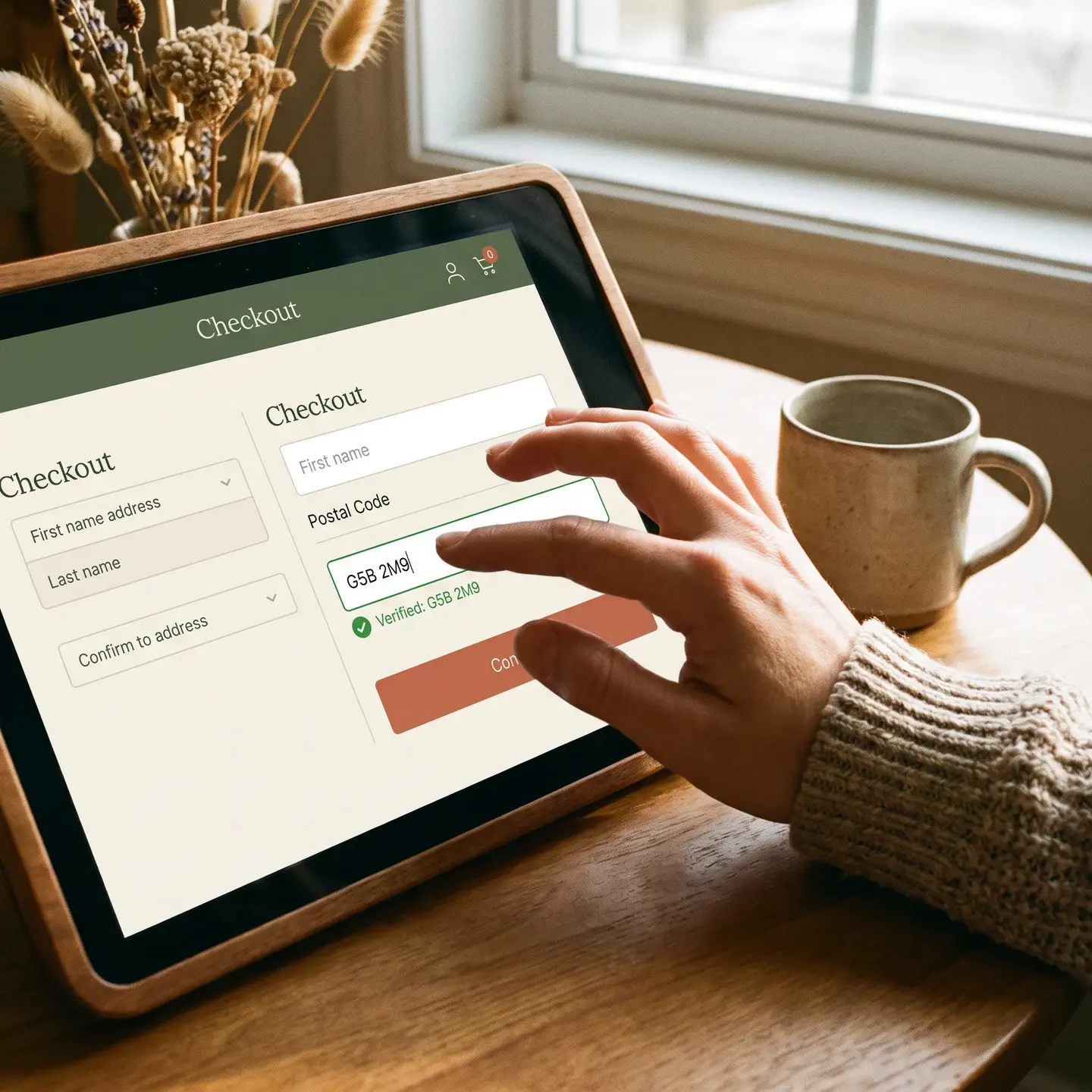
This guide provides the structural rules, validation logic, and implementation techniques you need to eliminate Canadian postal code errors before they become costly delivery failures.
Who This Guide Is For
This article serves operations managers, developers, and e-commerce platform administrators who need to configure checkout systems, troubleshoot delivery failures, or clean up customer address data for Canadian shipments.
This guide is for you if:
- Your checkout was originally built around US ZIP code assumptions
- You are expanding into Canada and need to implement proper address validation
- You are experiencing address correction fees or delivery failures on Canadian orders
- You need regex patterns or spreadsheet techniques for bulk data cleanup
This guide is not for you if:
- You need to look up a specific postal code for a single address (use the Canada Post postal code lookup tool instead)
- You are looking for carrier rate comparisons or shipping cost calculations
- You need customs documentation guidance beyond address formatting
The ANA NAN Structure Explained
Canadian postal codes follow a six-character alphanumeric format structured as ANA NAN, where “A” represents an alphabetic character and “N” represents a numeric character. The format looks like this: K1A 0B1.
This structure differs fundamentally from US ZIP codes in three ways:
- Alphanumeric composition: Canadian postal codes alternate between letters and numbers, while US ZIP codes are purely numeric.
- Mandatory space: A single space separates the first three characters (the Forward Sortation Area) from the last three characters (the Local Delivery Unit). This space is required in the printed format.
- Uppercase requirement: Canada Post specifies uppercase letters. Accept lowercase input, but always convert to uppercase before printing labels or submitting to carrier APIs.
Critical rule: Never use a hyphen. Unlike some international formats, Canadian postal codes should never contain a hyphen separator. If your checkout system allows “K1A-0B1,” you are introducing an error that carriers may reject or that will require manual correction.
Correct vs. Incorrect Formatting
K1A 0B1: Correct. Accept and verify against full address
k1a0b1: Acceptable input. Normalize to K1A 0B1
K1A-0B1: Common error. Replace hyphen with space
K1A0B1: Missing space. Insert space after third character
D1A 1A1: Invalid. Reject (D is never used)
Forward Sortation Area Decoding
The first three characters of a Canadian postal code form the Forward Sortation Area (FSA). This segment routes mail to the correct sorting facility and contains geographic information valuable for shipping cost estimation and carrier selection.
First Character: Province and Territory Mapping
The first letter identifies the province, territory, or major postal region.
A: Newfoundland and Labrador
B: Nova Scotia
C: Prince Edward Island
E: New Brunswick
G, H, J: Quebec
K, L, M, N, P: Ontario
R: Manitoba
S: Saskatchewan
T: Alberta
V: British Columbia
X: Northwest Territories and Nunavut
Y: Yukon
Validation implication: If a customer selects British Columbia as their province but enters a postal code starting with “M,” your system should flag this mismatch. A code beginning with “V” cannot belong to Ontario, and a code beginning with “M” cannot belong to British Columbia.
Second Character: Urban vs. Rural Classification
The second character distinguishes between urban and rural delivery areas:
- Digits 1 through 9: Urban postal codes
- Digit 0: Rural postal codes
Do not reject a postal code simply because it contains a zero in the second position. Rural postal codes are legitimate, and rural addresses represent a significant portion of Canadian deliveries. However, the urban/rural distinction affects carrier service availability and may trigger remote-area surcharges.
Third Character: Geographic Subdivision
The third character narrows the FSA to a specific neighbourhood, municipality, or mail processing section. Combined, the three FSA characters provide enough geographic specificity for carrier rate shopping and final mile delivery across Canada planning.
Local Delivery Unit and Final Mile Precision
The last three characters (NAN format) form the Local Delivery Unit (LDU). While the FSA routes mail to the correct facility, the LDU determines the specific delivery route, apartment building, business, or rural route segment.
LDU errors are particularly costly because they can send packages to the wrong carrier vehicle or require manual intervention at the delivery depot. When the LDU does not match the street address, carriers apply address correction fees that accumulate quickly at scale.
For brands working with Canada Post delivery standards, the LDU must precisely match the address on file. Canada Post treats items with incomplete or incorrect addresses as undeliverable, and incorrect parcels may be returned to sender.
Letters That Never Appear in Canadian Postal Codes
Canada Post excludes certain letters from the postal code system to avoid confusion with numbers and to improve machine readability:
- Never used anywhere: D, F, I, O, Q, U
- Never used in the first position: W, Z
If your validation accepts a postal code containing “O” (the letter), the customer likely intended “0” (the number). Rather than silently substituting, prompt the customer to correct their entry. Automatic substitution can introduce errors when the customer actually made a different mistake.
Common Validation Errors and Their Operational Costs
Each validation failure type creates specific operational consequences:
Missing space (K1A0B1): May fail carrier API validation; requires normalization
Hyphen separator (K1A-0B1): Non-standard format; may cause label printing issues
Lowercase letters (k1a 0b1): May fail strict carrier validation; reduces machine readability
Excluded letters (D1A 1A1): Invalid code; will fail delivery
Province mismatch (M5V 1H9 with BC selected): Incorrect carrier zone; wrong delivery estimate and rate
Non-existent code (Fabricated combination): Failed delivery; return to sender; customer service escalation
Brands shipping from the United States to Canada often encounter these errors because their checkout systems were designed around numeric-only ZIP codes. The fix is straightforward but must be implemented deliberately.
Regex Pattern for Production Validation
Use this regular expression to validate Canadian postal code format. This pattern handles the most common input variations while enforcing structural rules.
For normalized storage (no space, uppercase):
^[ABCEGHJKLMNPRSTVXY]\d[ABCEGHJKLMNPRSTVWXYZ]\d[ABCEGHJKLMNPRSTVWXYZ]\d$
For checkout input (optional space or hyphen, case-insensitive):
^[ABCEGHJKLMNPRSTVXYabceghjklmnprstvxy]\d[ABCEGHJKLMNPRSTVWXYZabceghjklmnprstvwxyz][ -]?\d[ABCEGHJKLMNPRSTVWXYZabceghjklmnprstvwxyz]\d$
Pattern Breakdown
- Position 1: Restricted letter set (excludes D, F, I, O, Q, U, W, Z)
- Position 2: Any digit 0-9 (including 0 for rural)
- Position 3: Broader letter set (excludes D, F, I, O, Q, U only)
- Position 4: Optional space or hyphen for input tolerance
- Position 5: Any digit 0-9
- Position 6: Same letter set as position 3
- Position 7: Any digit 0-9
JavaScript Normalization Function
function normalizeCanadianPostalCode(input) {
const value = input.trim().toUpperCase();
const pattern = /^[ABCEGHJKLMNPRSTVXY]\d[ABCEGHJKLMNPRSTVWXYZ][ -]?\d[ABCEGHJKLMNPRSTVWXYZ]\d$/;
if (!pattern.test(value)) return null;
const compact = value.replace(/[ -]/, ”);
return {
stored: compact,
displayed: compact.slice(0, 3) + ‘ ‘ + compact.slice(3)
};
}
Important: Regex validation confirms structural correctness but cannot verify that a code exists or matches the submitted address. That requires current Canada Post data or a live address validation API.
Excel and Spreadsheet Formatting Techniques
Operations teams frequently need to clean up customer address exports or format imported data. These techniques address common spreadsheet challenges:
Preserving Format with Text Cells
Format the postal code column as Text before importing or pasting data.
- Select the column
- Right-click and choose Format Cells
- Select Text under Category
- Import or paste data
Inserting Missing Spaces
For a compact six-character code in cell A1, insert the required space:
=UPPER(LEFT(A1,3) & ” ” & RIGHT(A1,3))
Validating Format with Conditional Formatting
Create a conditional formatting rule to highlight invalid postal codes:
- Select the postal code range
- Choose Conditional Formatting, then New Rule
- Select “Use a formula to determine which cells to format”
- Enter: =NOT(AND(LEN(A1)=7,MID(A1,4,1)=” “))
- Set the format to highlight invalid entries
This formula checks for seven characters (six alphanumeric plus one space) with the space in the fourth position.
Complete Address Formatting for Canadian Labels
Canada Post specifies a precise format for the last line of a Canadian address. Following this format improves machine processing and reduces delivery delays.
Standard Format
RECIPIENT NAME
UNIT-STREET NUMBER STREET NAME
CITY PROVINCE POSTAL CODE
Key requirements:
- One space between city and province
- Two spaces between province and postal code
- One space within the postal code
- Uppercase preferred throughout
- Two-letter province abbreviation
Example
JANE SMITH
1204-250 KING ST W
TORONTO ON M5V 1H9
If the address line is too long for the label, the postal code may occupy its own line. The postal code should never wrap mid-code or appear without its internal space.
Province Code Reference
Use the standard two-letter abbreviations from Canada Post’s province and territory abbreviations:
Alberta: AB
British Columbia: BC
Manitoba: MB
New Brunswick: NB
Newfoundland and Labrador: NL
Northwest Territories: NT
Nova Scotia: NS
Nunavut: NU
Ontario: ON
Prince Edward Island: PE
Quebec: QC
Saskatchewan: SK
Yukon: YT
Canada Post prefers the official two-letter abbreviations, although it also accepts the province or territory written in full. A common error is an incorrect abbreviation such as “PQ” for Quebec (the correct abbreviation is “QC”).
Integration Considerations for E-Commerce Platforms
Implementing proper validation depends on your platform architecture. Here are approaches for common systems:
Shopify
Shopify’s native checkout handles Canadian addresses, but custom validation may be needed for apps or checkout extensions. Use the Checkout UI extensions API to add format validation before submission. Ensure your theme’s address form accepts the space character without treating it as a field separator.
WooCommerce
WooCommerce uses the WC_Validation class for address validation. Add a custom validation filter for the billing_postcode and shipping_postcode fields that applies Canadian-specific rules when the country is CA.
Address Autocomplete Services
Services like Canada Post’s AddressComplete can reduce input errors by suggesting validated addresses as customers type. These services handle format normalization automatically and verify that the postal code exists and matches the street address.
Format Validation vs. Postal Code Verification
Validation and verification serve different purposes:
- Format validation checks whether the input follows structural rules. It catches typos, wrong character types, and invalid letter usage.
- Postal code verification confirms the code exists in Canada Post’s database and matches the submitted street address, city, and province.
Format validation should happen first, at the moment of input, to catch obvious errors immediately. Verification should happen before order submission to confirm deliverability.
A postal code can pass format validation but still be undeliverable. For example, “M9Z 9Z9” follows the correct pattern but may not be assigned to any address.
Implementation Checklist
Use this checklist when configuring your checkout or data processing systems for Canadian postal codes:
- Country detection: Apply Canadian rules only when the destination country is Canada
- Input acceptance: Allow uppercase, lowercase, with or without space or hyphen
- Normalization: Convert to uppercase and insert proper space before storage
- Letter validation: Reject D, F, I, O, Q, U anywhere; reject W, Z in first position
- Province cross-check: Verify first letter matches selected province
- Storage format: Store six characters without space (ANANAN) for database consistency
- Display format: Show and print with space (ANA NAN) for customers and carriers
- Full address verification: Validate postal code against street, city, and province before fulfillment
- Carrier compatibility: Confirm selected service delivers to the address type and postal code
- Error messaging: Provide specific, actionable feedback when validation fails

Next Steps: Beyond Address Validation
Proper postal code validation eliminates one category of cross-border friction, but Canadian fulfillment involves additional complexity: customs documentation, carrier rate shopping across multiple providers, regulatory compliance for health and beauty products, and delivery speed optimization through distributed inventory.
We built our infrastructure specifically for brands navigating these challenges. Our automated carrier rate-shopping across FedEx, UPS, Canada Post, Canpar, GLS, and UniUni selects the optimal service for each destination postal code.
Address validation is where Canadian fulfillment begins. The operational infrastructure behind it determines whether your Canadian customers experience the same speed and reliability as your domestic orders.
Frequently Asked Questions
Store normalized uppercase codes without spaces for consistency, format them as ANA NAN for labels, and verify them against the full Canadian address before fulfillment.
Yes. Accept common variations such as K1A0B1 or K1A-0B1, then convert them to uppercase and replace the separator with a space.
Regex checks structure only. Use a current address-validation service to confirm that the code exists and matches the customer’s street, city, and province.
Use the six-character ANA NAN format, such as K1A 0B1. Store it without the space if needed, but display it with the space.
No. Canada’s postal-code system excludes D, F, I, O, Q, and U, while W and Z cannot appear in the first position. Ask customers to correct these entries rather than substituting characters automatically.

Scale Your Canada Fulfillment with Confidence.
Partner with Canada's premier 3PL to unlock faster shipping, lower costs, and seamless scalability for your ecommerce brand.
Talk to an Expert