Fulfillment
Canadian Last-Mile Carriers: Navigating the Delivery Landscape for Optimal Performance
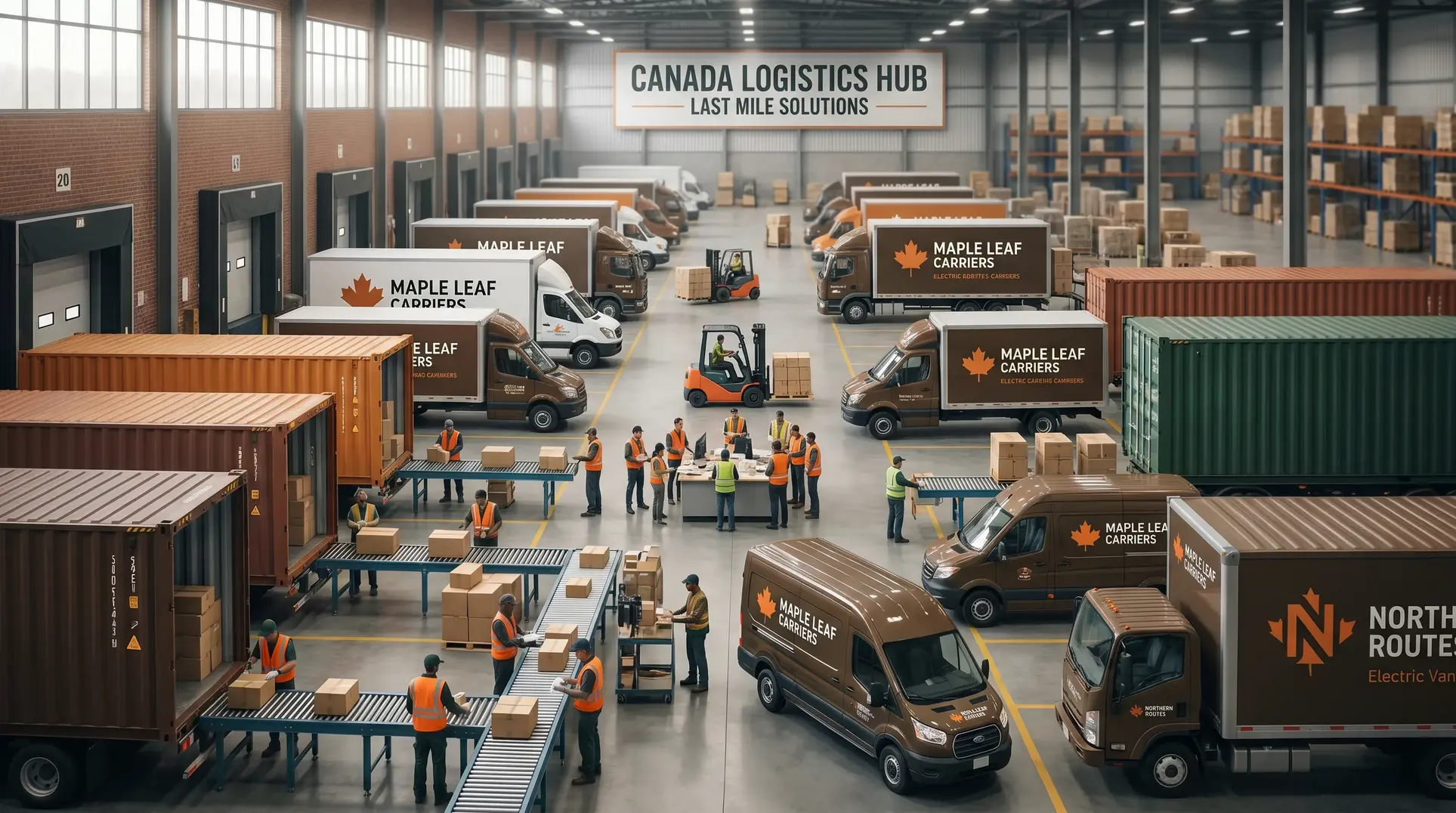
For international brands expanding into Canada, the last-mile delivery landscape presents a fundamentally different challenge than what most operations teams have navigated in their home markets. The Canadian carrier ecosystem operates according to its own rules—shaped by vast geography, population concentration along the southern border, bilingual service requirements, and a unique mix of national postal infrastructure and regional specialists that doesn’t map neatly onto American or European models. Understanding how to evaluate and select Canadian last-mile carriers isn’t simply a procurement exercise; it’s a strategic decision that directly impacts customer satisfaction, delivery costs, and your brand’s competitive positioning in the Canadian market. We’ve helped dozens of international D2C brands navigate this complexity through our Final Mile Delivery services, and in this article, we’re sharing the insider knowledge that transforms carrier selection from guesswork into strategic advantage.
The Canadian Last-Mile Carrier Landscape: Structure and Complexity
Before diving into specific carriers, it’s essential to understand why the Canadian delivery ecosystem demands a fundamentally different approach than what you’ve likely developed for US operations. The structural differences aren’t superficial—they reflect geographic, regulatory, and market realities that shape every aspect of carrier capability and performance.

Geographic Realities That Shape Carrier Capabilities
Canada’s population distribution creates a delivery environment unlike any other developed market. Approximately 90% of Canadians live within 200 kilometers of the US border, concentrated in urban corridors around Toronto, Montreal, Vancouver, Calgary, and Edmonton. This concentration means carriers can achieve exceptional efficiency and speed within these dense markets while facing dramatically higher costs and longer transit times for the remaining geographic territory.
What this means for your carrier strategy:
- Urban corridor excellence doesn’t guarantee national coverage — Carriers that perform brilliantly in the Toronto-Montreal-Vancouver triangle may struggle with delivery consistency in Northern Ontario, rural Saskatchewan, or Atlantic Canada.
- Remote delivery remains a universal challenge — No private carrier has solved remote Canadian delivery at scale. Canada Post maintains the only truly universal network, which creates strategic implications we’ll address below.
- Zone-based pricing varies dramatically — The cost differential between delivering to downtown Toronto and a northern community can be tenfold or more, making geographic customer concentration a critical factor in carrier economics.
Market Structure Differences From US Operations
If your team has optimized carrier relationships in the United States, you’ll find that Canadian market dynamics require recalibration across several dimensions:
- Volume thresholds for negotiated rates are lower — Canada’s smaller market means carriers offer meaningful rate improvements at lower volume commitments than US counterparts.
- Carrier consolidation is less advanced — Regional specialists maintain stronger positions, creating opportunities for multi-carrier strategies that leverage local expertise.
- Bilingual requirements affect customer experience — Tracking notifications, delivery instructions, and customer service interactions need French-language capabilities for Quebec and bilingual federal requirements.
- Weekend and evening delivery remains less common — Consumer expectations for delivery windows differ from US norms, though this is evolving rapidly in urban markets.
Canada Post: Strategic Use Cases and Limitations
Any honest assessment of Canadian last-mile carriers must begin with Canada Post, the Crown corporation that serves as the backbone of Canadian delivery infrastructure. Understanding when Canada Post makes strategic sense—and when alternatives deliver better outcomes—is fundamental to effective carrier selection.
When Canada Post Delivers Strategic Value
Canada Post maintains capabilities that no private carrier can match:
- Universal coverage — Every Canadian address, including rural routes, northern communities, and PO boxes, is within Canada Post’s network.
- Cost-effective for lightweight shipments — For packages under 500g, Canada Post’s Lettermail and small packet options often undercut private carrier rates.
- Consumer trust and familiarity — Canadian consumers have established relationships with their letter carriers, and many prefer Canada Post for residential delivery.
- Extensive retail and pickup network — With thousands of retail outlets, Canada Post offers pickup flexibility that private carriers struggle to match.
The Canada Post business shipping partners program provides commercial shippers with access to negotiated rates and integration tools, making it a viable option for brands shipping at scale.
When Alternative Carriers Outperform
Canada Post’s universal mandate comes with trade-offs that may not align with premium brand positioning or customer expectations:
- Tracking sophistication — While improving, Canada Post’s tracking granularity and real-time visibility lag behind technology-forward carriers.
- Urban delivery speed — In dense urban markets, private carriers often achieve faster transit times and more precise delivery windows.
- Weekend and evening delivery — Canada Post’s residential delivery operates primarily during weekday business hours.
- Customer service responsiveness — Resolution times for delivery exceptions and claims can extend longer than private carrier standards.
For brands where delivery experience directly impacts customer perception—particularly in premium, health, beauty, or lifestyle categories—these limitations often justify the cost differential of alternative carriers for urban customers while using Canada Post strategically for remote deliveries.
National Alternative Carriers in the Canadian Context
Major carriers like Purolator, UPS, and FedEx operate differently in Canada than in their home markets, and understanding these differences prevents the assumption that US carrier relationships translate directly to Canadian operations.
Purolator: The Canadian Incumbent
As a Canada Post subsidiary with deep Canadian market expertise, Purolator occupies a unique position in the carrier landscape. The Purolator business solutions portfolio includes capabilities specifically designed for Canadian commerce:
- Strong coverage in secondary and tertiary Canadian markets
- Established B2B delivery infrastructure
- Integration with Canada Post for remote delivery handoffs
- Weekend delivery options in select urban markets
UPS and FedEx: Premium Positioning Considerations
Both carriers maintain robust Canadian networks, but their positioning and pricing structures reflect premium service tiers that make strategic sense for specific scenarios:
- High average order value — When delivery cost represents a small percentage of order value, premium carrier reliability justifies the investment.
- Time-definite delivery requirements — For guaranteed delivery windows, national carriers offer service level agreements that regional options cannot match.
- Cross-border continuity — Brands shipping both domestically in the US and into Canada may benefit from carrier relationship consolidation.
The critical consideration for volume-conscious operations: neither UPS nor FedEx offers the cost efficiency of regional specialists or Canada Post for high-volume, standard-delivery shipments. Their value proposition centers on service reliability and brand recognition rather than cost optimization.
Regional and Technology-Forward Carriers: When Local Expertise Matters

The Canadian carrier landscape includes a growing segment of regional specialists and technology-platform carriers that optimize for specific geographies, delivery types, or customer experiences. These carriers often outperform national options within their areas of focus.
The Regional Carrier Advantage
Regional carriers succeed by concentrating resources and expertise within defined service areas, achieving performance metrics that generalist carriers struggle to match:
- Route density optimization — Carriers focused on specific metropolitan areas achieve superior route efficiency and faster delivery windows.
- Specialized capabilities — Some regional carriers have developed expertise in specific categories—temperature-controlled delivery, oversized items, or same-day urban service.
- Technology investment — Without legacy systems to maintain, technology-forward carriers often provide superior tracking visibility, delivery scheduling, and customer notification capabilities.
Industry performance data shows that specialized carriers can achieve on-time delivery rates exceeding 98% within their service areas, with customer satisfaction scores averaging 4.5 out of 5 based on millions of delivery reviews. These metrics demonstrate what’s achievable when carriers focus on geographic and service specialization rather than universal coverage.
Multi-Carrier Strategies Leverage Regional Strengths
The existence of high-performing regional carriers creates an opportunity that sophisticated fulfillment operations exploit through intelligent carrier orchestration. Rather than selecting a single carrier for all shipments, multi-carrier strategies route each package to the optimal carrier based on:
- Destination postal code and geographic region
- Package dimensions and weight
- Required service level and delivery speed
- Cost optimization within service constraints
This approach achieves what no single carrier can deliver: national coverage with regional excellence. The complexity lies in implementation—managing multiple carrier relationships, integrations, and performance monitoring—which is precisely why this capability is typically accessed through 3PL partnerships with established carrier ecosystems.
Carrier Selection Criteria: Matching Capabilities to Business Requirements
Effective carrier selection requires translating your business variables into carrier evaluation criteria. Rather than asking “which carrier is best,” the strategic question is “which carrier capabilities align with our specific requirements?”
Volume and Order Profile Factors
Monthly order volume under 500: Single carrier relationships sufficient; focus on coverage and simplicity
Monthly order volume 500-5,000: Multi-carrier strategies become cost-effective; regional specialists viable
Monthly order volume 5,000+: Carrier rate shopping essential; dedicated account management justified
Average order value under $50: Delivery cost as percentage of order critical; cost optimization priority
Average order value $100+: Service quality and brand experience justify premium carrier investment
Geographic Customer Concentration
Your customer distribution directly impacts carrier economics and strategy:
- Concentrated in major metros (70%+ in Toronto/Montreal/Vancouver) — Regional carrier strategies deliver optimal cost and performance.
- Distributed nationally with significant remote/rural component — Canada Post integration essential; hybrid strategies combining regional urban carriers with postal service for remote delivery.
- Quebec-heavy customer base — French-language capability requirements become critical; not all carriers offer equivalent bilingual service quality.
Product Category Considerations
Certain product categories impose carrier requirements beyond standard delivery:
- Natural health products, food, cosmetics — Carriers must maintain chain of custody documentation and handling standards that support regulatory compliance. Our e-commerce fulfillment operations maintain the compliance infrastructure that regulated products require.
- Temperature-sensitive items — Limited carrier options for cold chain maintenance; regional specialists often outperform national carriers.
- High-value products — Signature confirmation, insurance, and secure delivery protocols narrow carrier options.
- Oversized or heavy items — Dimensional weight pricing and surcharges vary dramatically between carriers; specialized LTL options may be more cost-effective.
Multi-Carrier Strategies: Optimization Through Intelligent Routing
The most sophisticated fulfillment operations don’t select carriers—they orchestrate carrier ecosystems. Understanding what this means in practice helps clarify when multi-carrier strategies justify their complexity.
How Carrier Rate Shopping Works
Automated carrier rate shopping evaluates each order against multiple carrier options in real-time, selecting the optimal choice based on configurable business rules:
- Order data capture — Destination, dimensions, weight, service level requirement, and any special handling needs.
- Multi-carrier rate query — Real-time API calls to all integrated carriers for current pricing and availability.
- Business rule application — Filters for service level minimums, carrier restrictions by product type, cost thresholds, and geographic preferences.
- Optimal carrier selection — Automatic routing to the carrier that meets all requirements at lowest cost.
At scale, this approach consistently achieves 15-25% delivery cost reduction compared to single-carrier strategies while maintaining or improving service levels. The catch: implementing multi-carrier strategies requires technology infrastructure (WMS integration, carrier APIs, rate shopping engines) and operational expertise that most brands cannot cost-effectively build in-house.
Volume Thresholds for Multi-Carrier ROI
Multi-carrier strategies deliver positive ROI when:
- Monthly shipment volume exceeds 1,000 packages (enough volume for rate comparison to generate meaningful savings)
- Customer base spans multiple geographic regions with different optimal carrier profiles
- Product mix includes items with varying delivery requirements
- Peak season volume fluctuations exceed 200% (carrier diversification reduces capacity risk)
For brands meeting these criteria, accessing multi-carrier capabilities through 3PL partnerships is typically more practical than building direct carrier relationships and integration infrastructure.
Carrier Performance Metrics: What to Measure and Why
Ongoing carrier strategy optimization requires systematic performance measurement. The metrics that matter extend beyond headline delivery rates to capture the dimensions of carrier performance that impact customer experience and operational efficiency.
Essential Carrier Performance KPIs
- On-time delivery rate by region — Aggregate rates mask regional variation; a carrier may excel in Ontario while underperforming in British Columbia.
- Transit time consistency — Average transit time matters less than variability; customers can adapt to predictable three-day delivery but struggle with erratic one-to-five-day windows.
- First-attempt delivery success — Failed delivery attempts generate redelivery costs, customer frustration, and operational complexity.
- Claims rate and resolution time — Damage and loss claims indicate handling quality; resolution responsiveness affects customer satisfaction recovery.
- Customer satisfaction correlation — Track whether carrier choice correlates with post-purchase satisfaction scores and repeat purchase rates.
- Cost per delivery by zone — Granular cost analysis reveals optimization opportunities within carrier portfolios.
Benchmark Expectations
Based on industry performance data and our operational experience, competitive carrier performance in the Canadian market looks like:
- On-time delivery in major urban markets: 95%+ achievable with premium carriers; 90-95% typical for cost-optimized options
- National coverage with consistent service: 96% of Canadian addresses reachable through coordinated carrier strategies
- Customer satisfaction scores: 4.5/5 or higher indicates excellent carrier performance
- Claims rates: Under 1% for standard products; higher rates warrant carrier review
For brands offering cross-border fulfillment from the US, understanding how Canadian carrier performance compares to domestic US benchmarks helps set appropriate customer expectations.
Connecting Carrier Strategy to Broader Fulfillment Decisions
Your carrier strategy doesn’t exist in isolation—it intersects with warehouse location, inventory positioning, and cross-border compliance approaches. The most effective carrier decisions consider these interdependencies.
Warehouse Location and Carrier Access
Fulfillment center location directly impacts carrier options and costs:
- Major carrier hub proximity — Facilities near carrier sort centers enable later pickup times and faster delivery to broader geographies.
- Regional carrier access — Some high-performing regional carriers only serve facilities within their service areas.
- Zone optimization — Strategic facility placement minimizes average zone distance to customers, reducing costs across all carriers.
Our distributed Canadian network—with fulfillment centers in Ottawa, Toronto, and Vancouver—provides access to the full carrier ecosystem while optimizing zone-based pricing through strategic inventory positioning.
Returns and Carrier Selection
Forward delivery carrier choice should consider reverse logistics requirements. Our reverse logistics and returns handling capabilities include multi-carrier returns programs that optimize return shipping costs while maintaining customer convenience.

Navigating Carrier Selection With Confidence
The Canadian last-mile carrier landscape rewards strategic thinking over simplistic carrier selection. The brands that achieve optimal delivery performance and cost efficiency understand that:
- No single carrier optimizes all scenarios — Multi-carrier strategies outperform single-carrier relationships at scale.
- Geographic reality demands hybrid approaches — Urban delivery excellence requires different capabilities than remote coverage.
- Technology enables optimization — Carrier rate shopping and intelligent routing deliver measurable ROI for high-volume operations.
- Performance measurement drives improvement — Systematic KPI tracking identifies optimization opportunities and carrier underperformance.
- Carrier strategy connects to fulfillment strategy — Warehouse location, inventory positioning, and carrier selection are interdependent decisions.
Navigating carrier selection requires both market knowledge and operational infrastructure. At Ottawa Logistics Fulfillment, we maintain established relationships across the Canadian carrier ecosystem—including FedEx, UPS, Canada Post, Canpar, GLS, and UniUni—enabling multi-carrier strategies through our final-mile delivery services without requiring you to manage individual carrier contracts, integrations, or performance monitoring. Our automated rate shopping evaluates every order against multiple carriers, routing each package to the optimal combination of cost and service level while you focus on growing your Canadian business.
Frequently Asked Questions
Focus on how well each carrier matches your reality: where your customers live (urban corridors vs remote and Quebec-heavy), your order volume and AOV, and your product type. Then validate with hard metrics—on-time rate by region, transit-time consistency, first-attempt success, claims resolution times, and cost per delivery by zone—rather than just headline rates or brand names.
Because urban excellence doesn’t equal national reliability. A carrier that’s fantastic in Toronto–Montreal–Vancouver may be slow, expensive, or inconsistent in Northern Ontario, the Prairies, Atlantic Canada, and the North. Brands aiming for true Canadian coverage almost always need a hybrid approach that mixes national carriers, regional specialists, and often Canada Post.
Canada Post shines for lightweight parcels and hard-to-reach addresses—rural, northern, PO boxes, and broadly distributed customer bases. For premium brands focused on fast, high-touch urban delivery with evenings, tighter time windows, and richer tracking, private carriers and regional specialists usually deliver a better customer experience, with Canada Post reserved for remote edge cases.
Multi-carrier routing pays off once you have meaningful volume (around 1,000+ shipments per month), customers spread across multiple regions, or a mix of product requirements like temperature-sensitive, high value, or oversized items. At that stage, automatically shopping rates and routing by postal code can cut delivery spend by double digits—typically via a 3PL.
Canada’s vast geography, border-concentrated population, and bilingual requirements make carrier performance highly region-specific, with big gaps between major corridors and remote areas. You can’t just copy-paste US or EU carrier setups—Canadian strategies must balance urban speed, remote coverage, and French/English service in a way that’s unique to this market.

Scale Your Canada Fulfillment with Confidence.
Partner with Canada's premier 3PL to unlock faster shipping, lower costs, and seamless scalability for your ecommerce brand.
Talk to an Expert