Fulfillment
Third-Party Logistics Explained: What 3PL Services Include and How They Create Value

For established ecommerce brands processing hundreds or thousands of orders monthly, the decision to outsource fulfillment operations represents far more than a cost calculation. Third-party logistics partnerships have evolved from simple warehousing arrangements into strategic relationships that determine how quickly you can enter new markets, how efficiently you can scale during peak seasons, and whether you can maintain compliance with increasingly complex regulatory requirements. Understanding what modern 3PL services actually include—and more importantly, how they create measurable business value—provides the foundation for making partnership decisions that support long-term growth rather than simply reducing short-term operational costs.
Who This Article Is For (And Who It Isn’t)
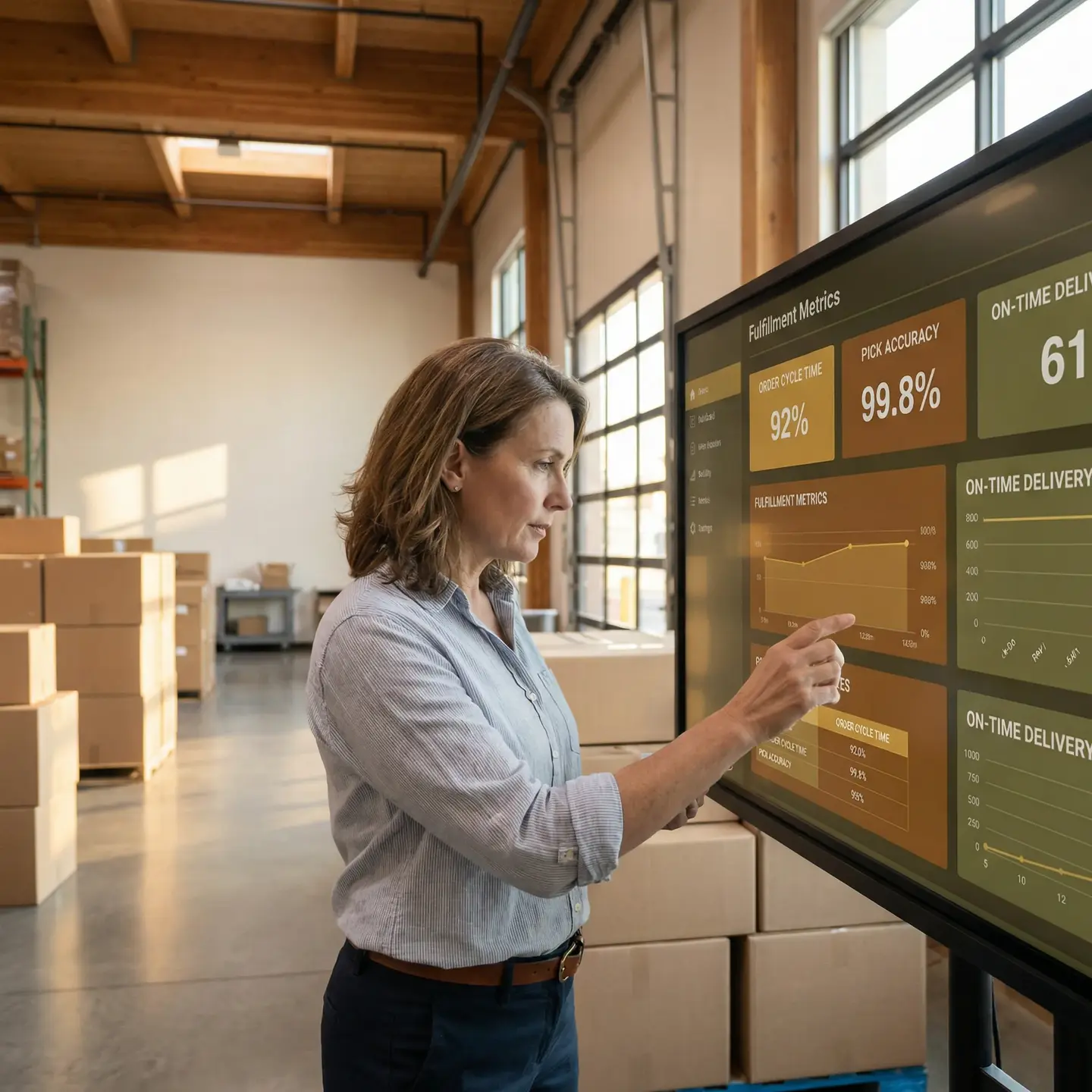
This article is written for operations managers, supply chain directors, and founders at established direct-to-consumer brands—typically those processing 500 or more orders monthly with annual revenues exceeding several million dollars. You likely understand ecommerce fulfillment fundamentals but need a strategic framework for evaluating whether 3PL partnerships make sense for your business stage and growth objectives.
This article is not for:
- Early-stage startups processing fewer than 100 orders monthly
- Marketplace-only sellers using FBA or similar programs exclusively
- Brands seeking a simple vendor comparison or pricing guide
If you’re evaluating 3PL partnerships as a strategic business decision rather than a procurement exercise, the frameworks and insights below will provide the conceptual foundation you need.
Defining Third-Party Logistics: Beyond the Textbook Definition
The Consumer Product Safety Improvement Act of 2008 legally defined a 3PL as “a person who solely receives, holds or otherwise transports a consumer product in the ordinary course of business.” While technically accurate, this definition captures almost none of what modern third-party logistics providers actually deliver to ecommerce brands.
In practice, third-party logistics fundamentals encompass an integrated ecosystem of services designed to handle every aspect of getting products from your suppliers to your customers’ doorsteps. The “third party” designation reflects the relationship structure: your brand is the first party, your customer is the second party, and the logistics provider serves as the third party coordinating the physical movement and storage of goods between you.
This structure creates strategic advantages that go far beyond outsourcing manual labor:
- Capital efficiency: Access warehouse infrastructure without multi-million-dollar real estate investments
- Geographic reach: Position inventory in markets where you have no physical presence
- Specialized expertise: Leverage compliance knowledge, carrier relationships, and technology systems that would take years to build internally
- Scalable capacity: Handle seasonal volume fluctuations without maintaining year-round fixed costs
The most significant distinction in modern 3PL partnerships is between transactional logistics outsourcing and strategic fulfillment relationships. Transactional arrangements focus on executing discrete tasks—receiving inventory, picking orders, shipping packages. Strategic partnerships align the 3PL’s capabilities with your business objectives, whether that means enabling market expansion, maintaining regulatory compliance, or achieving delivery speeds that create competitive advantage.
The Evolution of 3PL: From Trucking Deregulation to Strategic Partnership
Understanding how the third-party logistics industry developed explains why modern providers offer capabilities their predecessors never imagined. The term “3PL” first emerged in the early 1970s to identify intermodal marketing companies in transportation contracts. Prior to this point, logistics contracts typically featured only two parties: the shipper and the carrier.
The Motor Carrier Act of 1980 marked a transformational moment. This deregulation milestone reduced trucking rates and dramatically increased competition, creating opportunities for intermediaries who could aggregate shipments and negotiate favorable terms across multiple carriers. These early 3PLs primarily functioned as transportation brokers—valuable, but limited in scope.
The Technology-Driven Expansion
The term gained significant traction among consultants and during industry conferences throughout the 1990s, tied directly to evolving technology including the rise of the internet. This period transformed 3PLs from transportation coordinators into fulfillment ecosystem managers. Warehouse management systems enabled real-time inventory visibility. Electronic data interchange allowed automated order transmission. Internet connectivity made it possible for brands to monitor their outsourced operations as if they were running them internally.
The current era represents another fundamental shift. Modern 3PL providers have evolved into strategic partners who enable business objectives that would be impossible or impractical to achieve through in-house operations alone. This evolution encompasses:
- Platform integration: Direct connections with Shopify, WooCommerce, BigCommerce, Amazon, and enterprise systems like NetSuite
- Cross-border expertise: Navigation of customs requirements, duties calculations, and regulatory compliance across multiple jurisdictions
- Vertical specialization: Deep knowledge of specific product categories including regulated items requiring compliance documentation
- Data-driven optimization: Analytics that identify cost reduction opportunities and service level improvements
This historical context matters because it demonstrates that 3PL selection criteria must evolve alongside industry capabilities. Evaluating providers based solely on warehousing costs and shipping rates—metrics that defined 3PL value in the 1980s—ignores the strategic capabilities that create competitive advantage today, from cross-docking capabilities to automated carrier rate-shopping.
Core 3PL Service Capabilities: The Modern Provider’s Toolkit
Contemporary third-party logistics providers offer interconnected services that function as a fulfillment ecosystem rather than isolated operational tasks. Understanding each capability and how they relate to one another helps you evaluate whether a potential partner can support your specific business requirements.
Warehousing and Inventory Management
Modern 3PL warehousing extends far beyond storage space. Sophisticated providers maintain climate-controlled environments for temperature-sensitive products, organize inventory to minimize pick times, and implement barcode or RFID systems that provide real-time visibility into stock levels, locations, and movements.
The strategic value lies in accessing Class A warehouse infrastructure without the capital investment. Building or leasing equivalent facilities typically requires $500,000 to $5 million or more—capital that established brands can deploy more effectively toward product development, marketing, or market expansion.
Order Fulfillment and Pick-Pack Operations
Our e-commerce order fulfillment services represent the core operational function most brands associate with 3PL partnerships. When a customer places an order on your website, the fulfillment process begins: locating the product in the warehouse, picking it from inventory, packing it appropriately for shipment, generating shipping labels, and transferring it to carriers for delivery.
High-performing 3PL operations typically achieve error rates well below 1%, according to industry benchmarks — significantly better than the higher error rates common in in-house operations lacking specialized systems and barcode-verified processes. This accuracy directly impacts customer satisfaction, return rates, and ultimately, brand reputation.
Transportation Management and Carrier Rate Shopping
Rather than maintaining relationships with a single carrier, sophisticated 3PL providers implement transportation management systems that compare rates across multiple carriers in real-time. This automated carrier rate shopping — a core component of professional order fulfillment in Canada — typically reduces shipping costs by 5% to 15% compared to direct shipping arrangements.
Beyond cost savings, multi-carrier capabilities provide redundancy during peak seasons when individual carriers may face capacity constraints. Access to regional carriers alongside national providers can also improve delivery speeds in specific geographic areas.
Returns Processing and Reverse Logistics
Ecommerce return rates average 15% to 30% depending on product category, making reverse logistics a significant operational consideration. 3PL providers handle returns intake, quality inspection, inventory restocking for resalable items, and disposition of damaged products—processes that consume substantial management attention when handled internally.
Technology Integration
Modern 3PL partnerships require seamless enterprise supply chain technology integration between your ecommerce platform, the provider’s warehouse management system, and carrier networks. This integration enables automated order transmission, real-time inventory synchronization, and shipment tracking updates without manual intervention.
The practical implication: orders placed on your Shopify or WooCommerce store flow automatically to the fulfillment center, trigger pick-pack operations, generate optimized carrier selections, and update customers with tracking information—all without your team touching the order.
Value-Added Services: Where Strategic 3PLs Create Competitive Advantage
The services described above represent baseline 3PL capabilities. Strategic differentiation emerges through specialized capabilities that address specific business requirements—particularly for brands operating in regulated categories or expanding across borders.
Kitting and Assembly Services
Subscription box companies, brands offering customized bundles, and promotional product sellers require assembly operations that combine individual items into ready-to-ship packages. Kitting services typically add $0.75 to $3.00 per kit depending on component complexity, but the operational efficiency and error reduction often generate positive ROI.
Beyond cost considerations, kitting capabilities enable business models that would be impractical with in-house fulfillment—particularly for brands wanting to test subscription offerings or promotional bundles without investing in assembly infrastructure.
Regulatory Compliance for Specialized Products
Natural health products, nutraceuticals, food and beverage items, and cosmetics face regulatory requirements that many fulfillment providers cannot accommodate. Our regulatory compliance expertise addresses the specific documentation, labeling, storage, and handling requirements mandated by Health Canada, CFIA, and other regulatory bodies.
For brands in regulated categories, compliance capabilities aren’t optional features—they’re operational requirements. A 3PL partner lacking appropriate certifications and documented compliance processes creates regulatory risk that can result in product holds, import refusals, or penalties.
Cross-Border Fulfillment Expertise
International brands entering the Canadian market face complexity beyond simple logistics coordination. Cross-border fulfillment for US brands requires navigation of customs requirements, duties calculations, regulatory compliance verification, and documentation protocols that vary by product category.
The Section 321 de minimis suspension implemented in August 2025 fundamentally changed cross-border economics for US brands shipping to Canadian consumers. What previously allowed duty-free entry for low-value shipments now requires full customs compliance—making in-country fulfillment from Canadian warehouse locations strategically important for brands seeking to maintain competitive pricing and delivery speeds.
Positioning inventory within Canada transforms cross-border shipments into domestic deliveries, eliminating customs delays, duties surprises, and the extended delivery timelines that erode customer satisfaction.
Multi-Location Distribution Networks
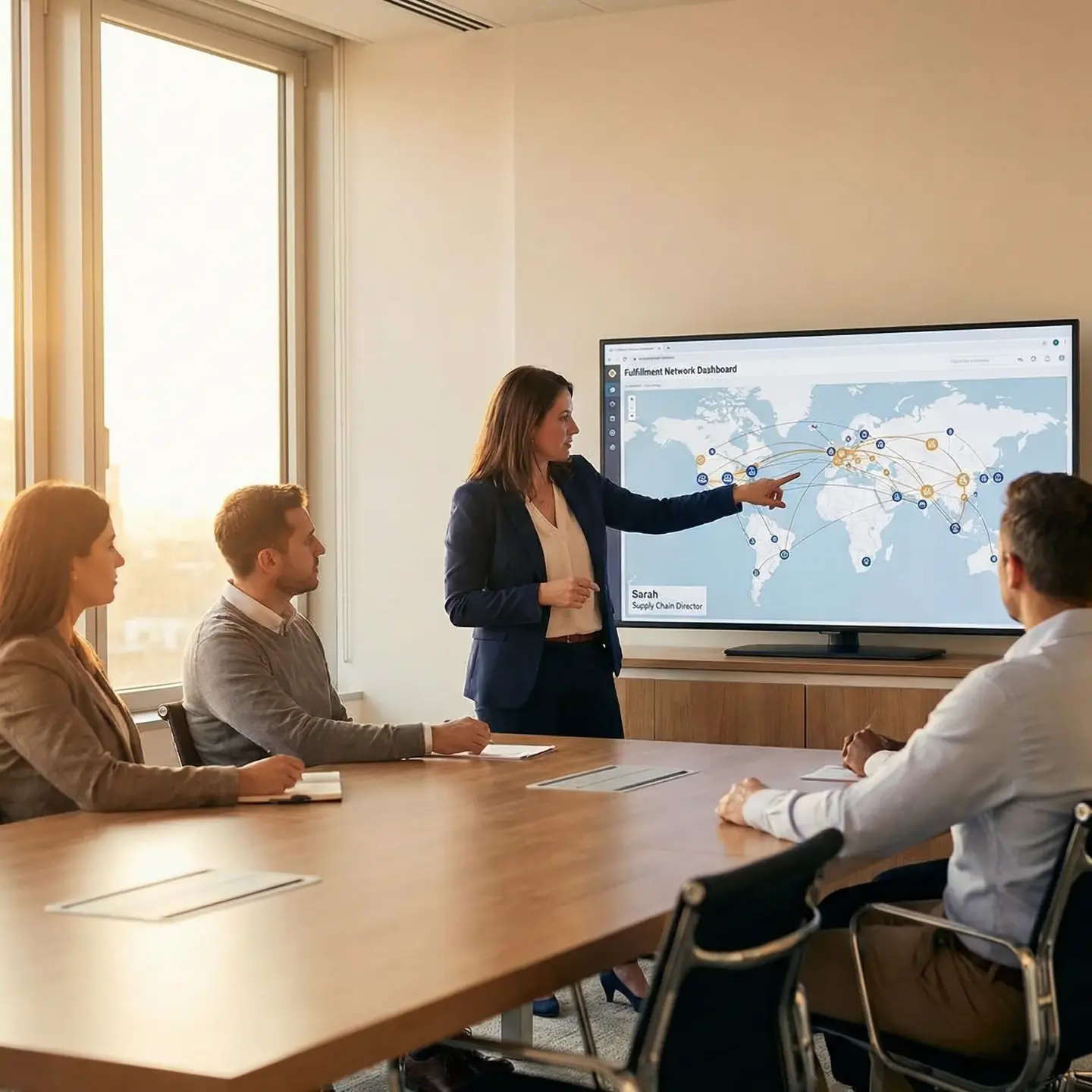
Geographic distribution of inventory across multiple fulfillment centers reduces shipping distances and delivery times while lowering transportation costs through zone optimization. A distributed Canadian network spanning multiple provinces enables 1-2 day ground delivery to most Canadian consumers—delivery speeds that would require premium expedited shipping from a single centralized location.
The Strategic 3PL Decision Framework: Beyond Cost Comparison
Industry research consistently shows that the majority of shippers consider some level of third-party logistics support essential across their supply chain operations. This near-universal recognition of 3PL value shifts the strategic question from “whether to outsource” to “how to select the right partner and structure the relationship.”
Evaluating Strategic Fit
Cost per order fulfillment matters, but it represents only one dimension of partnership value. Strategic fit assessment should address:
- Scalability alignment: Can the provider handle your current volumes AND your projected growth, including seasonal spikes that may reach 200% to 340% of baseline?
- Geographic expansion enablement: Does the provider’s facility network support your market entry objectives, particularly for cross-border expansion?
- Technology infrastructure compatibility: Do their systems integrate seamlessly with your existing ecommerce platform and ERP?
- Vertical-specific expertise: Do they have documented experience and compliance capabilities in your product category?
- Partnership orientation: Do they approach the relationship as strategic partners or transactional vendors?
The Hidden Costs of Pure Cost Optimization
Brands selecting 3PL partners based primarily on price comparison often discover hidden costs that eliminate apparent savings:
- Integration failures: Providers lacking robust technology infrastructure require manual order processing, increasing error rates and labor costs
- Compliance gaps: Partners without documented regulatory expertise create risk exposure that can result in import holds, product seizures, or penalties
- Scalability limitations: Providers unable to handle volume spikes during peak seasons damage customer relationships and revenue at critical moments
- Geographic constraints: Single-location providers cannot support zone optimization strategies or market expansion objectives
The strategic approach evaluates total cost of ownership including opportunity costs—the revenue lost when fulfillment limitations constrain growth, the customer relationships damaged by delivery delays, and the management attention consumed by vendor performance issues.
3PL Partnership Models: Matching Capabilities to Business Needs
Different business stages and models require different 3PL approaches. Understanding where your brand sits in the partnership maturity curve helps prioritize evaluation criteria.
Established Brands Seeking Operational Excellence
Brands processing 500 to 5,000 orders monthly typically need turnkey fulfillment solutions with strong platform integrations, reliable same-day processing, and transparent pricing. The primary value driver is operational excellence—consistent, accurate D2C ecommerce fulfillment that maintains customer satisfaction while freeing internal resources for growth initiatives.
Scaling Brands Requiring Multi-Node Distribution
As order volumes grow into the thousands daily, shipping costs and delivery speeds become increasingly important competitive factors. Multi-location inventory distribution becomes strategically valuable, enabling zone-skipping strategies that reduce costs while improving delivery times.
International Brands Entering New Markets
US brands expanding into Canada face a distinct set of requirements: in-country fulfillment to eliminate cross-border friction, customs compliance expertise for the post-Section 321 environment, regulatory knowledge for product categories requiring Health Canada or CFIA compliance, and bilingual capabilities for serving French-speaking Canadian consumers.
Our comprehensive fulfillment solutions address these requirements through facilities in Ottawa, Toronto, and Vancouver, with documented compliance certifications and English/French operational capabilities.

Brands with Specialized Product Requirements
Health, beauty, food, and natural health product brands require partners with verified compliance infrastructure—not just claims of capability. Certifications, audit documentation, and established regulatory relationships matter more than warehouse square footage or per-unit pricing.
When 3PL Partnerships Create Strategic Value: The Business Case Beyond Cost
The strongest argument for 3PL partnerships extends well beyond operational cost reduction. Strategic value creation occurs across multiple dimensions that compound over time.
Capital Efficiency and Resource Allocation
Building equivalent fulfillment infrastructure requires substantial capital investment: warehouse facilities, racking and equipment, technology systems, and trained personnel. 3PL partnerships convert these fixed costs into variable expenses that scale with business volume—preserving capital for product development, marketing, and market expansion initiatives that drive growth.
Focus on Core Competencies
Product development, brand building, customer acquisition, and market expansion represent the activities that create competitive advantage for most ecommerce brands. Fulfillment operations, while essential, rarely differentiate one brand from another in customers’ minds. Outsourcing logistics execution to specialized partners allows leadership teams to concentrate on activities where their expertise creates unique value.
Access to Specialized Expertise
Building internal capabilities in areas like cross-border customs compliance, carrier relationship management, or regulated product handling requires years of experience and substantial investment. 3PL partnerships provide immediate access to expertise that would be impractical to develop internally—particularly for brands entering new markets or product categories.
The Council of Supply Chain Management Professionals emphasizes that supply chain excellence increasingly depends on partnership networks rather than internal capabilities alone.
Scalability Without Fixed Cost Expansion
Ecommerce brands face dramatic volume fluctuations—seasonal peaks, promotional events, viral moments, and market expansion phases that can multiply order volumes with little warning. In-house fulfillment operations must maintain capacity for peak demand, creating underutilization during normal periods. 3PL partnerships provide elastic capacity that expands and contracts with business needs, converting fixed infrastructure costs into usage-based expenses.
Geographic Expansion Without Infrastructure Investment
Entering the Canadian market traditionally required establishing local facilities, hiring local teams, navigating regulatory requirements, and building carrier relationships—investments that could delay market entry by months or years. Strategic 3PL partnerships enable immediate geographic expansion through existing infrastructure, accelerating time-to-market while reducing entry risk.
Building the Foundation for Strategic Partnership
Third-party logistics has evolved from commodity transportation brokerage into strategic partnership that enables business transformation. The most successful 3PL relationships are those where the provider’s capabilities align with the brand’s growth objectives—whether that means entering new markets, scaling operations efficiently, maintaining regulatory compliance, or achieving delivery speeds that create competitive advantage.
For established ecommerce brands evaluating 3PL partnerships, the decision framework should prioritize strategic fit over cost comparison. The right partner provides not just operational execution but the infrastructure, expertise, and flexibility to support growth objectives that in-house operations cannot efficiently achieve.
Explore our Solutions (Hub) to understand how our capabilities align with your specific business requirements—whether you’re entering the Canadian market, scaling existing operations, or seeking compliance expertise for regulated product categories.
Frequently Asked Questions
Check scalability for 200-340% peaks, geographic networks for expansion, tech compatibility with your platforms, category-specific compliance, and partner mindset—total ownership cost beats short-term pricing every time.
The Section 321 de minimis suspension means no more duty-free low-value shipments—Canadian warehouses cut customs delays, duties, and slow delivery, turning cross-border headaches into fast domestic service.
From 1980s trucking brokers to today’s tech-driven partners, 3PLs now handle platform integrations (Shopify, NetSuite), cross-border customs, and data analytics—turning logistics into a growth enabler, not just cost-cutting.
This guide targets established DTC brands processing 500+ orders monthly with multi-million-dollar revenues—like ops managers or founders eyeing strategic growth. If you’re under 100 orders or just FBA-only, skip it and stick to basics.
Low-price providers often lead to integration headaches, compliance failures (like Health Canada issues), scalability crashes during peaks, and single-location delays—eroding savings through lost revenue and customer churn.

Scale Your Canada Fulfillment with Confidence.
Partner with Canada's premier 3PL to unlock faster shipping, lower costs, and seamless scalability for your ecommerce brand.
Talk to an Expert