Fulfillment
Subscription Box Fulfillment: Complete Guide to Building and Scaling Your Recurring Revenue Business in 2026

The subscription box industry has evolved from a novelty concept into a sophisticated, operationally demanding business model that requires precision fulfillment, seamless technology integration, and unwavering attention to customer experience. With the global subscription e-commerce market projected to reach staggering growth by 2026, established direct-to-consumer brands are increasingly adding subscription models to capture recurring revenue and build deeper customer relationships. However, the operational complexity of subscription fulfillment differs fundamentally from standard e-commerce order processing. Success depends not on novelty alone but on mastering the intricate choreography of kitting, inventory forecasting, platform integration, and consistent delivery execution month after month. In this comprehensive guide, we explore the critical systems, strategies, and operational benchmarks that define successful subscription box fulfillment operations, with particular focus on how brands can optimize cross-border fulfillment through strategic Canadian partnerships.

Who This Guide Is For
This guide serves operations managers, supply chain directors, and founders at established D2C brands who are evaluating whether to launch or scale a subscription box offering. We assume you understand concepts like zone-skipping, batch processing, and API integration. If you are seeking basic information about what fulfillment means or how warehouses operate, this content may be too advanced for your current needs.
This guide is not for:
- Entrepreneurs still validating product-market fit for a subscription concept
- Brands shipping fewer than 500 boxes monthly without growth plans
- Readers seeking subscription box marketing or customer acquisition strategies
We focus exclusively on fulfillment operations—the infrastructure that transforms subscriber payments into delightful unboxing experiences that drive retention and lifetime value.
The Subscription Box Market Opportunity in 2026
The global subscription box market reached approximately $37.5 billion in 2024 according to IMARC Group, with projections indicating continued double-digit compound annual growth through the end of the decade. North America remains the largest regional market, with the United States accounting for the majority of subscription box revenue. This growth trajectory reflects a fundamental shift in consumer purchasing behavior—subscribers increasingly value convenience, curation, and predictability over one-time transactions.
The food and beverage segment dominates with approximately 46% of market share, driven by busy lifestyles and demand for meal kits and pre-portioned ingredients. Beauty and wellness categories follow closely, with beauty anticipated to grow at an even higher rate due to personalized skincare and cosmetics offerings. Pet products represent another high-growth segment, with the global pet supplements sector alone projected to exceed $3 billion by 2030.
Key market dynamics shaping 2026 include:
- Quality over quantity: Consumers now value premium items and thoughtful curation over box volume
- Retention economics: With average customer acquisition costs ranging from $45 to $127 depending on category, retention becomes the primary profitability lever
- Operational maturity: Buyers and investors prioritize businesses demonstrating stable monthly recurring revenue, low churn, and documented metrics
- Generational shifts: Generation Z discovers brands through social platforms and demands authenticity, forcing brands to rethink engagement strategies
Industry research consistently shows that fulfillment accuracy and delivery speed are among the top factors driving subscription retention — ahead of product selection, pricing, and brand loyalty in determining whether subscribers renew or cancel. This statistic underscores why fulfillment excellence has become the defining competitive advantage—not just a backend operational concern.
What Makes Subscription Box Fulfillment Different
Subscription fulfillment operates under fundamentally different constraints than standard e-commerce order processing. Understanding these distinctions is essential before evaluating fulfillment partners or building internal capabilities.
Recurring Order Processing Cycles
Standard e-commerce fulfillment responds reactively to unpredictable order volumes. Subscription fulfillment operates on predictable monthly cycles where thousands of identical or similar boxes must ship within compressed timeframes. This creates both advantages—predictable demand for workforce planning—and challenges, as fulfillment capacity must accommodate volume spikes concentrated in narrow windows.
Kitting Complexity
While standard orders typically involve picking individual SKUs from inventory, subscription boxes require assembling multiple components into curated packages. A beauty subscription might combine 6 different products with branded tissue paper, sample sachets, promotional inserts, and personalized messaging—all requiring precise assembly sequences and quality verification.
Customization and Variation Management
Many subscription brands offer tiered subscriptions, preference-based customization, or regional variations. Managing inventory allocation across dozens of potential box configurations introduces complexity that generic fulfillment operations struggle to accommodate.
Inventory Forecasting Challenges
Subscription brands must forecast component inventory weeks before the billing cycle, accounting for historical churn rates, expected gift subscriptions, and promotional campaigns. Most experienced operators order product for 100-105% of projected subscriber count, balancing overstock costs against the catastrophe of stockouts that derail entire fulfillment cycles.
Core Subscription Box Fulfillment Requirements
Successful subscription fulfillment demands specific capabilities that distinguish specialized partners from generic warehousing operations. When evaluating your e-commerce fulfillment services options, prioritize these essential elements:
Kitting and Assembly Infrastructure
- Linear assembly line configurations optimized for sequential component addition
- Dedicated staging zones for each SKU with clear visual management
- Quality control checkpoints at multiple assembly stages
- Flexibility to handle both standardized and customized box configurations
Subscription Platform Integration
Seamless connectivity with subscription management systems is non-negotiable. Your fulfillment partner must integrate with platforms like Shopify subscriptions, Recharge, Cratejoy, or Bold to:
- Automatically receive recurring order data at billing cycle completion
- Handle subscription modifications (skips, pauses, cancellations) in real-time
- Push tracking information back to customer portals
- Synchronize inventory levels to prevent overselling
Our platform integrations with Shopify and subscription management systems demonstrate the technical depth required for subscription fulfillment success.
Batch Processing Capabilities
Unlike continuous order flow in standard e-commerce, subscription fulfillment requires processing thousands of orders in compressed timeframes. Fulfillment partners must demonstrate capacity to batch-process your monthly volume without compromising accuracy or delivery timing.
Kitting and Assembly Operations
Kitting represents the operational heart of subscription fulfillment—and simultaneously the arena where poor process design creates significant time and cost losses. Our kitting and assembly capabilities reflect decades of operational refinement in this critical function.
Workflow Design Principles
The most efficient kitting operations employ linear assembly models where workers move progressively through stations, each adding one component to the box. This configuration:
- Minimizes travel time between inventory locations
- Enables role specialization and skill development
- Creates natural quality control checkpoints
- Reduces error rates through consistent processes
Quality Control Protocols
Subscription fulfillment quality control transcends catching damaged products—it protects the emotional experience subscribers pay for. A box arriving with a leaking product, missing item, or crushed insert card signals carelessness that costs renewals and generates support tickets.
World-class operations implement three-point quality control:
- Inbound inspection: Verify product condition and quantities upon supplier delivery
- Mid-line checks: Spot verification at key assembly stations
- Final sealed-box audit: Random sampling of 2-5% of total boxes before palletization
Managing Complexity Levels
A beauty subscription brand shipping 8,000 monthly boxes with 6 standardized SKUs faces different kitting requirements than a snack box brand shipping 2,500 boxes with 12+ variable items based on dietary preferences. Kitting and assembly labor costs represent 12-18% of total fulfillment costs for subscription boxes with 5+ items, making workflow efficiency directly impact unit economics.
Technology and Platform Integration
Modern subscription fulfillment requires deep technology integration that eliminates manual processes and enables real-time operational visibility.
Essential Integration Capabilities
Integration Function: Automated order import – Business Impact: Eliminates manual data entry errors
Integration Function: Real-time inventory sync – Business Impact: Prevents overselling and stockouts
Integration Function: Subscription modification handling – Business Impact: Accurate fulfillment despite customer changes
Integration Function: Tracking number pushback – Business Impact: Reduces “where is my order?” support volume
Integration Function: Low-stock alerts – Business Impact: Enables proactive reordering
Warehouse Management System Requirements
Your fulfillment partner’s WMS should provide:
- Barcode-based verification at every pick and pack stage
- Intelligent order batching that groups similar configurations
- Optimized pick paths minimizing warehouse travel time
- Real-time dashboard access to inventory and order status
- Comprehensive reporting for continuous improvement analysis
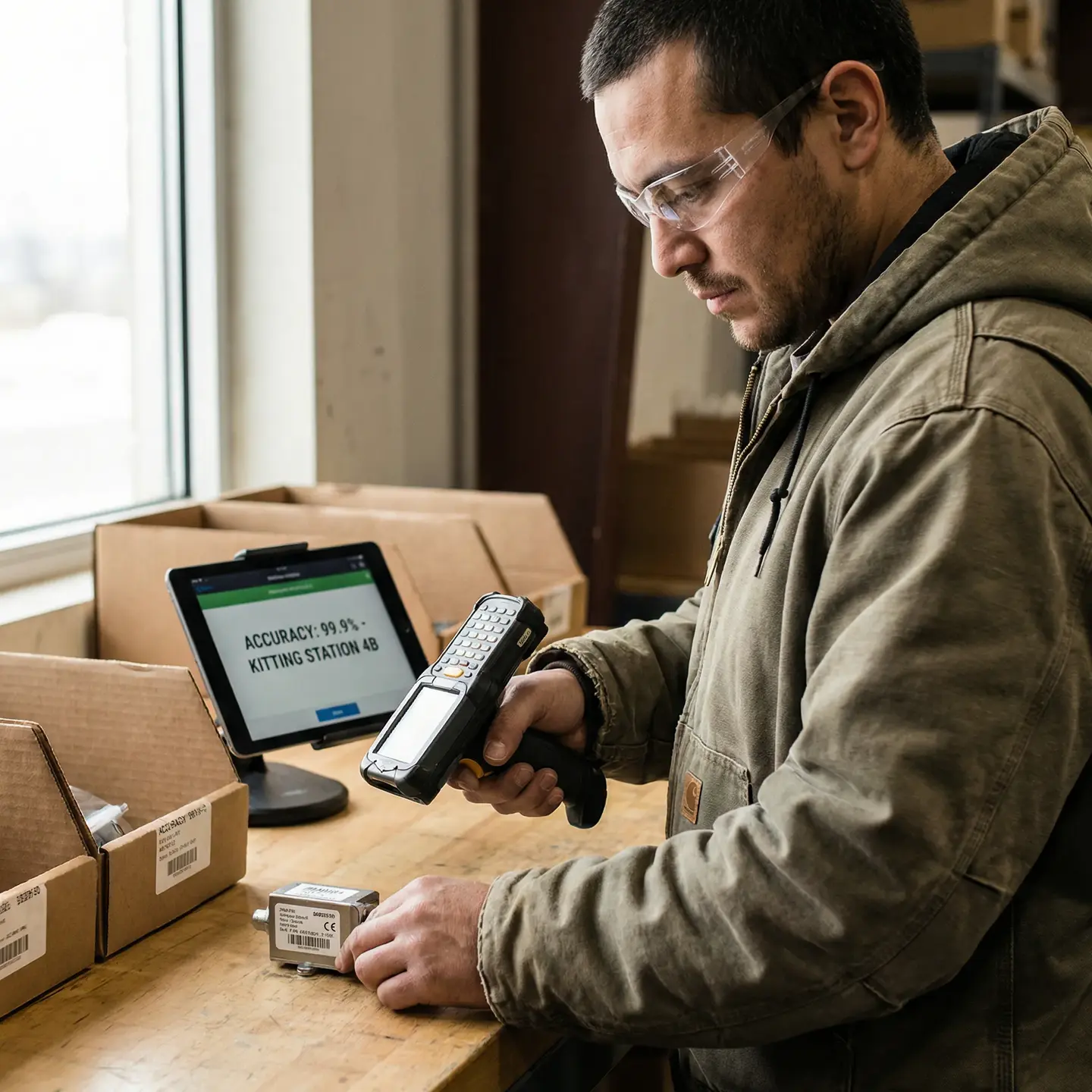
Scan-based picking and packing verification can drive order accuracy rates above 99.9%, meaning fewer disappointed customers, fewer costly reshipments, and stronger brand reputation for reliability.
Cross-Border Fulfillment for Subscription Brands
International subscription brands shipping to Canadian customers face a critical strategic decision: fulfill from origin country facilities or establish Canadian fulfillment operations. The economics strongly favor Canadian fulfillment for brands with meaningful Canadian subscriber bases.
The Cost Advantage of Canadian Fulfillment
Cross-border subscription shipments to Canada from US fulfillment centers incur significantly higher shipping costs compared to domestic Canadian fulfillment, driven by international carrier rates, customs brokerage fees, and duties that don’t apply to shipments originating within Canada. Beyond shipping rates, cross-border fulfillment introduces:
- Customs clearance delays adding 2-3 days to delivery times
- Duties and taxes on shipments exceeding de minimis thresholds
- Brokerage fees that erode per-order margins
- Tracking inconsistencies as packages transfer between carrier networks
Section 321 De Minimis Compliance
Since the suspension of US Section 321 de minimis fulfillment treatment in August 2025, cross-border subscription shipments face formal customs entry requirements regardless of value. Our cross-border fulfillment expertise helps subscription brands navigate the post-321 environment with efficient customs compliance and strategic inventory positioning that minimizes duty exposure.
Zone-Skipping Strategies
For subscription brands shipping at volume, zone-skipping—delivering pre-sorted pallets directly to regional carrier hubs—can meaningfully reduce both transit times and shipping costs. With fulfillment centers strategically positioned in Ottawa, Toronto, and Vancouver, we enable zone optimization that brings shipments closer to Canadian subscribers and US border crossings.
Subscription Box Fulfillment Cost Structure
Understanding the complete cost structure of subscription fulfillment enables accurate financial modeling and informed partner evaluation. Transparency in pricing prevents unexpected margin erosion as your subscription scales.
Fixed Cost Components
A realistic subscription box operation requires significant fixed overhead before accounting for variable fulfillment costs:
- Warehouse lease and operations: $3,500-$6,000 monthly depending on space requirements
- Technology infrastructure: $1,500-$3,000 monthly for platforms, integrations, and hosting
- Core staffing: Operations management, customer service, and marketing represent fixed payroll commitments
Variable Cost Components
Cost Category: Product inventory (COGS) – Typical Range: 40-60% of box price – Scale Impact: Improves with volume discounts
Cost Category: Kitting and assembly labor – Typical Range: $1.50-$4.00 per box – Scale Impact: Improves with workflow optimization
Cost Category: Packaging materials – Typical Range: $1.00-$3.50 per box – Scale Impact: Improves with volume purchasing
Cost Category: Shipping – Typical Range: 30-50% of revenue initially – Scale Impact: Improves with carrier negotiations
Cost Category: Pick and pack fees – Typical Range: $0.50-$2.00 per item – Scale Impact: Varies by 3PL model
Cost Modeling at Different Volume Tiers
500 monthly boxes: Higher per-unit costs due to limited negotiating leverage. Kitting labor represents disproportionate expense. Focus on workflow efficiency and gradual volume growth.
5,000 monthly boxes: Meaningful carrier discounts become achievable. Kitting workflows benefit from dedicated assembly lines. Fixed costs spread across larger subscriber base improves unit economics.
25,000+ monthly boxes: Volume enables significant carrier rate negotiations. Zone-skipping strategies become viable. Multiple fulfillment center distribution optimizes delivery times and costs.
Inventory Management and Forecasting
Subscription inventory management differs fundamentally from standard e-commerce because you are creating demand rather than responding to it. Brands using automated inventory forecasting reduce stockouts by 43% and overstock by 31% compared to manual planning.
Forecasting for Recurring Orders
Effective subscription inventory forecasting requires analyzing:
- Historical subscriber count at billing cutoff
- Churn rates between billing and ship date
- Expected gift subscription orders
- Promotional campaign impacts on sign-ups
- Seasonal demand patterns
Component Inventory Management
For kitted subscription boxes, each component SKU requires individual forecasting and reorder point management. A shortage of one component out of ten can halt your entire monthly fulfillment cycle—making supplier relationship management and lead time optimization critical.
Safety Stock Optimization
Most experienced operators maintain 100-105% of projected subscriber count in component inventory. This buffer absorbs normal supplier variability and unexpected subscriber growth without tying up excessive capital in overstock.
Scaling Subscription Box Operations
Scaling subscription fulfillment requires deliberate investment in systems, processes, and partner capabilities at each growth stage.
Launch Phase: 500-1,000 Monthly Boxes
- Establish documented kitting procedures and quality control protocols
- Implement platform integrations with subscription management systems
- Build supplier relationships with reliable lead times
- Create measurement frameworks for accuracy and timing metrics
Growth Phase: 5,000-10,000 Monthly Boxes
- Optimize kitting workflows for throughput efficiency
- Negotiate improved carrier rates based on volume commitments
- Implement automated inventory forecasting
- Consider geographic distribution to multiple fulfillment centers
Maturity Phase: 25,000+ Monthly Boxes
- Deploy zone-skipping strategies for cost optimization
- Implement AI-driven demand forecasting and labor planning
- Establish regional fulfillment networks for delivery speed
- Develop contingency plans for peak season capacity
Returns and Customer Experience Management
Subscription businesses experience 15-25% monthly churn rates on average, with fulfillment issues contributing to 18% of cancellations. Managing the post-delivery experience directly impacts retention economics.
Returns Handling Protocols
Subscription returns differ from standard e-commerce because customers are not rejecting a deliberate purchase—they may have received damaged items, incorrect products, or shipments after cancellation. Clear protocols for:
- Damaged shipment replacement without return requirement
- Quality issue documentation for supplier feedback
- Efficient restocking of returned items when viable
Proactive Exception Management
Workflows that proactively reach out when shipments are delayed—rather than waiting for subscriber complaints—build confidence and reduce churn. Automated shipping notifications should trigger immediately upon carrier scanning, pushing tracking information back to customer portals.
Selecting a Subscription Box Fulfillment Partner
Many brands worry about losing control over the customer experience when outsourcing fulfillment. The right partner maintains your brand standards while providing operational capabilities you could not build economically in-house.
Evaluation Framework
- Kitting experience: Request references from subscription brands at similar volume and complexity levels
- Technology depth: Verify direct integration with your subscription management platform
- Scalability: Confirm capacity to handle 3-5x your current volume during growth phases
- Geographic coverage: Evaluate fulfillment center locations relative to subscriber concentrations
- Cross-border expertise: Assess customs compliance capabilities and Section 321 experience
- Pricing transparency: Require detailed cost breakdowns without hidden setup or monthly fees
- Quality processes: Review quality control protocols and historical accuracy metrics
- Responsiveness: Test support response times before committing
Red Flags to Watch
- Inability to provide subscription-specific references
- Manual integration processes rather than automated API connections
- Vague pricing structures with undefined “additional fees”
- Limited experience with cross-border compliance requirements

Getting Started with Subscription Box Fulfillment
Implementing professional subscription fulfillment requires methodical preparation and clear timelines.
Onboarding Timeline
- Week 1-2: Platform integration setup and testing
- Week 2-3: Initial inventory transfer and receiving verification
- Week 3-4: Kitting procedure documentation and training
- Week 4-5: Test shipment batch for quality verification
- Week 5-6: Full production launch with monitoring
Critical Success Factors
- Document detailed kitting specifications including component placement and quality standards
- Establish clear communication protocols for subscription modifications
- Define escalation procedures for inventory shortages or quality issues
- Create measurement frameworks for ongoing performance evaluation
Ongoing Optimization
Monthly performance reviews should examine:
- On-time fulfillment rates by shipping zone
- Order accuracy at unit level
- Kitting throughput and labor cost trends
- Shipping cost per box by carrier and destination
- Customer support ticket volume related to fulfillment issues
Building Your Subscription Fulfillment Foundation
The subscription box industry rewards operational excellence more than any other factor. While product curation and marketing drive initial subscriber acquisition, fulfillment quality determines whether those subscribers remain—month after month, year after year. With customer acquisition costs often exceeding $50 per subscriber and healthy lifetime value ratios requiring 3:1 or greater returns, every percentage point of churn reduction directly impacts profitability.
We understand the operational complexity that distinguishes subscription fulfillment from standard e-commerce. Our facilities in Ottawa, Toronto, and Vancouver provide the geographic distribution, technology integration, and cross-border expertise that subscription brands require for sustainable growth. Whether you are launching your first subscription offering or scaling an established program to 25,000+ monthly boxes, the foundation remains the same: meticulous kitting processes, seamless platform integration, proactive quality control, and relentless focus on the subscriber experience.
Ready to explore how strategic Canadian fulfillment can optimize your subscription operations? Discuss your subscription box fulfillment requirements with our team to evaluate partnership opportunities.
Frequently Asked Questions
Seamless API ties to Shopify Subscriptions, Recharge, or Cratejoy for auto order import, mod handling (pauses/cancels), inventory sync, and tracking pushback. Skip manual entry to hit 99.9% accuracy and dodge support headaches.
Watch for no subscription references, manual integrations over APIs, vague pricing with hidden fees, or weak cross-border know-how. Demand kitting demos, accuracy metrics >99%, and scalability proof for your volume.
Stock 100-105% of projected subscriber count per component to cover churn and surprises without overstock waste. Factor in historical data, gifts, and promos—automated forecasting cuts stockouts by 43%.
Unlike one-off orders, subscriptions demand predictable monthly cycles with kitting multiple items, handling customizations, and forecasting inventory for spikes—any slip-up like stockouts kills retention. Focus on partners with linear assembly lines and real-time platform syncs to nail it.
US-to-Canada shipping hits 35-50% higher rates plus customs delays and fees—Canadian centers slash that with domestic shipping rates, zone-skipping, and elimination of per-shipment duties for domestic Canadian orders. Ideal if 10%+ of your subs are Canadian; check partner locations in Ottawa, Toronto, or Vancouver.

Scale Your Canada Fulfillment with Confidence.
Partner with Canada's premier 3PL to unlock faster shipping, lower costs, and seamless scalability for your ecommerce brand.
Talk to an Expert